.svg&w=384&q=75 "Naijagoal logo")

Scotland's Tactical Efficiency Shines in Victory Over Haiti
The night air over Gillette Stadium had barely settled when the reality of Group C took shape. Following this result, Scotland walked away with a 1–0 victory and the early leadership of the section, while Haiti were left to process a narrow defeat in their first ever step into this World Cup campaign.
I. The Big Picture – Two 4-4-2s, Two Very Different Stories
Both sides lined up in a 4-4-2, but the shared numbers masked very different identities.
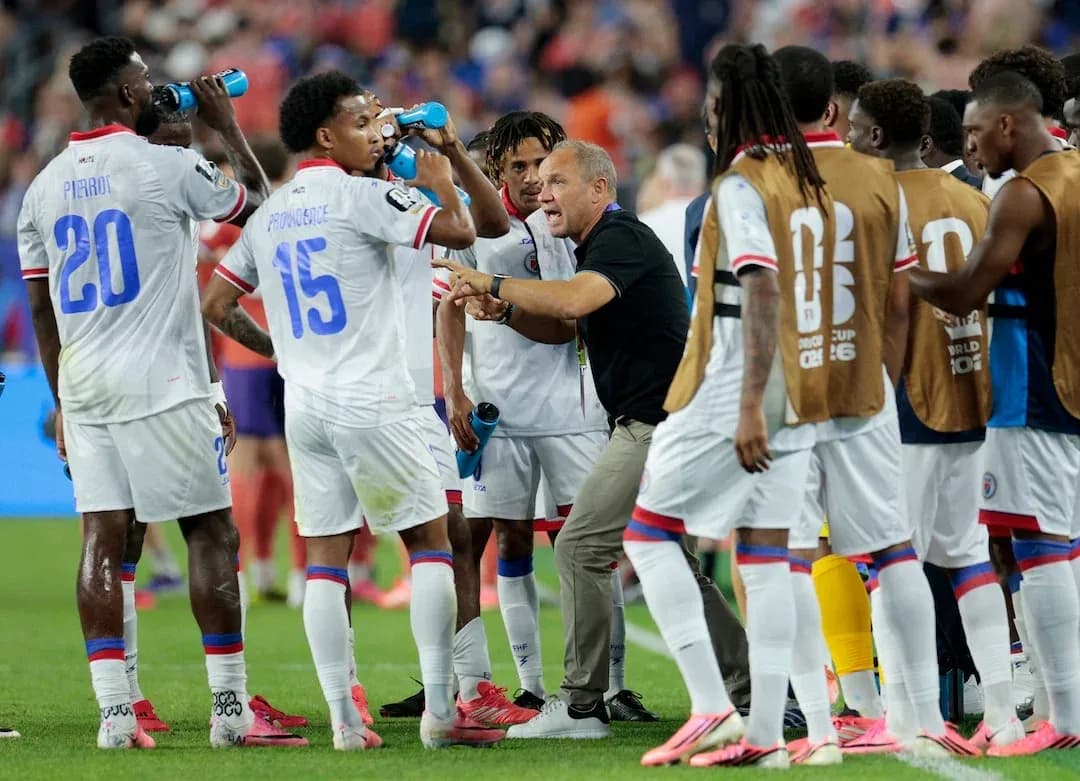
For Haiti, Sebastien Migne’s structure was conservative on paper but ambitious in intent. Johny Placide anchored a back four of Carlens Arcus, Ricardo Adé, Hannes Delcroix and Martin Expérience, with a flat midfield band that blended industry and flair: Louicius Don Deedson wide right, Ruben Providence wide left, Danley Jean Jacques and Jean-Ricner Bellegarde in central roles. Up front, Frantzdy Pierrot and Wilson Isidor were tasked with making limited service count.
Heading into this game, Haiti’s season profile was a blank canvas. Overall they had played 1 match, at home, and lost it 0–1, scoring 0 goals and conceding 1. The pattern held here: another 0–1 defeat, another failure to score, and again no clean sheet. Overall, they have now failed to score in 1 match and kept 0 clean sheets. Their goal difference overall sits at -1, exactly matching the standings: 0 goals for and 1 against.
Steve Clarke’s Scotland mirrored the 4-4-2 but with a more defined, tournament-hardened personality. Angus Gunn started in goal, shielded by Aaron Hickey, Grant Hanley, Jack Hendry and Andy Robertson. Across midfield, Ben Gannon-Doak on the right and John McGinn on the left flanked the central pair of Scott McTominay and Lewis Ferguson. Lawrence Shankland and Che Adams formed a dual spearhead.
Scotland’s numbers already hinted at a functional efficiency. Overall they had played 1 match away, winning it 1–0, with 1 goal scored and 0 conceded. Following this result, that picture remains intact: 1 win, 0 draws, 0 defeats; 1 goal for, 0 against; overall goal difference +1. It is not expansive, but it is ruthlessly effective.
II. Tactical Voids and the Discipline Ledger
There were no declared absences in the squad data; both managers had full benches to lean on. Instead, the “voids” were more tactical than personnel-based.
For Haiti, the main gap was between midfield and attack. With Jean Jacques and Bellegarde asked to screen and distribute, the wide players often had to drop so deep that Pierrot and Isidor were left isolated. The statistics underline the consequence: overall, Haiti average 0.0 goals for and 1.0 goals against per match, and they have already “failed to score” in 1 fixture. The shape protected them from being overrun, but it starved their forwards.
Discipline-wise, Haiti’s season profile shows a single yellow card concentrated in the 31–45 minute window, accounting for 100.00% of their cautions so far. It fits the narrative of a side that grows more desperate as the first half ticks toward the break, forced into late, corrective challenges when their structure is stretched.
Scotland’s disciplinary map is more scattered but tells its own story of controlled aggression. Overall, their yellow cards are clustered in two late-game bands: 33.33% between 46–60 minutes and 66.67% between 91–105 minutes. That late flurry is embodied by the likes of Findlay Curtis and Kenny McLean, both substitutes who came on to help close the game and each collected a yellow. Aaron Hickey, too, walked the line, picking up a booking while contributing 35 passes at 88% accuracy, 2 key passes and 7 duels contested, 5 of them won. This is a back line that defends on the front foot and accepts cards as part of game management.
III. Key Matchups – Hunter vs Shield, and the Engine Room
The “Hunter vs Shield” duel framed this contest in miniature. For Haiti, Pierrot is the natural reference point: a classic target forward asked to occupy Hanley and Hendry, win first contacts and bring runners into play. Yet with Haiti’s overall average of 0.0 goals for, the Hunter never quite got within range. Hanley and Hendry, backed by Gunn and the full-backs, extended Scotland’s season-long record of conceding 0.0 goals on their travels and overall. One away match, 1 clean sheet, 0 goals conceded – the Shield held.
On the other side, Scotland’s forwards worked more as decoys and link men than pure finishers. Shankland and Adams pinned Haiti’s centre-backs, but it was the midfield that truly tilted the game. McTominay and Ferguson formed the spine of the “Engine Room,” recycling possession and stepping into half-spaces, while McGinn and Gannon-Doak constantly probed the inside channels.
Here, the duel with Haiti’s central pair was decisive. Jean Jacques and Bellegarde had to choose between tracking runners and screening the zone in front of Adé and Delcroix. Each time they stepped out, McTominay found room to dictate; each time they sat, Ferguson could turn and face goal. The lack of Haitian goal threat meant Scotland could keep their full-backs, especially Robertson and Hickey, aggressive in their positioning without fearing the counter.
IV. Statistical Prognosis – What This Match Tells Us About the Road Ahead
Even without explicit xG values, the season data and structure of the game point toward a clear prognosis.
Haiti are compact, disciplined in phases, but blunt. Overall, their attacking average of 0.0 goals per match and 1.0 goals conceded signals a side that will likely be involved in tight, low-scoring encounters. Their 4-4-2 can frustrate, but unless Don Deedson and Providence can consistently connect with Pierrot and Isidor, they will remain overly reliant on set pieces or individual moments. The single yellow card concentrated just before half-time suggests emotional spikes rather than sustained aggression; Migne will need to turn that energy into coordinated pressing if Haiti are to flip narrow defeats into draws or wins.
Scotland, by contrast, look like a team built for tournament football. Overall they have 1 win from 1, with an average of 1.0 goals scored and 0.0 conceded, and a clean sheet on their travels. Their biggest away win so far is the very 0–1 that opened this group, and it feels emblematic: controlled, slightly conservative, but emotionally secure. The late yellow-card surge – 66.67% of their cautions coming after the 90th minute – reflects a side willing to darken the game in its dying moments to protect a lead.
Projecting forward, that balance between a disciplined back four, a robust central duo in McTominay and Ferguson, and creative width from McGinn and Gannon-Doak positions Scotland as a side whose xG profile will likely be modest but efficient. They may not blow teams away, but with a defensive record of 0 goals conceded overall and on their travels, they do not need to. One goal, as Haiti discovered in Boston, may often be enough.