.svg&w=384&q=75 "Naijagoal logo")

Uruguay's World Cup Collapse: Muslera's Nightmarish Campaign
Marcelo Bielsa’s Uruguay crashed out of the 2026 World Cup with a whimper, and Fernando Muslera found himself at the brutal heart of it.
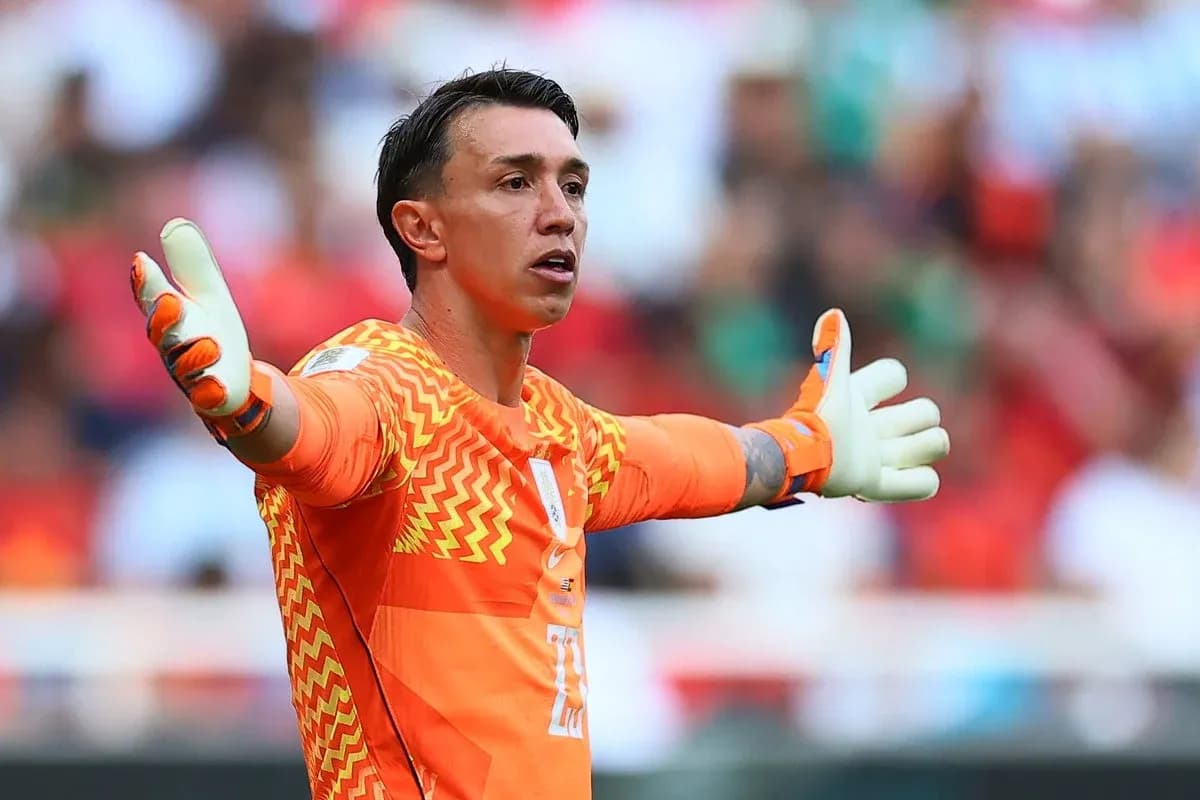
Spain’s 1-0 win sealed La Celeste’s fate and closed the book on a campaign that turned into a personal ordeal for the veteran goalkeeper. The decisive moment came from what should have been a routine save. Alex Baena’s effort lacked venom, yet it squirmed past Muslera and rolled into the corner. As the ball crossed the line, Muslera erupted, screaming in fury at himself, the scene capturing a campaign unravelling in one agonising frame.
That mistake did more than just put Uruguay behind. It carved Muslera’s name into the record books for all the wrong reasons: the first goalkeeper since records began in 1966 to make three errors directly leading to goals in a single World Cup campaign. For a player who has long been a symbol of experience and reliability, it was a staggering fall.
The damage at half-time was not just on the scoreboard. Muslera did not reappear after the break, with Sergio Rochet taking his place. It looked, at first glance, like a ruthless call from Bielsa. It wasn’t.
“The Muslera change was not my decision, it was Fernando,” Bielsa told Uruguayan television after the defeat, laying bare the scale of the keeper’s torment. Muslera had effectively taken himself out of the firing line.
The substitution carried historic weight. Uruguay had not replaced a goalkeeper in a World Cup match since substitutions were first permitted at Mexico 1970. On this night, that rare act felt less like a tactical tweak and more like a symbol of a team and a campaign buckling under pressure.
Uruguay’s task had been simple on paper: avoid defeat against Spain and they would advance from Group J. Draws with Cabo Verde and Saudi Arabia had left them on two points, still in control of their own destiny. Instead, they finished with the same two points and no route out of the group, undone by their own fragility as much as Spanish control.
Bielsa cut a bleak figure in the aftermath. “I couldn't boost the Uruguay players, I leave nothing to the country,” he admitted, a stark self-indictment from a coach whose intensity usually galvanises squads rather than drains them. He also pointed to his attacking intentions, adding that with Federico Valverde’s withdrawal he had sought more presence up front.
That decision will echo as loudly as the goalkeeping drama. Valverde, the Real Madrid star and captain in all but name, was hauled off after 56 subdued minutes. In a game crying out for a moment of authority, Bielsa removed his most influential outfield player. The move only fuels the growing noise around internal disagreements and fractures within the camp.
The combination of Muslera’s nightmare, the historic half-time change, the timid exit, and the Valverde call leaves Bielsa’s future shrouded in doubt. Speculation over his position had already started before the Spain defeat; now it will intensify.
Uruguay arrived needing only a draw. They leave with two points, a trail of controversy, and a goalkeeper whose World Cup will be remembered for all the wrong reasons. The question now is whether Bielsa is allowed to stay and rebuild, or whether this painful campaign becomes the final chapter of his brief, turbulent reign.