.svg&w=384&q=75 "Naijagoal logo")
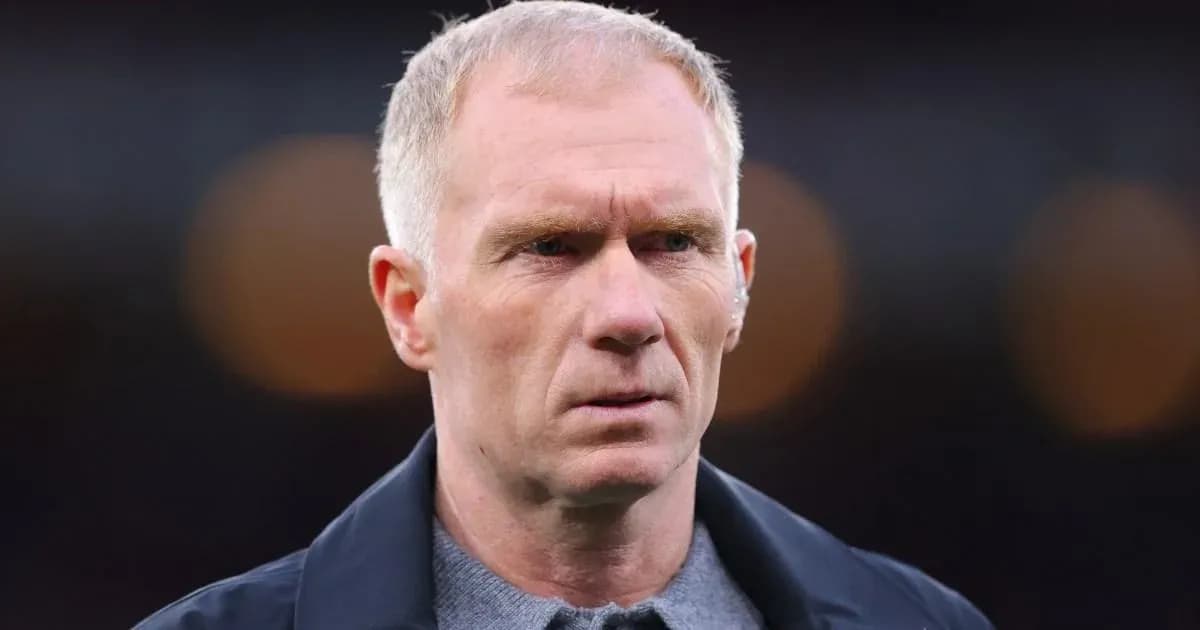

Paul Scholes Advocates for Elliot Anderson Over Declan Rice
Paul Scholes has never been afraid of a bold opinion. This time, his target is the heartbeat of England’s midfield.
The former Manchester United and England playmaker has called on Thomas Tuchel to drop Declan Rice for the World Cup last‑32 tie against DR Congo, arguing that England do not need two holding midfielders in a game they are expected to dominate.
England arrive in the knockouts having topped Group L with seven points from nine, but their football has rarely matched their results. Tuchel’s side burst into life with a 4-2 win over Croatia in their opener in the United States, a performance that suggested this might finally be the year the 60-year wait ends.
Since then, the sparkle has faded.
A flat, goalless draw with Ghana exposed England’s struggles to break down a compact defence. The pattern repeated itself against Panama. England laboured for over an hour before finally finding a way through, eventually winning 2-0 but never quite convincing.
Rice missed that Panama match, officially due to a lingering injury concern and also because he was one booking away from suspension after being cautioned against Ghana. His absence opened the door for others and, in Scholes’ eyes, the door should stay open.
“England don’t need to play two sitting midfielders in the next game,” Scholes said on The Good, The Bad & The Football podcast. “No disrespect to Congo but in those type of games you play as many attackers as possible. I think it has to be a straight shootout between Declan Rice and Elliot Anderson, and I think I would just go with Anderson.”
That is a striking stance on a player widely regarded as one of the most reliable midfielders on the planet. Rice, a title winner with Arsenal and a cornerstone for club and country, is expected to walk back into Tuchel’s XI against DR Congo. Scholes would resist that temptation.
“I think he will pass it forward a bit more,” Scholes said of Anderson. Then he turned the focus back on Rice’s club form. “Think about Rice with Arsenal… look, he’s a great player and a great leader, I get all that, and you’d rather him in your team than not most of the time.
“But Arsenal didn’t play great football last season either, did they? Rice couldn’t get [Martin] Odegaard in the game, so maybe that’s transferred a bit to England. I don’t think that happens with Anderson.”
It is a harsh reading of a player many see as undroppable, but it taps into a wider debate around this England team: balance versus bravery. Tuchel has leaned towards caution in midfield. Scholes wants risk, especially against opponents unlikely to monopolise the ball.
His concerns extend beyond one selection call. Reflecting on the group stage as a whole, Scholes did not sugar-coat his assessment.
“It wasn’t great, was it?” he said of the Panama win. “Across the three games I don’t think I’ve seen a team that will win the World Cup.
“It hasn’t been great but look, they could get better and they’re winning games and I do think they’ve got match winners in the team. I just don’t think they’re at the level of France or Argentina yet.”
If Scholes is pushing for Anderson over Rice, another member of that treble‑winning United midfield sees it differently.
Nicky Butt, his former club and international teammate, also believes Tuchel must abandon the double pivot against DR Congo. Unlike Scholes, he insists Rice has to start.
“You can’t play two sitting midfielders against teams who aren’t going to have any of the possession,” Butt said. “I’d definitely play Declan Rice in the next game so I would leave Elliot Anderson out.
“I think he’s been brilliant and is a top, top, top player which is why Man City have gone and paid £120m for him. I just don’t think you can leave Declan Rice out. He’s one of those players you just don’t leave out.”
The Anderson question is loaded with context. The Nottingham Forest midfielder, set to join Manchester City in a deal worth around £116m, has surged into this tournament as one of England’s most eye-catching performers. He plays on the half-turn, looks forward, and drives the team up the pitch. For Scholes, that tilt towards incision is exactly what England need now.
DR Congo, though, will not arrive as cannon fodder. They finished third in Group K after beating Uzbekistan, drawing with Portugal and losing to Colombia. Unpredictable, awkward, dangerous in moments – the sort of opponent who can punish a side that sleepwalks through the early stages of a knockout tie.
Tuchel stands at the crossroads of his first truly high‑stakes decision of this World Cup. Stick with his trusted lieutenant in Rice and keep control, or release Anderson from the start and chase a statement performance.
One of England’s great midfielders says Rice should sit. Another says he must play. Tuchel can only satisfy one of them – and the rest of the tournament may reveal which vision of England was right.