.svg&w=384&q=75 "Naijagoal logo")

Spain Crowned World Champions After Extra Time Victory Over Argentina
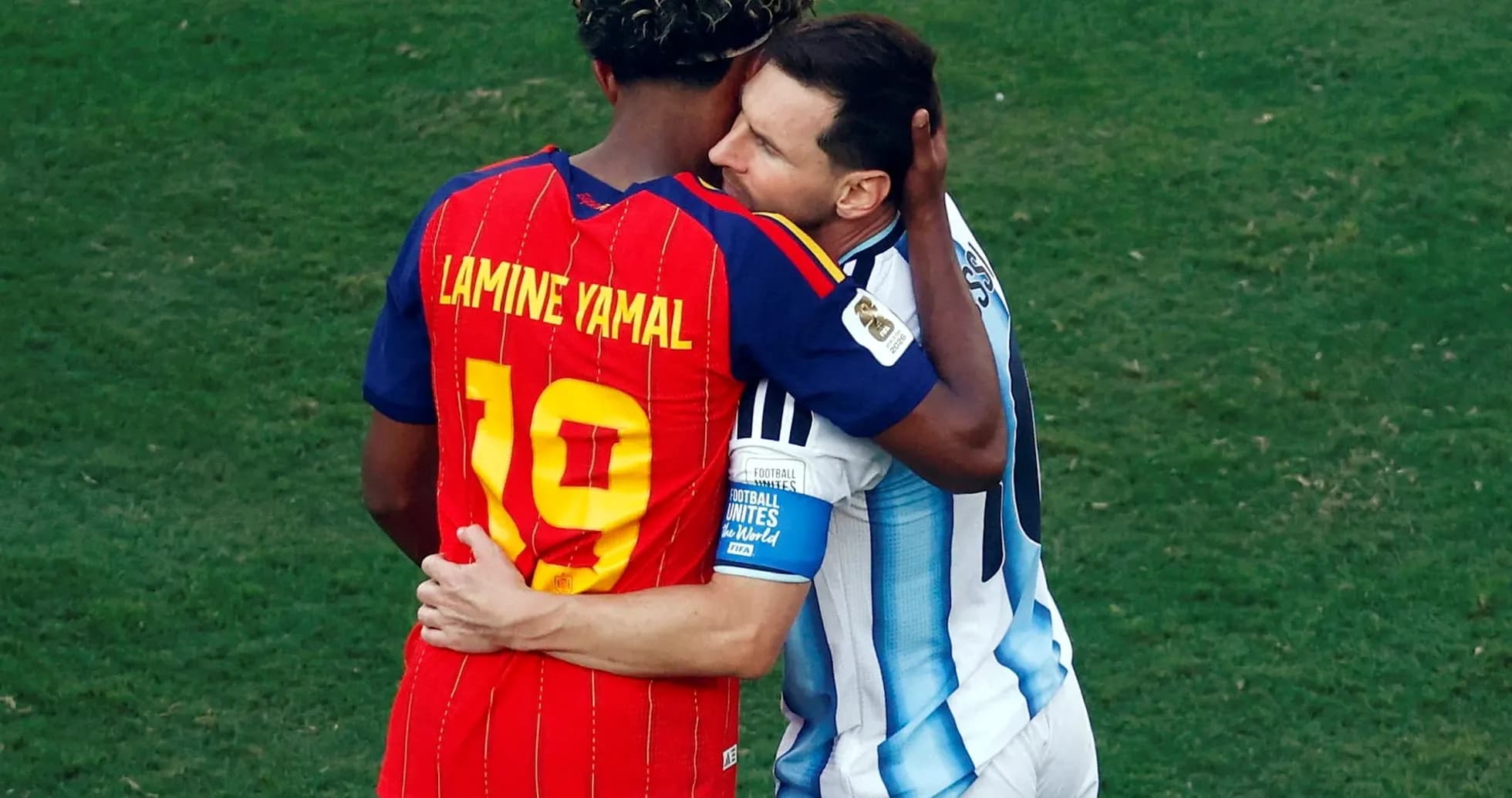
Spain 1-0 Argentina (after extra time) at MetLife Stadium crowns Spain as world champions, their dominance of territory and chances finally rewarded deep into extra time. Having both arrived in the Final as group winners from the Round of 32 path, Spain convert their control into the ultimate prize, while Argentina’s resistance falls agonisingly short despite a deep defensive block and an outstanding goalkeeping display.
Match Report
The Final opened in cagey fashion, with Spain monopolising the ball and Argentina largely content to defend in a compact 4-4-2. The first major disciplinary note arrived on 41', when Lisandro Martínez (Argentina) was booked — yellow card (Foul) — a sign of the strain Spain’s circulation was beginning to place on Argentina’s back line.
Argentina were forced into their first reshuffle on 44', as Nicolás Otamendi replaced Lisandro Martínez (Argentina), an early centre-back change that hinted at either a fitness concern or tactical recalibration against Spain’s fluid front line.
On 45', Leandro Paredes came on for Nicolás Iván González (Argentina), tightening the midfield and signalling Lionel Scaloni’s intent to gain more control in central areas rather than leave the game stretched.
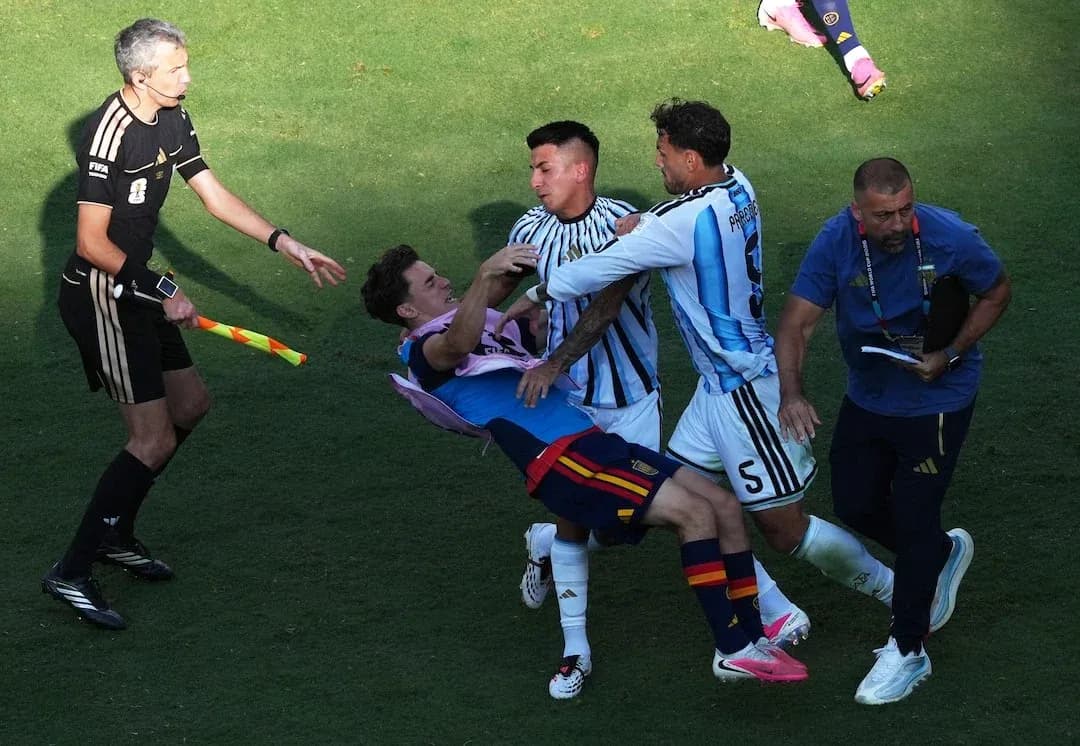
Early in the second half, Argentina’s frustration surfaced again on 52', when Leandro Paredes (Argentina) — yellow card (Argument) — went into the book, reflecting rising tension as Spain continued to dictate possession.
Scaloni adjusted his right flank on 58', with Nahuel Molina replacing Gonzalo Montiel (Argentina), seeking fresher legs to cope with Spain’s left-sided rotations and overlaps.
Spain made their first attacking changes on 62'. Ferrán Torres replaced Mikel Oyarzabal (Spain), adding more direct running in behind the Argentine defence. In the same minute, Pedri replaced Fabián Ruiz (Spain), injecting extra creativity and tempo between the lines.
Argentina responded with a double substitution on 70'. Facundo Medina replaced Cristian Romero (Argentina), altering the profile at centre-back, while Giuliano Simeone Baldini replaced Rodrigo De Paul (Argentina), adding energy higher up the pitch but also slightly loosening Argentina’s midfield screen.
Spain continued to refresh their attacking structure on 75'. Nico Williams replaced Alejandro Baena Rodríguez (Spain), providing pace and 1v1 threat from wide areas, and Mikel Merino replaced Daniel Olmo Carvajal (Spain), offering late runs and physicality from midfield.
Argentina’s discipline wavered again on 82', as Enzo Fernández (Argentina) — yellow card (Dissent) — was cautioned, a further indicator of mounting pressure. That was followed on 90+2', when Cristian Romero (Argentina) — yellow card (Dissent) — was booked from the bench, underlining the emotional edge as the tie moved towards extra time.
Into extra time, Luis de la Fuente continued to manage Spain’s midfield base on 99', with Martín Zubimendi replacing Rodrigo Hernandez Cascante (Spain), keeping the pivot position fresh to maintain counter-pressing intensity. Simultaneously, Eric García replaced Aymeric Laporte (Spain), renewing the centre of defence against potential late Argentine counters.
Argentina made another change on 102', with Marcos Senesi replacing Julián Álvarez (Argentina), a move that effectively added another defender and further entrenched their low block as they tried to survive Spain’s pressure.
The touchline tension was formalised on 104', when Lionel Sebastián Scaloni (Argentina) — yellow card (Dissent) — was booked, emblematic of a dugout feeling the weight of Spain’s dominance.
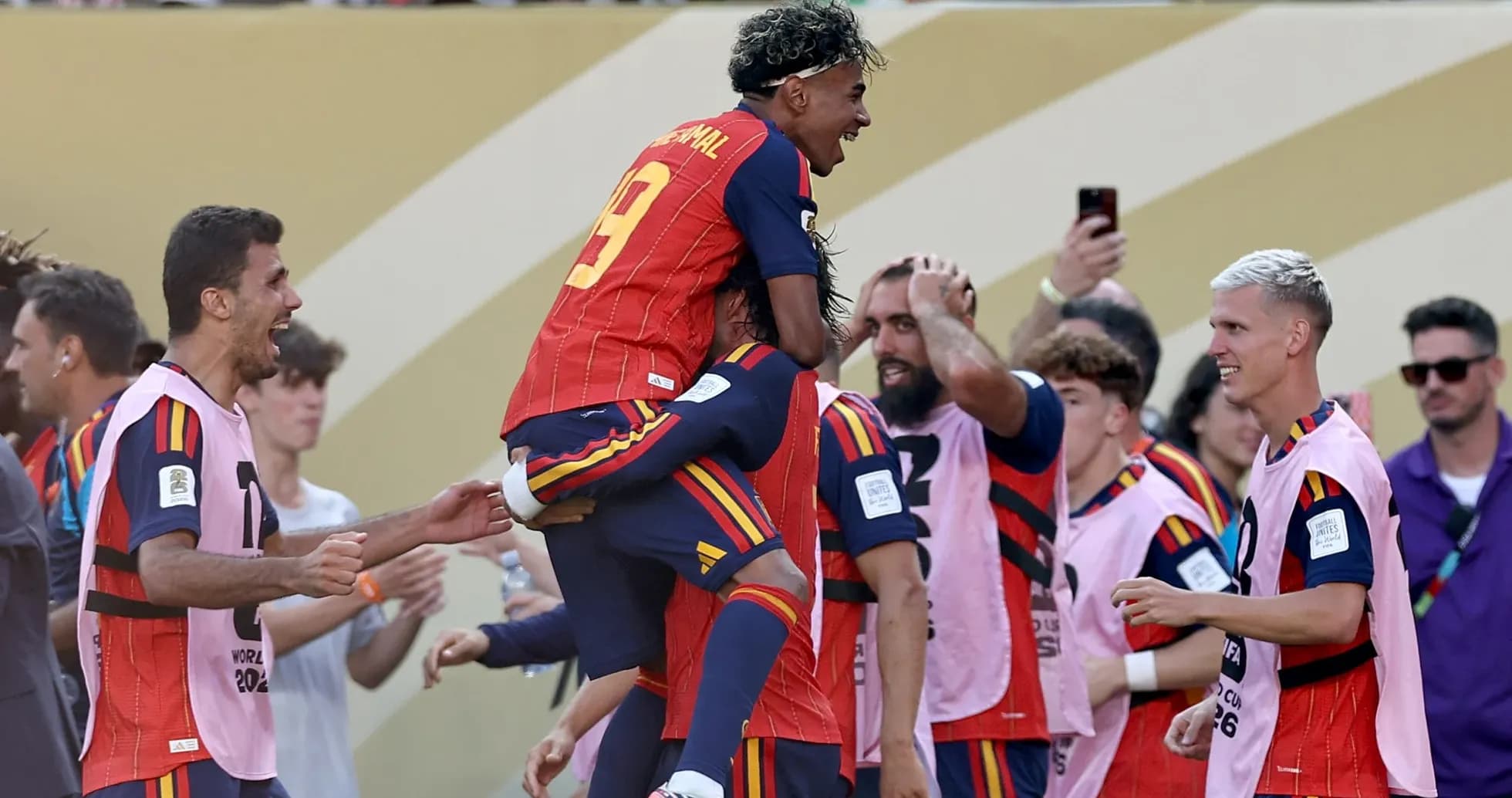
The decisive moment arrived on 106'. Spain goal — Ferrán Torres (assisted by Nico Williams). Williams attacked from the flank and supplied the crucial pass for Torres to finish, finally breaking Argentina’s resistance and making it 1-0 to Spain after sustained pressure.
Argentina’s final card came on 111', as Alexis Mac Allister (Argentina) — yellow card (Foul) — was cautioned, another consequence of late, desperate challenges as they chased an equaliser that never materialised.
Fixture Statistics & Tactical Audit
- xG: not provided vs not provided
- Possession: Spain 65% vs 35% Argentina
- Shots on Target: Spain 12 vs 0 Argentina
- Goalkeeper Saves: Spain 0 vs 11 Argentina
- Blocked Shots: Spain 3 vs 1 Argentina
The statistical profile underlines how one-sided the Final was in terms of territory and chance creation. Spain’s dominance (65% possession, 20 total shots, 12 on target) reflects a controlled positional game that repeatedly pinned Argentina deep. In contrast, Argentina’s attacking output was minimal — just 2 total shots and none on target — revealing a game plan built almost entirely around deep defending and sporadic counters that never truly materialised.
Emiliano Martínez’s workload (11 saves, mirroring Spain’s 12 shots on target with one blocked or deflected before reaching goal) was the central reason the match remained goalless through 90 minutes. Spain’s volume of efforts, plus 3 blocked shots, shows a side consistently finding shooting positions around and inside the box, even if the absence of xG figures prevents a precise quantification of chance quality.
Defensively, Spain were secure (Argentina 0 shots on target, Spain 0 saves), with their rest defence and counter-pressing effectively smothering transitions. Argentina’s 25 fouls and 5 yellow cards, plus one for their coach, underline how often they had to resort to breaking up Spain’s rhythm. The 4-4-2 block was resilient but reactive; over 120 minutes, the inability to relieve pressure or create their own chances meant the 1-0 scoreline aligned with the flow of play, even if it arrived late.
Standings Update & Seasonal Impact
Spain entered the World Cup Final having topped Group H with 7 points, 5 goals scored and none conceded. Their 1-0 victory here adds 3 more points in the tournament tally context, taking them to 10, with new figures of 6 goals for and 0 against, and a goal difference of +6. That defensive perfection across group and knockout phases underpins their status as world champions.
Argentina came into the Final from Group J with a perfect 9 points, 8 goals scored and 1 conceded. Defeat in East Rutherford halts that momentum, leaving them on 9 points overall, with new totals of 8 goals for and 2 against, and a goal difference trimmed to +6. From a seasonal narrative perspective, they finish as runners-up, their path from Round of 32 group winners to the Final ending one step short against a Spain side that simply allowed fewer chances and managed key moments better.
Lineups & Personnel
Spain Starting XI
- GK: Unai Simón
- DF: Pedro Porro, Pau Cubarsí Paredes, Aymeric Laporte, Marc Cucurella
- MF: Rodri, Dani Olmo, Fabián Ruiz, Álex Baena
- FW: Lamine Yamal, Mikel Oyarzabal
Argentina Starting XI
- GK: E. Martínez
- DF: G. Montiel, C. Romero, Lisandro Martínez, N. Tagliafico
- MF: R. De Paul, E. Fernández, A. Mac Allister
- FW: N. González, L. Messi, J. Álvarez
Post-Match Verdict
Spain delivered a dominant performance (65% possession, 20 shots to 2, 12-0 shots on target) built on their trademark positional play and aggressive counter-press. The rotation of creators — with Pedri and Mikel Merino introduced from the bench and Nico Williams providing the decisive assist — allowed them to maintain a high tempo throughout 120 minutes. Their defensive structure was equally impressive, restricting Argentina to no shots on target and ensuring Unai Simón had a largely observational role.
Argentina’s display was defined by defensive resilience but attacking anonymity. While their deep block and Emiliano Martínez’s 11 saves kept them in contention for over 100 minutes, the lack of offensive threat (2 total shots, 0 on target) meant the margin for error was always razor thin. The accumulation of 25 fouls and 5 yellow cards, plus the booking for Scaloni, illustrated a side increasingly stretched and reactive. In the end, Spain’s sustained pressure and bench impact made the breakthrough feel inevitable, and the 1-0 scoreline after extra time reflects a Final where one team consistently imposed its game and the other survived rather than competed on equal terms.