.svg&w=384&q=75 "Naijagoal logo")

France vs England: A Tactical Analysis of the 6-4 World Cup Final
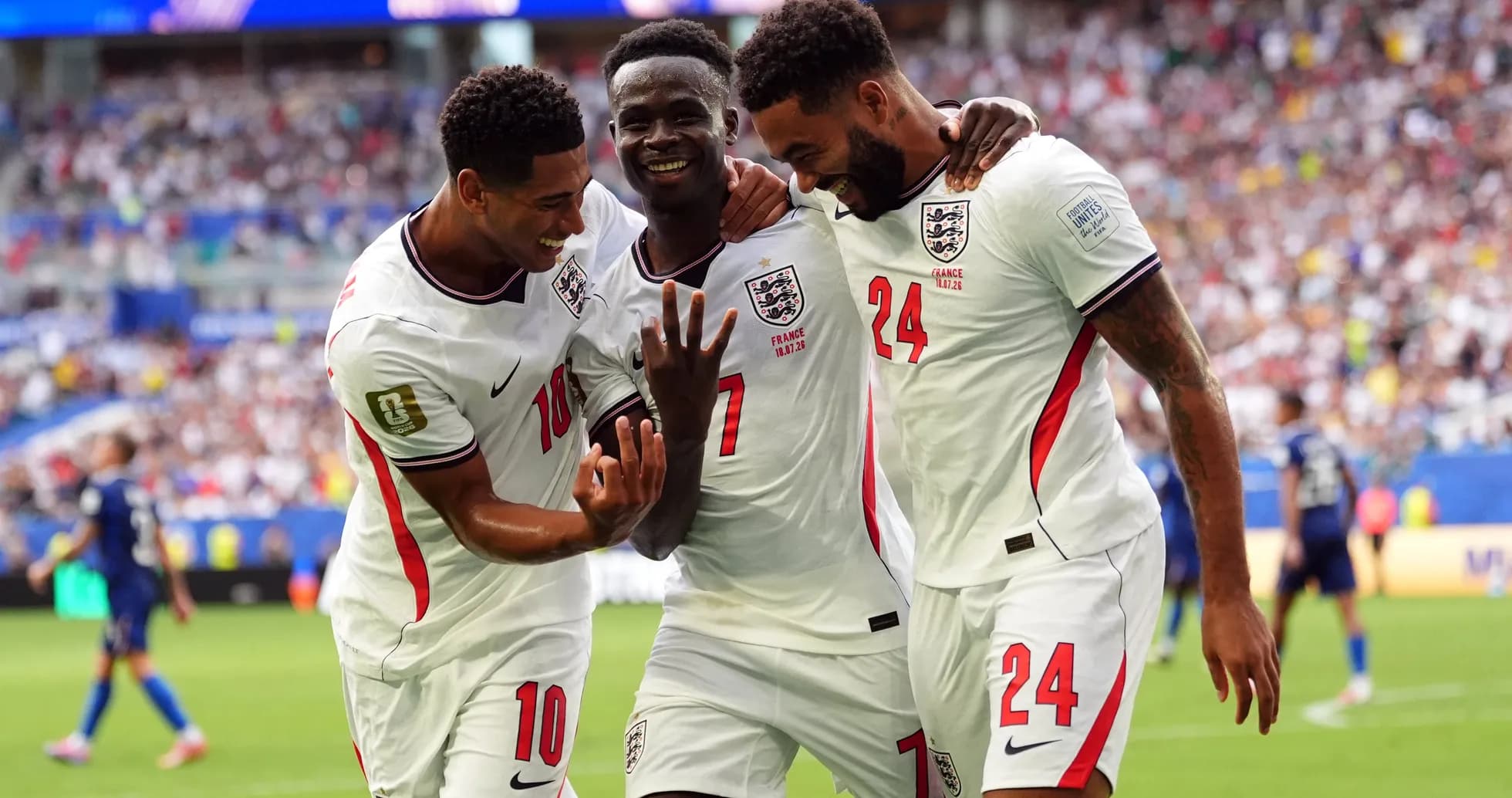
France’s 6-4 defeat to England at Hard Rock Stadium, Miami Garden was a wild, structurally asymmetric game in which first-half control and vertical efficiency from England were met by an aggressive, risk-heavy French response after the break. The 3rd Place Final of the World Cup produced two very different matches within the same 90 minutes: England’s organised, possession-based dismantling of France’s initial structure, and then France’s chaotic, transition-driven comeback attempt that almost flipped the contest.
England's Tactical Platform
England’s tactical platform was built on a 54% share of the ball and a compact, technically secure midfield. Declan Rice anchored the structure, both as a first-line receiver from the back four and as a late-arriving threat, highlighted by his early goal. With 515 total passes and 467 accurate (91%), England circulated the ball with patience, dragging France’s midfield three of Warren Zaïre-Emery, Adrien Rabiot and Michael Olise into wide areas. The wide midfielders Bukayo Saka and Marcus Rashford played high and narrow, pinning France’s full-backs and creating interior lanes for Morgan Rogers and Eberechi Eze to receive between the lines.
France's Direct Approach
France, by contrast, were more direct and burst-oriented. Their 445 passes, with 405 accurate (91%), show they could combine cleanly, but the game plan leaned on Kylian Mbappé’s depth runs and the creative freedom of Rayan Cherki and Dési ré Doué. Early on, though, the French block lacked compactness: the back four of Malo Gusto, Ibrahima Konaté, Maxence Lacroix and Theo Hernández was repeatedly exposed by England’s rotations, especially when Rice stepped beyond the first press and Saka attacked the space outside Lacroix.
Shot Profile
The shot profile underlines how both approaches converged into a high-event contest. Each side produced 19 total shots, but England’s were more concentrated in high-value zones: 16 shots inside the box versus France’s 12. France actually generated a slightly higher xG at 2.87 compared to England’s 2.58, reflecting the quality of chances created once they committed numbers forward in the second half. However, England’s early 4-0 lead at half-time came from superior occupation of the half-spaces and set-piece or secondary-phase situations, where France’s marking and rest-defence were repeatedly disorganised.
Defensive Struggles
Defensively, both teams struggled to contain the other’s strengths, but in different ways. France committed 14 fouls to England’s 8, a sign of their increasing desperation to disrupt England’s rhythm, especially after the interval. Yet the lack of yellow or red cards meant neither side’s defensive approach was constrained by disciplinary pressure. England’s back line, led by Ezri Konsa and Marc Guéhi, was aggressive stepping into midfield to compress space around Mbappé and Cherki, but once France adjusted with more runners from deep – notably Bradley Barcola and later Ousmane Dembélé – the English defensive line became stretched and vulnerable to quick combinations.
Goalkeeping Performance
In goal, Mike Maignan (France) was left brutally exposed by the structural issues in front of him during the first half. He made 4 saves but conceded 6, a reflection not of poor individual performance but of the volume and quality of England’s box entries and finishes, particularly from close range. Dean Henderson (England), with 5 saves, benefited from a more controlled first half but was increasingly busy as France turned the match into a transition battle after the break. Both goalkeepers’ “goals prevented” metric stood at 0.05, indicating that, statistically, neither significantly overperformed or underperformed relative to the chances faced; the story was written more by systemic defending than by goalkeeping heroics.
Set Pieces and Box Management
Set pieces and box management were another decisive layer. England earned 4 corner kicks to France’s 3 and used these dead-ball situations to pin France deep and maintain territorial pressure. France’s 4 blocked shots against England’s 6 underline how England, even while under second-half pressure, managed to get bodies in front of attempts, particularly when defending late surges from Mbappé and Dembélé. Conversely, France’s inability to block England’s early efforts allowed clean shooting windows from central zones, contributing to the early avalanche.
Second Half Adjustments
The second half was shaped by coaching adjustments and substitutions. Didier Deschamps leaned into attacking changes immediately after the break, using Bradley Barcola and Ousmane Dembélé to add verticality and 1v1 threat around Mbappé. This shifted France’s attack from a relatively static, possession-based structure into a more fluid, counter-punching unit, which explains the surge in shots on goal (9 in total) and the climb in xG. Thomas Tuchel responded by refreshing his attacking and midfield lines with Jude Bellingham, Ollie Watkins and Elliot Anderson, prioritising ball retention and counter-attacking outlets to exploit the spaces France left in behind.
Statistical Verdict
Ultimately, the statistical verdict aligns with the tactical narrative: England’s marginally lower xG but higher early efficiency, combined with superior territorial control (54% possession, more shots inside the box, fewer fouls), built a decisive platform. France’s late surge turned the contest into a shootout and justified their higher xG, but their initial structural fragility and defensive indiscipline without cards – too many tactical fouls, not enough compactness – meant that even a four-goal output could not rescue them. The 6-4 scoreline is the logical extreme of two high-talent teams leaning heavily into their offensive strengths and accepting defensive risk, with England’s first-half control ultimately outweighing France’s second-half storm.