.svg&w=384&q=75 "Naijagoal logo")

Qatar vs Switzerland: World Cup 2026 Opening Draw Analysis
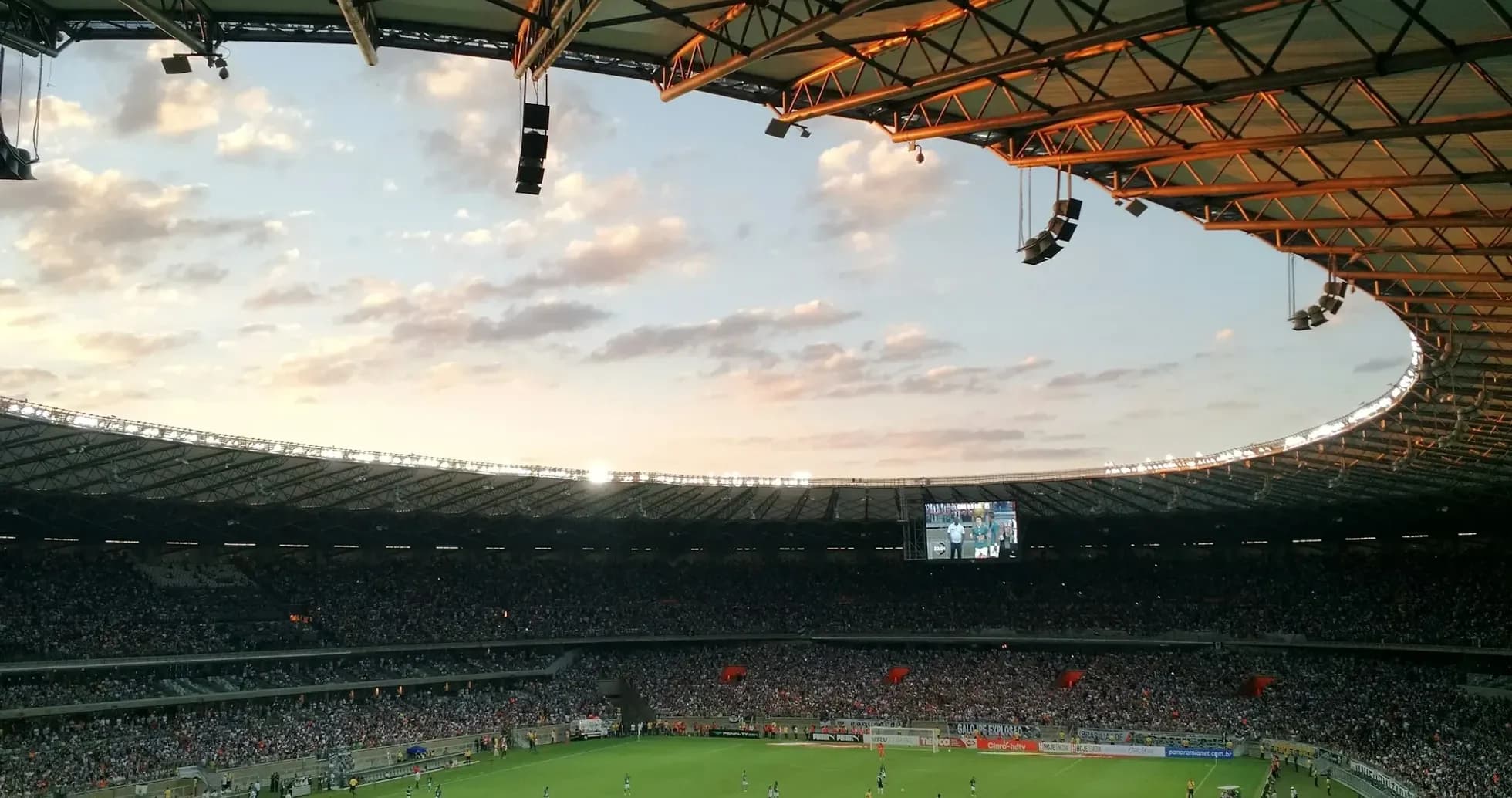
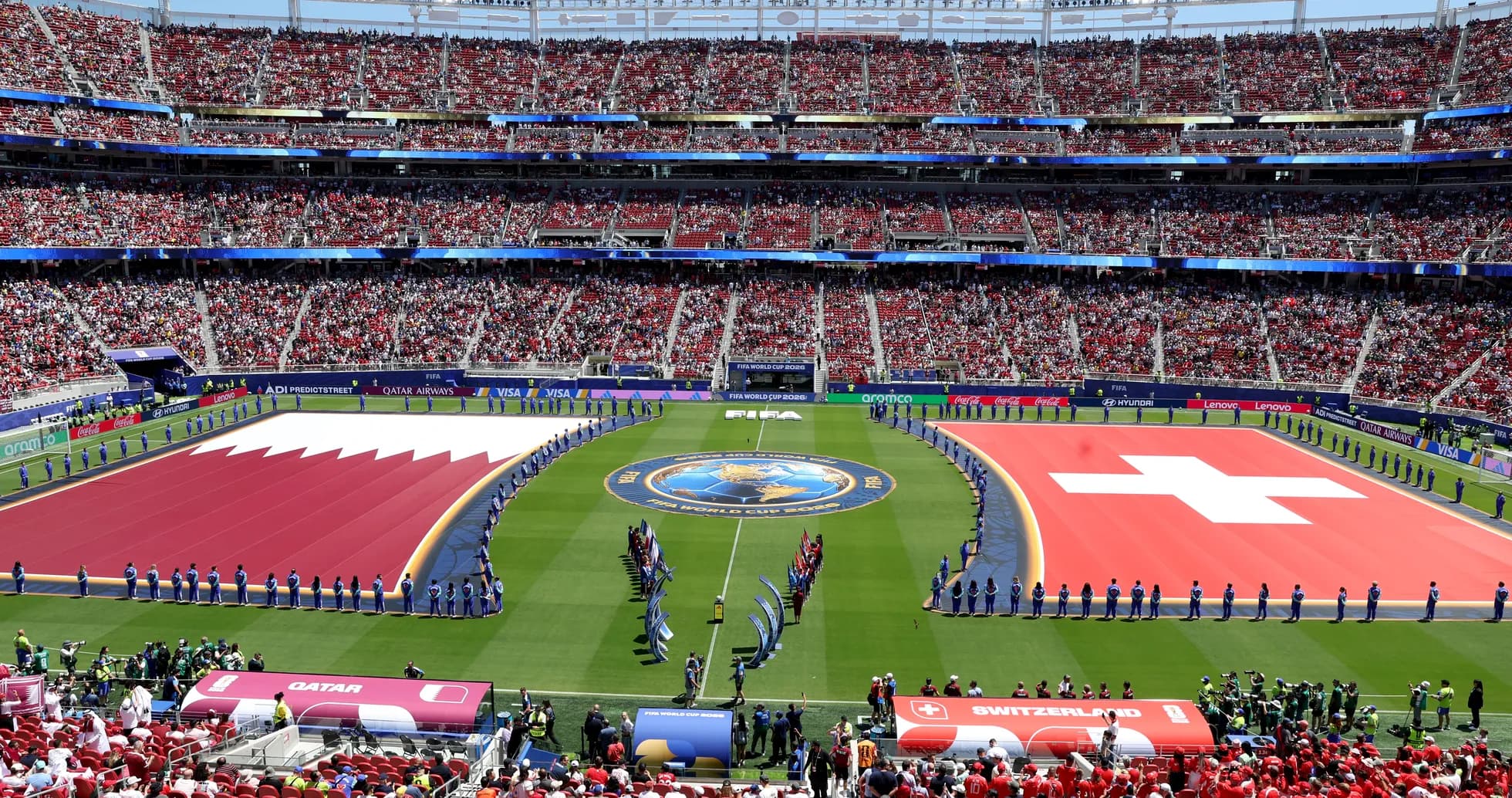
Levi’s Stadium, bathed in the late California light, hosted a meeting of contrasts as Qatar and Switzerland opened their World Cup 2026 campaigns with a 1–1 draw. Following this result in Group B, Switzerland sit on 1 point with a goal difference of 0, as do Qatar, both teams having mirrored records: overall 1 match played, 0 wins, 1 draw, 0 defeats, 1 goal for and 1 against.
Both managers leaned into a shared structural language: matching 4‑3‑3s that told very different stories. Julen Lopetegui’s Qatar used the system as a protective shell, while Murat Yakin’s Switzerland treated it as a platform for territorial control and vertical surges through their front three.
I. The Big Picture – Two 4‑3‑3s, two identities
Qatar’s season profile heading into this game was essentially a blank slate at World Cup level, but the immediate numbers are clear: at home they have played 1 match, scoring 1.0 goals on average and conceding 1.0. There is no clean sheet yet and no failure to score, underlining a side that can threaten but is still defensively porous.
Lopetegui’s 4‑3‑3 was anchored by Mahmud Abunada in goal and a back four of H. Al Amin, Boualem Khoukhi, Pedro Miguel and A. Al Oui. In front of them, the trio of I. Laye, A. O. Madibo and Jassem Gaber was less about artistry and more about screening, shuttling, and plugging gaps. Ahead, the attacking trident of A. Afif, Y. Abdurisag and Edmilson Junior was tasked with punishing transitions rather than dictating the rhythm.
Switzerland’s profile is similarly embryonic but telling: on their travels they have played 1 match, scoring 1.0 and conceding 1.0 on average, with no clean sheets and no blanks in attack. Yakin’s 4‑3‑3 leaned on a familiar spine: Gregor Kobel behind a line of R. Rodriguez, M. Akanji, N. Elvedi and D. Zakaria, with G. Xhaka, R. Freuler and M. Aebischer controlling the middle. Up front, the pace and directness of R. Vargas and D. Ndoye flanked the penalty‑box presence of B. Embolo.
The narrative of the night reflected those templates: Switzerland more assured in structure and possession, Qatar more reactive but increasingly dangerous as they grew into the contest.
II. Tactical Voids and Discipline – A match shaped by edges, not absences
There were no listed absentees for either side, allowing both managers to field close to their ideal blueprints. The voids, then, were tactical rather than personnel‑driven: Qatar’s lack of a natural deep playmaker and Switzerland’s occasional over‑commitment in the half‑spaces.
Discipline quietly underpinned the game’s rhythm. Qatar’s season card profile shows a clear spike in yellow cards between 16–30 minutes, with 100.00% of their cautions arriving in that early second quarter. That pattern held: Jassem Gaber, already a combative presence, again walked the disciplinary tightrope. Across his 60 minutes he committed 2 fouls, picked up a yellow card, and still managed to block 2 shots and engage in 8 duels, winning 3. He embodies Qatar’s edge: industrious, aggressive, but always a moment away from tipping over.
Mahmud Abunada, too, carries disciplinary weight. He has already collected a yellow card and committed the penalty that Switzerland converted, his season record showing 1 foul committed, 1 card, and a penalty conceded. For a side that cannot afford to lose its goalkeeper, his decision‑making in the box will be a recurring storyline.
On Switzerland’s side, D. Zakaria’s yellow card slotted neatly into their own profile: 100.00% of their cautions so far have arrived between 31–45 minutes, a reflection of how they raise the intensity before half‑time. Zakaria’s 3 tackles and 2 interceptions were vital in stifling Qatari counters, but his 1 foul and booking underline the cost of that aggression.
III. Key Matchups – Hunter vs Shield, Engine Room vs Enforcer
The clearest “Hunter vs Shield” duel came through B. Embolo against Qatar’s central defensive axis and Abunada. Embolo’s World Cup line already reads like a threat report: 1 goal, 1 penalty scored, 2 shots (1 on target), and 5 key passes from just 8 total passes, with a 75% accuracy. He is not simply a finisher; he is a fulcrum. His ability to drop, combine and then burst into the box forced Khoukhi and company into constant recalibration.
Khoukhi, though, responded with authority. As Qatar’s top scorer so far with 1 goal from 1 shot on target, he was both defender and unlikely hunter. Defensively, he completed 1 tackle, blocked 1 shot, and made 2 interceptions, while engaging in 6 duels and winning 2. His presence turned Qatar’s box into a contested zone rather than a Swiss playground. Every time Embolo or Vargas attacked the space between full‑back and centre‑back, Khoukhi’s positioning was the counterweight.
In the “Engine Room” battle, G. Xhaka and R. Freuler squared off, conceptually, against Qatar’s central trio. Switzerland’s midfield was about tempo and control; Qatar’s about disruption. Gaber again was the emblem of that: his 1 tackle, 2 blocks and 2 fouls committed speak to a role built on breaking patterns rather than creating them. A. O. Madibo and I. Laye supported by closing lanes, ceding the ball but contesting the second phase.
On the flanks, D. Ndoye and R. Vargas targeted the channels around H. Al Amin and A. Al Oui. Qatar’s full‑backs, with limited overlapping support, often found themselves pinned, which in turn limited Afif and Edmilson Junior’s ability to receive high and wide. Switzerland’s 4‑3‑3 thus acted as a territorial vise, even if the final scoreboard refused to tilt fully in their favour.
IV. Statistical Prognosis – What this draw really says
With both sides now on identical overall records – 1 draw, 1 goal scored, 1 conceded, goal difference 0 – the statistical picture is one of fragile balance. Qatar at home average 1.0 goals for and 1.0 against; Switzerland on their travels mirror that with 1.0 for and 1.0 against. Neither side has yet produced a clean sheet, and neither has failed to score.
Switzerland’s penalty record, however, hints at a sharper cutting edge: overall they have earned 1 penalty and converted it with a 100.00% success rate. Embolo’s composure from the spot contrasts starkly with Abunada’s concession, a micro‑battle that may echo if Qatar continue to defend on the edge inside their own area.
Without explicit xG numbers, the patterns still suggest a familiar script: Switzerland’s structure and territorial control likely produced the more sustained pressure, while Qatar’s resilience and set‑piece threat – embodied by Khoukhi’s goal – kept them alive. The defensive solidity is imperfect on both sides: overall clean sheets stand at 0 for each, and the goal‑against averages of 1.0 for both teams underline that a single lapse is almost guaranteed.
Following this result, the prognosis is of two sides whose margins will be defined by detail. For Qatar, that means tightening the penalty‑area decision‑making of Abunada, channelling Gaber’s aggression more cleanly, and leaning into Khoukhi’s dual role as shield and surprise scorer. For Switzerland, it is about turning Embolo’s all‑round influence into multi‑goal outputs, managing Zakaria’s disciplinary line, and converting territorial dominance into something more than a single, nervy strike from the spot.
The draw at Levi’s Stadium leaves Group B delicately poised. Neither Qatar nor Switzerland has yet revealed their ceiling, but both have shown their fault lines. The next 90 minutes for each will not just test systems; they will test whether these early patterns harden into identity or are rewritten under the pressure of tournament football.