.svg&w=384&q=75 "Naijagoal logo")

Netherlands 2-2 Japan: Match Report and Tactical Insights
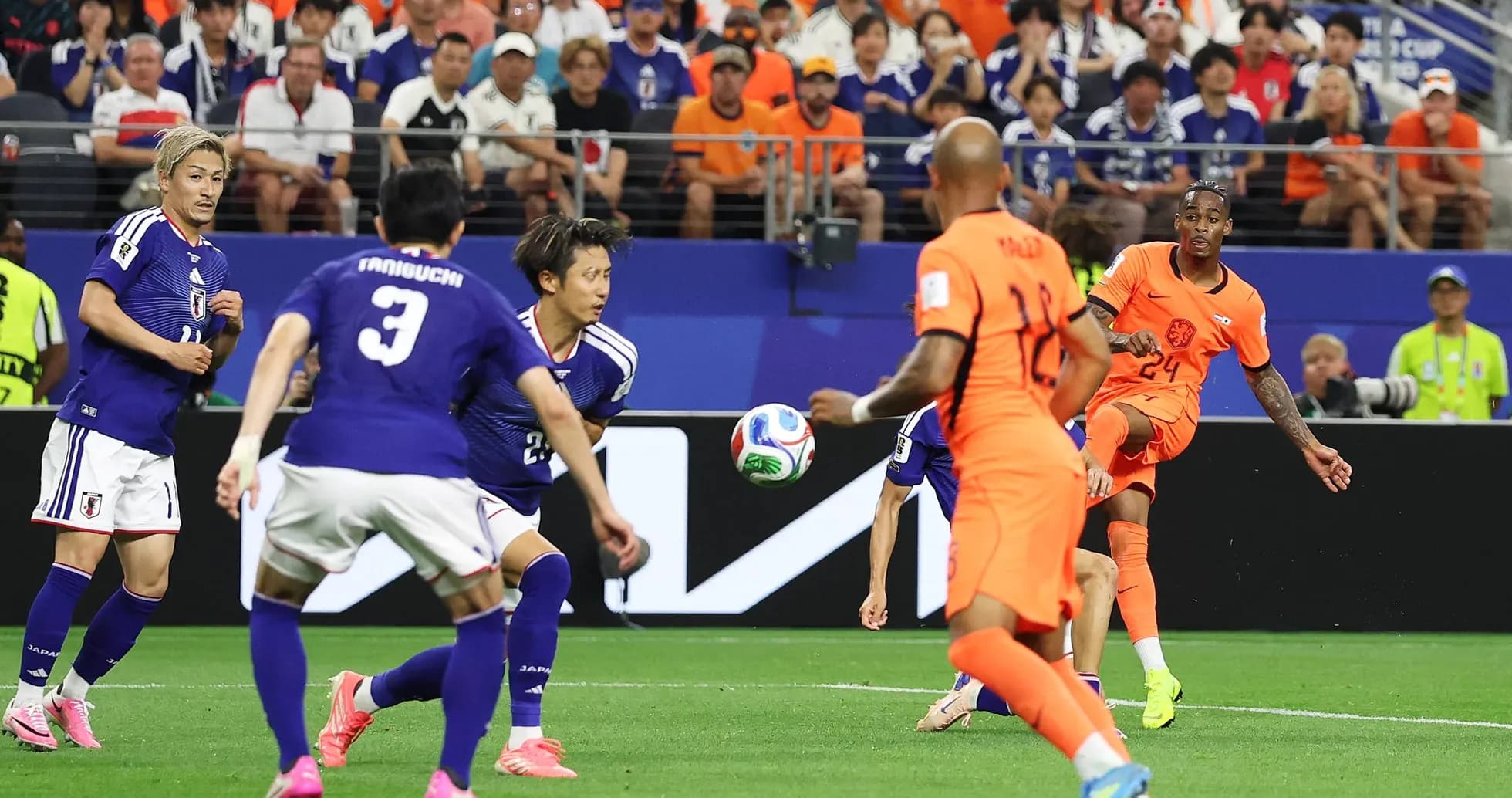
Netherlands 2-2 Japan at AT&T Stadium leaves Group F finely poised, with both sides taking a point from a match where the Dutch twice led on xG (0.79 vs 0.54) but could not protect their advantage. With this draw, Netherlands move to 2 points and remain in the Round of 32 qualification places, while Japan also climb to 2 points and stay in the same qualification zone, separated only by fine margins on rank.
Match Report
The game opened in a controlled rhythm, with Netherlands using their 4-3-3 to dominate the ball and push full-backs high, while Japan’s 3-4-2-1 focused on compactness and quick breaks. After a goalless first half, the match exploded after the interval.
51' Netherlands goal — V. van Dijk (assisted by R. Gravenberch). From a Netherlands set of sustained pressure, Gravenberch delivered a precise ball into the box and Van Dijk attacked it aggressively to give the Dutch a 1-0 lead.
57' Japan goal — K. Nakamura (assisted by T. Kubo). Japan responded quickly: Kubo drifted into a pocket between the lines and slipped a clever pass into Nakamura, who finished clinically to level at 1-1.
61' C. Summerville (Netherlands) — yellow card (Tripping). The winger was booked after a late challenge as he tried to counter-press immediately after losing possession.
64' Netherlands goal — C. Summerville (assisted by R. Gravenberch). Summerville redeemed himself within minutes, cutting in from the flank after another progressive pass from Gravenberch and finishing to the far corner to restore the Dutch lead at 2-1.
66' J. Ito replaced D. Maeda (Japan). Japan adjusted their front line, introducing Ito’s direct running to stretch the Dutch defence.
70' M. Depay replaced D. Malen (Netherlands). Ronald Koeman sought fresh energy and link play up front, bringing Depay into the central attacking role.
70' T. Koopmeiners replaced C. Summerville (Netherlands). With the lead in hand, Netherlands added an extra midfielder in Koopmeiners, sacrificing a winger to gain more control in the centre.
70' Q. Timber replaced T. Reijnders (Netherlands). Timber’s introduction further refreshed the midfield unit, aiming to maintain intensity in the press and ball circulation.
75' T. Tomiyasu replaced T. Watanabe (Japan). Japan reshaped their back line, adding Tomiyasu’s composure and distribution from defence.
75' K. Ogawa replaced T. Kubo (Japan). Ogawa came on to provide a more traditional forward presence, shifting the attacking reference point.
75' Y. Sugawara replaced R. Doan (Japan). With Sugawara, Japan injected new legs on the flank, looking to raise their tempo in wide areas.
81' N. Ake replaced R. Gravenberch (Netherlands). Having already provided two assists, Gravenberch made way for Aké, signalling a more defensive Dutch posture to protect the 2-1 lead.
83' M. Depay (Netherlands) — yellow card (Roughing). Depay was booked after a robust challenge while trying to prevent a Japanese counter.
84' K. Shiogai replaced A. Ueda (Japan). Japan rotated their centre-forward, bringing on fresh attacking energy in Shiogai for the closing stages.
85' B. Brobbey replaced C. Gakpo (Netherlands). Koeman introduced Brobbey’s physical presence up front, aiming to hold the ball and relieve pressure.
88' Japan goal — D. Kamada (assisted by K. Ogawa). Japan’s pressure finally told: Ogawa dropped off the front line to receive and slipped a well-weighted pass into Kamada’s forward run, and the midfielder finished low to equalise at 2-2.
90+1' M. van de Ven (Netherlands) — yellow card (Holding). Under late Japanese pressure, Van de Ven was booked for a holding offence as he halted a potential break.
Fixture Statistics & Tactical Audit
- xG: Netherlands 0.79 vs Japan 0.54
- Possession: Netherlands 60% vs Japan 40%
- Shots on Target: Netherlands 6 vs Japan 3
- Goalkeeper Saves: Netherlands 1 vs Japan 4
- Blocked Shots: Netherlands 1 vs Japan 1
The numbers underline a relatively balanced contest, with Netherlands slightly ahead on xG (0.79 vs 0.54) and shots on target (6 vs 3), reflecting their longer spells of structured possession. Japan, however, were efficient in turning limited final-third entries into high-impact moments, scoring twice from three efforts on goal. Netherlands’ dominance in possession (60%) did not translate into a high volume of clear chances, suggesting Japan’s mid-block and back three were largely effective in forcing shots from less dangerous zones inside the box. Japan’s goalkeeper Zion Suzuki made 4 saves, mirroring the Dutch’s 6 shots on target minus the 2 goals conceded, underlining how his interventions prevented the Dutch from converting control into a decisive margin. Overall, the 2-2 scoreline aligns with the narrow xG gap and reflects a match where Netherlands had more of the ball but Japan maximised their attacking phases.
Standings Update & Seasonal Impact
For Netherlands, the two goals scored in Arlington take their tally to 4 for the group, with 4 conceded, leaving them on a goal difference of 0 and 2 points after two matches. They remain in a Round of 32 qualification position in Group F but have not yet turned territorial dominance into a win, keeping the group finely balanced.
Japan also move to 2 points, with 4 goals scored and 4 conceded and a goal difference of 0. They stay within the Round of 32 zone, matching Netherlands on points and goal difference and ensuring that the final group fixture will be decisive, with qualification likely to hinge on small details in both boxes.
Lineups & Personnel
Netherlands Starting XI
- GK: Bart Verbruggen
- DF: Denzel Dumfries, Jan Paul van Hecke, Virgil van Dijk, Micky van de Ven
- MF: Ryan Gravenberch, Frenkie de Jong, Tijjani Reijnders
- FW: Crysencio Summerville, Donyell Malen, Cody Gakpo
Japan Starting XI
- GK: Zion Suzuki
- DF: Tsuyoshi Watanabe, Shogo Taniguchi, Hiroki Itō
- MF: Ritsu Doan, Kaishu Sano, Daichi Kamada, Keito Nakamura
- FW: Takefusa Kubo, Daizen Maeda, Ayase Ueda
Post-Match Verdict
Netherlands produced a controlled but not truly ruthless performance in possession, with their 60% share of the ball and slight xG edge (0.79 vs 0.54) showing structural superiority without overwhelming chance creation. The double contribution of Ryan Gravenberch, with two assists, underpinned their best attacking sequences, yet the shift to a more defensive posture after going 2-1 up — introducing Nathan Aké and extra midfielders — invited Japan higher and reduced Dutch threat in transition. Defensively, conceding 2 goals from 3 shots on target points to vulnerability in managing Japan’s late runs and combinations rather than volume of pressure.
Japan’s display was tactically resilient and opportunistic. Their lower possession share (40%) and equal total shots (10-10) emphasise a game plan built on compactness and selective attacking bursts. The substitutions by Hajime Moriyasu — particularly the introductions of Koki Ogawa and Takehiro Tomiyasu — improved their structure and gave them a more direct focal point, culminating in Daichi Kamada’s late equaliser. With an xG of 0.54, Japan were efficient rather than dominant, but their ability to turn limited chances into two goals, combined with 4 saves from Zion Suzuki, made this a strategically successful draw that keeps them firmly in contention for the knockout rounds.