.svg&w=384&q=75 "Naijagoal logo")

Roberto Mancini Returns as Italy's Head Coach
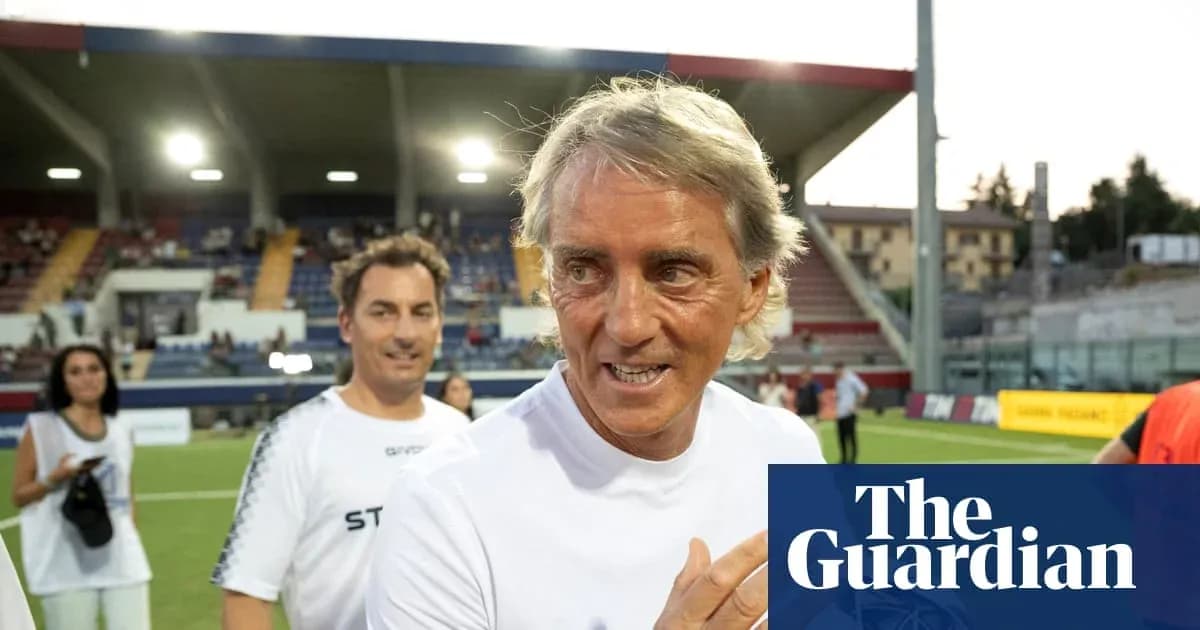
Roberto Mancini is back in charge of Italy. Again.
The Italian Football Federation president, Giovanni Malagò, confirmed on Tuesday that Mancini has agreed to return as head coach, with Claudio Ranieri stepping in as technical director in a sweeping reset at the top of the Azzurri.
Mancini replaces Gennaro Gattuso, who walked away in April after Italy failed to qualify for a third consecutive World Cup. For a nation that once measured itself by its presence on the biggest stage, the latest failure cut deep. The response is to rewind to a man who, not so long ago, had Italy back on top of Europe.
From Wembley glory to World Cup despair
Mancini’s second coming follows a turbulent first spell that ran from 2018 to 2023. He inherited a broken side after the 2018 World Cup fiasco and rebuilt it into a slick, fearless team that swept through Euro 2020, culminating in that unforgettable night at Wembley.
Italy outlasted England on penalties in the Euro 2021 final, lifting the European Championship with a side that seemed to have rediscovered its soul. Mancini’s blend of possession football, tactical discipline and emotional unity made him a national hero.
Then the momentum snapped.
Italy crashed out of the race for the 2022 World Cup and stumbled into Euro 2024 qualifying with a slow, unconvincing start. The same coach who had turned the team into a juggernaut suddenly found himself unable to drag it over the line when it mattered most.
Across his first tenure, Mancini took charge of 58 matches. The numbers tell a story of renewal and regression, of a high peak and a sharp drop that ultimately led to his departure.
A coach with scars — and silverware
Mancini does not return as a romantic choice. He returns as a proven operator with a heavy résumé and a few scars.
At club level, he has managed Inter, Fiorentina and Manchester City, among others. His three-year spell in England brought City their first Premier League title in 2011–12, a landmark triumph that shifted the balance of power in Manchester and underlined his ability to deliver under intense pressure.
The FIGC now leans on that experience again. Malagò left no room for doubt.
“Mancini is the coach,” he said on Tuesday. “I believed that the best person to become head coach was Roberto Mancini.”
The message is clear: this is not an experiment. It is a bet on familiarity, on a coach who knows Coverciano, knows the players, and knows the scale of the crisis.
Ranieri steps in, Maldini walks out
While Mancini returns to the dugout, Claudio Ranieri takes on the role of technical director, adding another heavyweight to the federation’s new structure. Ranieri, a veteran of dugouts across Europe, steps into a job vacated in dramatic fashion.
Former FIGC technical director Paolo Maldini and his adviser, Leonardo, resigned on Monday. Their exits came after Andrea Pirlo’s proposed appointment as head coach was blocked due to the former midfielder’s ties to a Russian betting firm.
The fallout was immediate. A legend in Maldini walking away, a high-profile project scrapped, and a federation forced to pivot quickly.
Italy’s first choice to lead this new era had actually been Pep Guardiola, but the Manchester City manager turned down the job last month. With Guardiola out and the Pirlo plan dead, the FIGC circled back to the man who has already taken Italy to a major title.
A second act under heavy scrutiny
Mancini now returns to a job he knows too well, but in a very different landscape. The Azzurri are bruised by repeated World Cup absences, the federation has been shaken by resignations, and public patience is thin.
He has already delivered one European crown. The question this time is harsher, more unforgiving: can he restore Italy to the World Cup stage and keep them there, or will this second spell define how his legacy with the Azzurri is truly remembered?