.svg&w=384&q=75 "Naijagoal logo")
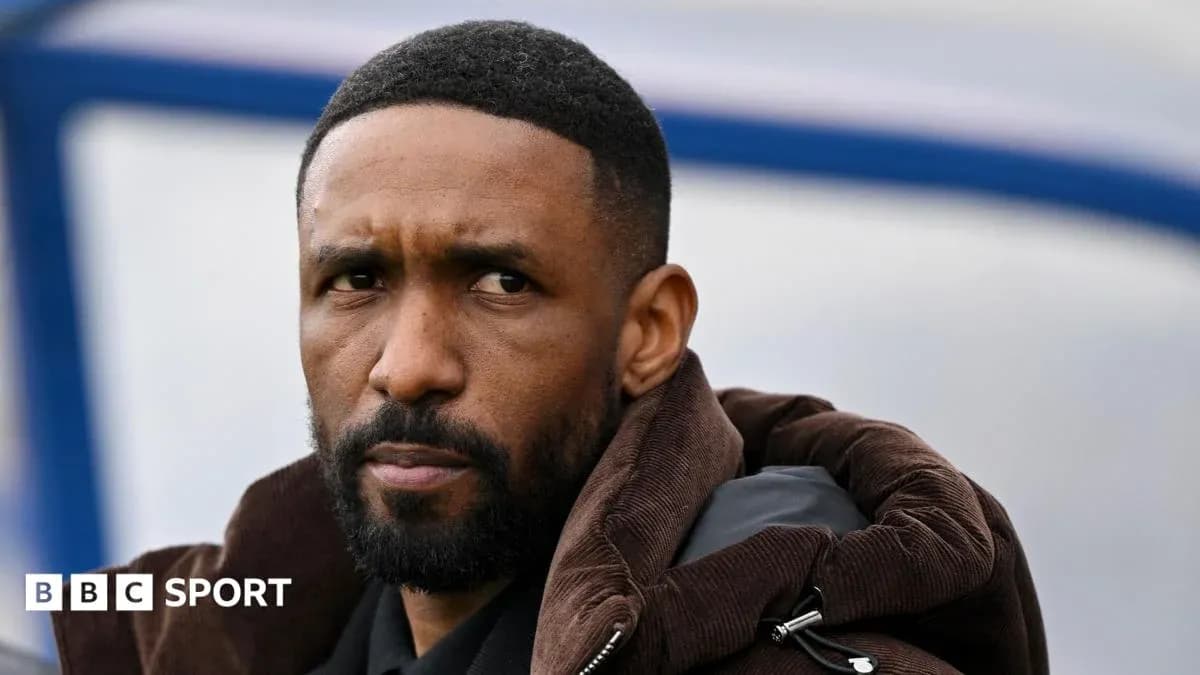

Jermain Defoe's Brief Management Tenure at Woking
Jermain Defoe’s first full step into management has lasted barely four months. At Woking, it has ended not with a bang, but with a flurry of unanswered emails, missed meetings and “growing concerns” that the club felt it could no longer ignore.
Two weeks before the new National League season kicks off at Sutton United, Woking and their high-profile manager “mutually agreed to part ways with immediate effect”. On paper, it looks abrupt. Inside the club, it had been brewing.
Enthusiasm on the surface, unease underneath
To the outside world, Defoe cut an upbeat figure. The former England striker spoke often about his excitement for the challenge, his enthusiasm for the season ahead. Jody Brown, Woking’s director of football, heard the same in private.
“Jermain's feedback was always positive, and he regularly expressed his enthusiasm and excitement for the season, both publicly and privately,” Brown said.
That is why the timing – six league games into his tenure, just as pre-season planning should be sharpening into focus – raised eyebrows. Brown understands the surprise. He has seen the speculation. Inside the club, though, the mood had shifted.
“In recent weeks there had been feedback from across the club, including players, staff and other departments, regarding growing concerns,” he explained.
Those concerns were not about Defoe’s name, his pedigree or his personality. Brown calls him “likeable”. The issues lay in the nuts and bolts of management: planning, communication, the day-to-day detail that underpins a promotion push or a survival fight in the National League.
A report requested, a silence that grew
Sensing unease, Brown moved to get clarity. He asked Defoe and assistant Paul Bracewell for a short report: squad depth, recruitment priorities, any operational problems. The kind of document that helps a club’s football department line up support and resources before a ball is kicked.
It never arrived.
Brown says he requested it more than once. Still nothing. For a club trying to build towards a new season, that silence grew louder.
So a meeting was set. Directors, manager, assistant manager, head of operations – a full review of where Woking stood and what was needed. On paper, it looked like a reset point. In reality, it became the breaking point.
“Neither Jermain nor his assistant attended that meeting or that day's training session,” Brown revealed.
For a manager still only months into his first permanent job, that no-show was seismic. It left Woking’s hierarchy with a decision to make and very little time to make it.
No public blame, but a clear line
Brown has chosen not to guess at Defoe’s motives.
“Throughout his tenure, Jermain had never communicated any serious concerns directly to me, so I am not going to speculate on his reasons,” he said.
He does, though, accept his own role. He pushed for Defoe’s appointment. He believed that a man with 305 senior goals in 763 appearances – for West Ham, Tottenham, Portsmouth, Sunderland and others – could front an “exciting new era” at the club.
Brown still respects the player. He respects the person. But he is blunt about the reality.
“As we have seen many times before, success as a player does not always translate into management and leadership.”
Defoe is far from the first big-name former striker to discover that the dugout is an entirely different game. The touchline offers no deference to past glories. It demands structure, clarity, presence. It punishes gaps in communication as ruthlessly as any centre-back once punished a loose touch.
A short, sharp lesson
For Defoe, Woking will go down as a first, bruising lesson in full-time management.
He has called it “an eye-opening managerial experience and one that will undoubtedly make me stronger for the next challenge in my career”. That next challenge will now arrive sooner than expected.
His coaching path before this had been measured. A role in Rangers’ interim staff in 2021. Work in the Spurs academy. A gradual shift from the pitch to the training ground. In 2024, he stepped away from Tottenham to chase a full-time managerial role. Woking gave him that chance.
Four months later, the club is searching again, and Defoe is back on the market – older in managerial terms, if not much more experienced.
Brown, for his part, insists he hopes Defoe succeeds “in whichever direction he follows”. The tone is sincere, but the message for Woking is clear: the club could not wait for the situation to resolve itself.
The National League is unforgiving. Seasons are often defined in the early weeks, when squads are still gelling and plans are tested under real pressure. Woking now go into that storm without the marquee name they had hoped would lead them into a new era, and with a blunt reminder that reputation alone cannot organise a pre-season, fill a recruitment board or front a difficult meeting.