.svg&w=384&q=75 "Naijagoal logo")

England’s Tactical Triumph Over Congo DR: A 2-1 Comeback Analysis
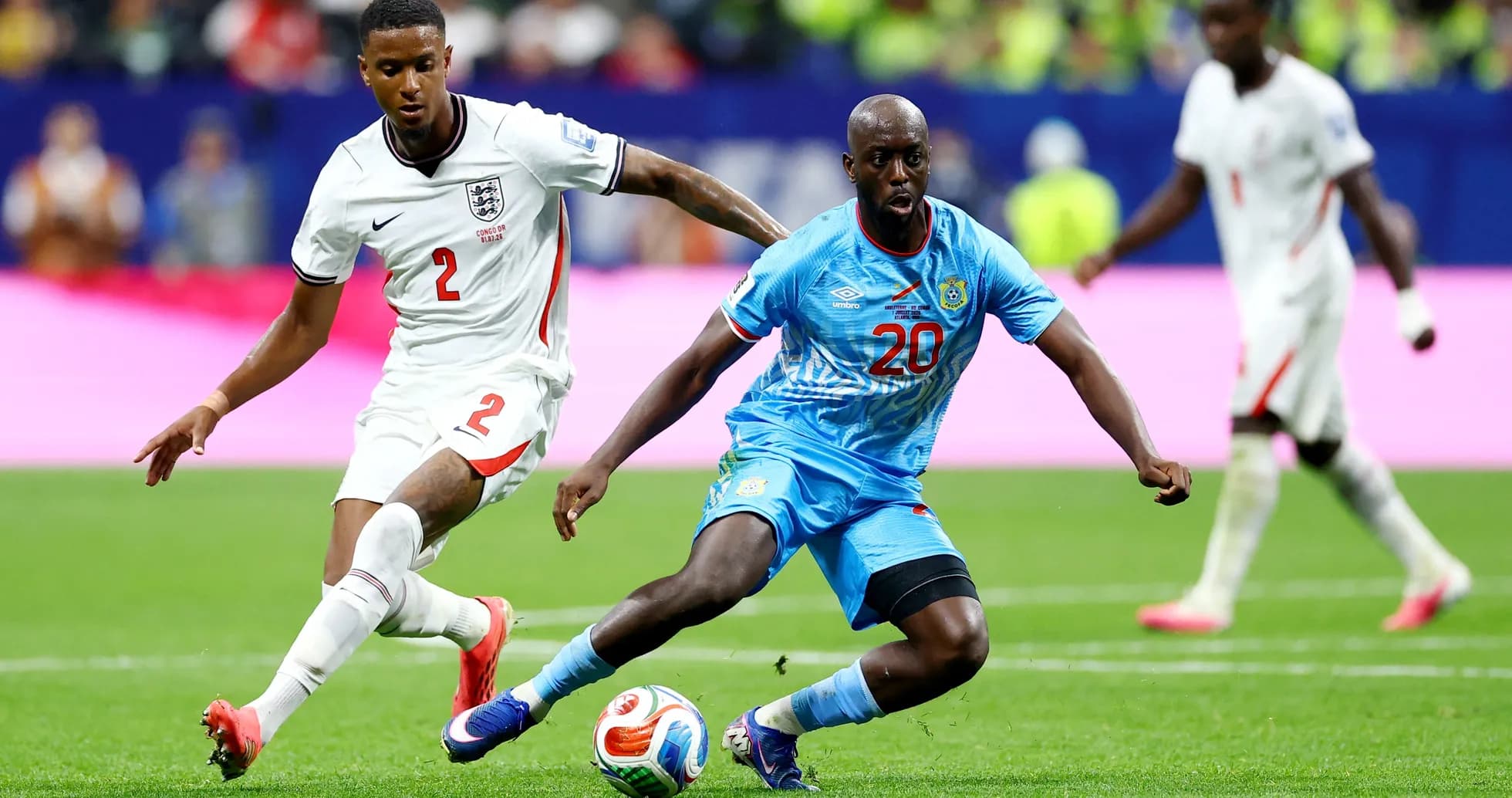
England’s 2-1 comeback win over Congo DR at Mercedes-Benz Stadium was shaped by structural control versus transition threat. Thomas Tuchel’s England imposed a 4-2-3-1 that dominated territory and the ball, while Sebastien Desabre’s Congo DR used a compact 4-3-3 geared towards early vertical punches and then deep protection of their lead.
England’s shape was textbook Tuchel: Jordan Pickford (England) behind a back four of Djed Spence, Ezri Konsa, Marc Guéhi and Nico O’Reilly, with Declan Rice and Elliot Anderson as the double pivot. Ahead, Noni Madueke and Marcus Rashford held the flanks, Jude Bellingham operated as a free 10, and Harry Kane was the reference point. The 60% possession and 517 passes, with 468 accurate (91%), underline how England built patiently from the back, often using Rice to drop between centre-backs to escape Congo DR’s first pressing line.
Congo DR’s 4-3-3 was more conservative in practice. Lionel Mpasi Nzau (Congo DR) was protected by a back four of Aaron Wan-Bissaka, Chancel Mbemba, Axel Tuanzebe and Arthur Masuaku. In midfield, Ngal’ayel Mukau, Samuel Moutoussamy and Noah Sadiki formed a hard-working trio, while Nathanaël Mbuku and Brian Cipenga flanked Yoane Wissa. Out of possession, the wingers dropped to create a 4-5-1, with Wissa left high to attack the space behind England’s advanced full-backs.
First Half
The opening goal on 7 minutes, Cipenga finishing from a Mbemba assist, came straight from Congo DR’s game plan: quick, vertical use of the ball once they broke England’s first line. With only 7 total shots and just 2 on target all game, their attacking strategy was about efficiency rather than volume. The 0.8 xG figure reflects a low number of entries into England’s box (only 2 shots inside the box), but one of those was converted.
After the early shock, England settled into a clear attacking pattern. With Congo DR’s wingers tucked in, England’s full-backs became key width providers. Spence pushed high on the right, allowing Madueke to drift into half-spaces, while O’Reilly advanced more cautiously on the left with Rashford often moving inside. Bellingham repeatedly looked to receive between Congo DR’s midfield and defence, dragging markers out and creating pockets for Kane to drop into.
Shot Profile
The shot profile shows how England pinned Congo DR back: 16 total shots, 13 from inside the box, and 7 on goal. This wasn’t speculative shooting from distance; it was sustained occupation of the penalty area. The 2.04 xG aligns closely with the final tally of two goals, suggesting England created chances at roughly the rate the scoreline implies, rather than significantly over- or under-performing.
Defensively, England’s control was reflected in how little Pickford (England) had to do: just 1 goalkeeper save. Congo DR’s transitions were sporadic, and when they did break, Konsa and Guéhi generally defended high and aggressively, stepping into midfield to intercept. The relatively low foul count for England (10) indicates they were not forced into persistent emergency defending; instead, their counter-press after losing possession limited Congo DR’s ability to run in behind.
Congo DR’s defensive effort was more about volume and compactness. Their 12 fouls and single yellow card for Sadiki show a willingness to disrupt England’s rhythm, especially around the central lanes where Bellingham and Kane combined. Mpasi Nzau (Congo DR) was far busier than his opposite number, making 5 saves as England rained in crosses and cut-backs. The 5 saves against 7 shots on target underscore his importance in keeping Congo DR in front for so long.
Tactical Changes
The goals and substitutions around the hour mark reveal the tactical turning point. Tuchel’s first changes at 60 minutes were attacking: Bukayo Saka (IN) came on for Noni Madueke (OUT), and Anthony Gordon (IN) came on for Marcus Rashford (OUT). This re-energised both flanks. Saka offered more direct 1v1 threat and inside runs, while Gordon’s diagonal movements from the left immediately troubled Congo DR’s right side.
Desabre responded at 64 minutes with Meschak Elia (IN) for Nathanaël Mbuku (OUT), a like-for-like move that kept the 4-3-3 but aimed to freshen the counter-attacking threat. At 71 minutes, Eberechi Eze (IN) came on for Djed Spence (OUT), a bold shift that effectively turned England into a back three in possession, with O’Reilly tucking in and Eze joining Bellingham between the lines. This overload in central attacking zones was decisive.
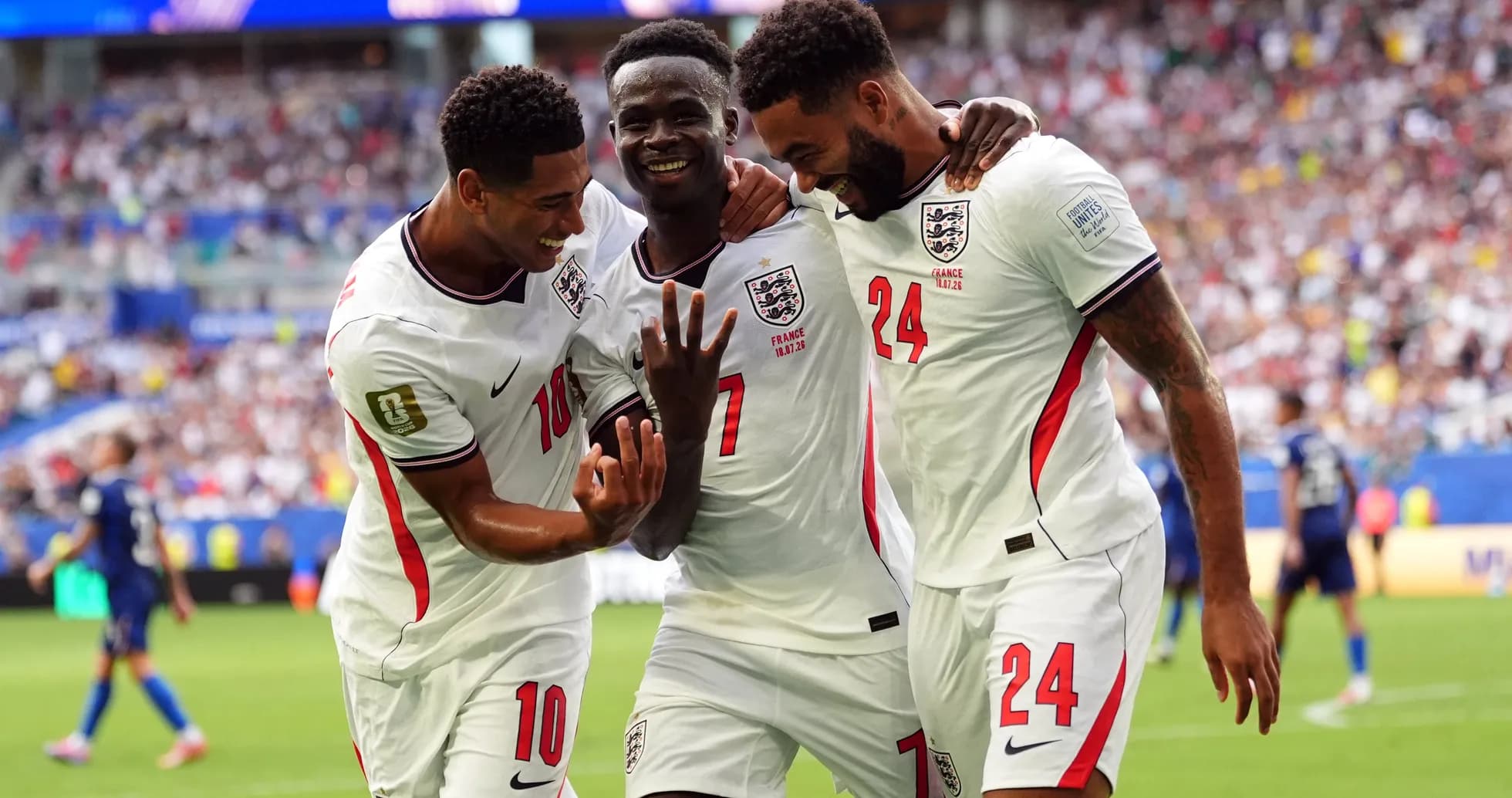
From that point, England’s positional play overwhelmed Congo DR’s midfield three. Gordon became the key connector, and his understanding with Kane was immediate: both England goals (75’ and 86’) came from Gordon assists to Kane. The first was the product of sustained pressure and second-phase possession around the box; the second reflected Congo DR’s fatigue and England’s ability to repeatedly find Kane between centre-backs.
Late Substitutions
Congo DR’s late substitutions – Théo Bongonda (IN) for Brian Cipenga (OUT) and Edo Kayembe (IN) for Ngal’ayel Mukau (OUT) at 76 minutes, followed by Fiston Mayele (IN) for Samuel Moutoussamy (OUT) and Joris Kayembe (IN) for Arthur Masuaku (OUT) at 89 minutes – were attempts to regain some attacking thrust and fresh legs, but they came against a tide of English possession. By then, England were managing the game, with John Stones (IN) replacing Declan Rice (OUT) at 90 minutes to add aerial security and calm in the closing stages.
Statistical Analysis
Statistically, the story is coherent: England’s 60% possession, higher shot volume and superior xG mirror what the eye test suggests – a controlled, territorially dominant display that eventually broke down a resilient but increasingly deep Congo DR block. Congo DR’s 365 passes with 299 accurate (82%) show they could circulate the ball when settled, but their 4 offsides and low shots inside the box underline how often their attacks stalled before reaching truly dangerous zones.
Both goalkeepers’ “goals prevented” figures at -0.04 hint that neither significantly outperformed or underperformed expectation in pure shot-stopping terms. The difference lay in volume: Mpasi Nzau (Congo DR) was exposed to far more pressure than Pickford (England). In tactical terms, England’s structural superiority, bench impact, and central overloads around Bellingham, Eze and Kane ultimately translated their statistical dominance into a deserved 2-1 progression in this Round of 32 tie.