.svg&w=384&q=75 "Naijagoal logo")


England vs Congo DR: Round of 32 Match Analysis
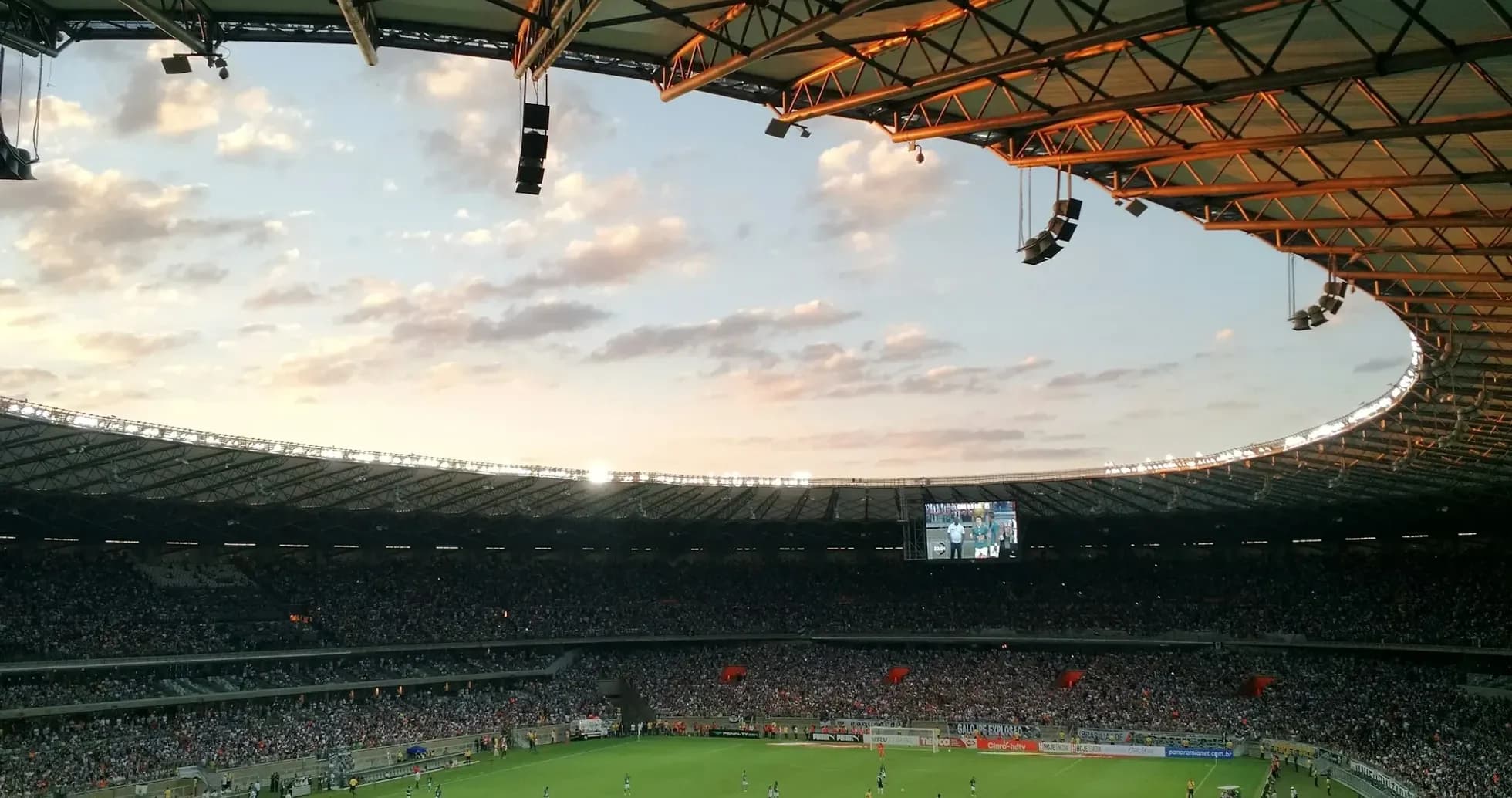
The Round of 32 in Atlanta felt less like the first knockout step and more like an early final: England, group winners with authority, against a Congo DR side whose journey from a tight group had already hardened them. Under the closed roof of Mercedes-Benz Stadium, the narrative swung from shock to inevitability, ending 2–1 to England but only after Congo DR had asked serious questions of a heavily favoured squad.
England's Profile
Heading into this game, England’s seasonal profile in the World Cup was that of a controlled heavyweight. Overall they had played 4 matches, winning 3 and drawing 1, with no defeats. Their attack was ruthlessly consistent: 8 goals in total, split evenly between home and away contexts, for an overall average of 2.0 goals per match. Defensively, they had conceded just 3 overall, at an average of 0.8 per match, and they carried 2 clean sheets into Atlanta. A goal difference of 5 (8 scored, 3 conceded) framed them as one of the tournament’s most balanced outfits.
Congo DR's Profile
Congo DR arrived with a more volatile profile. Across 4 matches overall, they had 1 win, 1 draw and 2 defeats, scoring 5 and conceding 5 for a goal difference of 0. At home they had been explosive, scoring 3 and conceding 1, but on their travels they were far more restricted, with only 2 goals scored and 4 conceded. Their away average of 0.7 goals for and 1.3 against suggested that sustaining pressure over 90 minutes against elite opposition might be their fault line.
Tactical Approaches
On the tactical board, Thomas Tuchel doubled down on England’s tournament identity with his preferred 4-2-3-1. J. Pickford sat behind a back four of D. Spence, E. Konsa, M. Guehi and N. O’Reilly, a line designed for aggression in the wide channels and calm distribution through the centre-backs. In front, the double pivot of D. Rice and E. Anderson was a clear statement: one destroyer-organiser in Rice, one more connective midfielder in Anderson, tasked with knitting phases and stepping beyond the first line of pressure.
Ahead of them, the trio of N. Madueke, J. Bellingham and M. Rashford provided three different kinds of threat: Madueke as the one-on-one dribbler from the right, Bellingham as the tempo-breaking conductor between the lines, Rashford as the vertical runner from the left. H. Kane, already with 5 goals in 4 appearances and a 7.68 average rating in the competition, led the line as the reference point around whom everything else orbited. His 14 shots with 9 on target underlined a striker arriving in the knockouts in full rhythm.
Sebastien Desabre responded with a 4-3-3 for Congo DR, a shape that could flatten into a 4-5-1 without the ball. L. Mpasi-Nzau was shielded by a back four of A. Wan-Bissaka, C. Mbemba, A. Tuanzebe and A. Masuaku – a unit built more for duels and recovery than for expansive build-up. In midfield, N. Mukau, S. Moutoussamy and N. Sadiki formed a compact trio. Sadiki, who had already collected 2 yellow cards in the tournament while also making 9 tackles, 1 block and 2 interceptions, was the clear enforcer: the man tasked with stepping into Bellingham’s zone and making it hostile.
Up front, the threat was real. Y. Wissa, with 3 goals in 4 appearances and a 7.03 rating, started centrally, flanked by N. Mbuku and B. Cipenga. Wissa’s 10 shots and 9 fouls drawn told the story of a forward who lives on the edge of contact, capable of turning a half-chance or a penalty-box tangle into a decisive moment. England’s centre-backs knew that one mistimed challenge could tilt the tie.
Match Dynamics
The early narrative belonged to Congo DR. Their 4-3-3 pressed high in the first phase, forcing England’s build-up towards the flanks and isolating O’Reilly and Spence under pressure. With England’s yellow cards in this tournament previously clustered between 16–60 minutes, this was exactly the kind of early-chaos environment that could have drawn a rash challenge. Instead, Congo DR found their breakthrough before the interval, carrying a 1–0 lead into half-time.
From there, the match became a test of England’s structural maturity. Their season data had suggested a side comfortable in adversity: they had failed to score only once overall, and their biggest home win of 4–2 showed they could trade punches if needed. The double pivot began to assert itself; Rice screened transitions, Anderson pushed higher to support Bellingham, and the wide players started to pin Congo DR’s full-backs deeper.
The bench options told their own tactical story. Even with R. James and J. Quansah ruled out through injury, Tuchel could still turn to B. Saka, A. Gordon, O. Watkins, I. Toney and E. Eze – a bench loaded with different profiles of final-third threat. Saka, already with 2 assists in the tournament from just 135 minutes, represented a particularly sharp late-game weapon, his 7 successful dribbles and 80% pass accuracy ideal for breaking down a tiring block.
Congo DR’s depth was more functional than transformative. C. Bakambu and S. Banza offered alternative reference points up front, while G. Kakuta and T. Bongonda could add guile between the lines. But with no clean sheets at all this campaign and an away record of 4 goals conceded in 3 matches, the question was always whether they could survive 90 minutes of sustained English pressure.
In the end, they could not. England’s 2–1 turnaround in regular time felt like a statistical correction as much as a dramatic twist. A side averaging 2.0 goals per match overall eventually hit their mark; a defence that had conceded just 0.8 per match overall limited Congo DR to the single strike. Kane’s presence, Bellingham’s control and the security of Rice in front of a settled back four gradually suffocated the upset.
Following this result, the patterns hold: England advance looking like a team whose numbers and narrative are aligned – efficient, resilient, and with enough attacking depth to change games from the bench. Congo DR exit having proved they can hurt elite opponents, but their inability to produce a clean sheet, especially on their travels, ultimately defined their ceiling at this World Cup.