.svg&w=384&q=75 "Naijagoal logo")

Bradley Barcola: The Rising Star of PSG and Top Summer Target
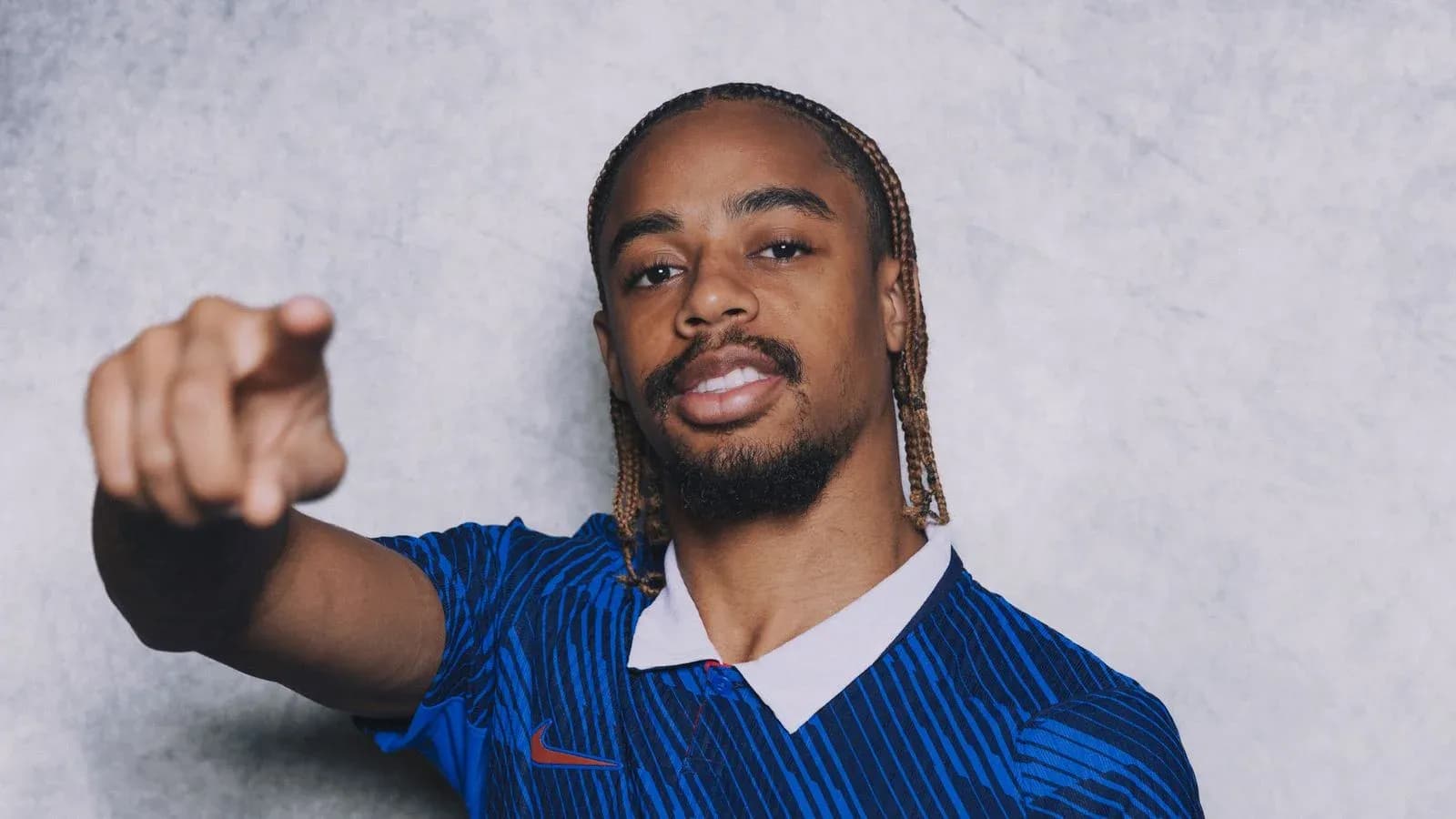
Bradley Barcola is on the verge of becoming the most expensive signing of the summer, with Liverpool and Arsenal circling. On paper, he is a rotation forward at Paris Saint-Germain, a 23-year-old who has had to live with the role of Champions League final substitute in back-to-back triumphs.
On the pitch, he looks like something else entirely: a star waiting for a team to be built around him.
From fringe to focal point
Barcola’s story does not begin like that of a prodigy. There was no Mbappé-style fast track, no breathless youth headlines. At Lyon, he was a name on the fringes of Laurent Blanc’s first team, close enough to see the lights but not yet under them.
Then one decision changed his career.
Karl Toko Ekambi wanted out. A loan was lined up, the kind of routine squad move that usually passes without a second thought. But for Jean-François Vulliez, then at Lyon and now a development coach at PSG, it became the sliding-doors moment.
“A club in Switzerland was interested because he was not playing for the first team,” Vulliez recalled. Toko Ekambi’s desire to leave forced a rethink. Blanc halted the move. Lyon might need Bradley.
They did. Toko Ekambi left. One game later, an injury opened a space and Barcola stepped into it. A squad player suddenly had a runway.
What followed was a burst that made Europe take notice: five goals in nine games in early 2023. He then impressed at the European Under-21 Championship that summer. By the time the tournament ended, Lyon still technically had him, but as Vulliez put it, “His body was in Lyon but his head was in Paris.”
The transfer saga dragged, but the outcome felt inevitable. PSG got their man.
The late bloomer who learned to think first
Ask those who worked with Barcola in Lyon’s academy and you do not hear tales of a boy wonder tearing through age groups. You hear the opposite.
“He was a normal kid,” Vulliez said. No playing above his age category. No leapfrogging stages. No France youth caps. The maturation, as he described it, was “a normal process.”
That normality is what makes his current level so striking. This was not a teenager overpowering opponents. Physically, he was not ready to dominate. That limitation forced him to survive another way.
He had to learn.
Barcola developed the habit of scanning the pitch, constantly checking his surroundings, taking information and using space. He already had speed. Intelligence turned it into a weapon. When the body caught up – the muscle, the power – those foundations turned him into a complete modern forward.
“It is a combination of these tactical abilities, technical abilities and physical abilities,” Vulliez said. The order of that list matters. The brain came first.
Inside Lyon, patience was a deliberate choice. Coaches knew the technical base was there. They waited for the psychological and physical transformation. Once it arrived, progress accelerated. The five-in-nine run was not a fluke; it was a player whose pieces had finally clicked together.
PSG polish – and a Champions League sheen
Three seasons at PSG have done the rest. Thirteen trophies. Over 150 appearances. Thirty-nine goals. Two Champions League medals, even if both finals began for him on the bench.
Luis Enrique has sharpened the edges of his game. The raw runner from Lyon now manages risk. He keeps the ball better, picks his moments to attack, understands when to drive at defenders and when to recycle. The chaos has been refined.
Barcola operates mostly from the left, but his instincts are those of a striker. He played up front at Lyon until 17, and you can still see it in the way he moves. From the flank, he loves to cut inside and whip shots towards the far corner with his stronger foot. These are striker’s habits in a winger’s starting position.
Clubs at the top level pay a premium for wide players who bring end product, not just dribbles. Barcola fits that profile. He scores and he creates. His shot volume last season placed him among the top 10 players in Ligue 1 per 90 minutes, a striking figure for someone nominally stationed out wide.
Playing wide does not keep him on the touchline. “He is very clever with his runs inside,” Vulliez said. The timing of those movements – when to slip between centre-backs, when to dart beyond the last line, when to drop between the lines – is where his background as a striker resurfaces.
Because he has that feel, coaches can use him in different zones. Ask him to stretch play, he will. Ask him to arrive late in the box, he can do that too. “With Bradley in your team, you need to use this capacity to come between the lines or run from deep, because it is his strength,” Vulliez added.
Intelligence you cannot teach
Vulliez is adamant about one thing: what separates Barcola is not a trick or a sprint time. It is his football brain.
“We never had a problem with him at the academy because he is intelligent and listens,” he said. For coaches, that changes everything. You can move him around the front line. You can tweak systems. He will understand and adapt.
“I do not think you can transform a player after the age of 17 because if the player does not have the intelligence at that age then they will never have it,” Vulliez argued. That is why those early years of scanning, of solving problems without the crutch of superior strength, matter so much now.
Barcola has that intelligence. That is why clubs believe they can still shape him.
At PSG, he has already shown his flexibility. Left wing is his home, but he has operated on the right and has the pace to hit the byline when asked. In last season’s Champions League, he ranked among the top 10 fastest players in the competition. If a coach wants pure “knock and run” in behind, he can provide it.
The version of Barcola now at PSG is a long way from the quiet academy prospect at Lyon. “Nobody could have imagined this,” Vulliez admitted. Not this quickly. Not this high.
The unfinished forward
For all the progress, there is still work to do. His finishing can drift. Chances come, but the final touch does not always match the build-up. Luis Enrique has pushed him to become more ruthless. The message is clear: the numbers must rise.
History offers encouragement. “There are many very good players who improved their finishing when they became more mature,” Vulliez said. Barcola has time, and crucially, he has the mindset to respond to that “push” that every young player needs.
Right now, the left wing looks like his best position. The angle suits his right foot, the spaces suit his runs. Yet Vulliez is not convinced that is where the story ends. “Maybe the left wing is the better position for him right now but I am curious to see how he develops because I believe he is able to become a No 9.”
That possibility is part of what excites the clubs circling him. They are not just buying a winger. They are buying a potential future centre-forward, a player who could eventually lead a line or at the very least operate across it.
And then there is the pace. The raw, game-breaking speed that ranked him among the Champions League’s quickest last season. Add that to his movement, his improving decision-making, his ability to both score and assist, and you begin to see why the fee keeps climbing.
Liverpool and Arsenal are not chasing a finished article. They are chasing a trajectory.
Barcola has already collected medals, goals and trophies in Paris. He has already survived the slow burn of a late developer and the pressure of a superclub. The next question, the one now driving his price into the stratosphere, is simple.
If this is what Bradley Barcola looks like before his peak, what happens when he finally reaches it?