.svg&w=384&q=75 "Naijagoal logo")

Premier League Insights: Hull's Surprise Start and Chelsea's Chaos
The Premier League table is barely out of the wrapper and already the divide is clear. Some clubs look like they’ve worked out who they are. Others are throwing money at a mirror and hoping the reflection changes.
Right now, Spurs and Liverpool sit firmly in the second camp. Hull, Chelsea and a quietly blossoming James McAtee are in the first.
Hull rip up the script
Promoted clubs aren’t meant to look like this. Hull were supposed to be another punchline, their results lazily measured against Derby 2007/08 until they cleared that bar and still slipped away with a shrug.
Instead, they’ve come flying out of the blocks.
Hull are only the fourth promoted side ever to win their first two Premier League games. Two of the previous three stayed up. The other one? Hull themselves in 2016/17, which slightly spoils the omen, but doesn’t change the feeling: this is a serious operation.
Sergej Jakirovic hasn’t tried to be clever. He’s gone basic, and it’s working. A solid keeper. Three big, aggressive centre-halves in a back five. A disciplined midfield. Real width. Clear patterns. Repetition. Structure. Organisation. Teamwork.
It’s not glamorous, but it’s coherent. And with more attacking firepower expected before the deadline, Hull look built to hang around in games and pounce on moments – on the break, from set pieces, in those scrappy phases where promoted clubs usually get bullied.
They were meant to be cannon fodder. They’ve started like a team that intends to be anything but.
Chelsea lean into chaos – and enjoy it
Xabi Alonso has turned Chelsea into something Kevin Keegan might recognise more than Rafael Benitez or Jose Mourinho ever would. “We’ll score one more than you” isn’t a philosophy he picked up in those old Liverpool and Chelsea dressing rooms, but it’s where he’s landed.
Chelsea spent last season terrified of conceding twice. Across the whole campaign, they won just one league game when they let in two or more. This season? They’ve already pulled out 3-2 and 4-3 wins, flirting with implosion each time before remembering how to manage a game just in time.
The attack is the reason. It’s fluid, interchangeable, unpredictable. It looks like it will create and convert more often than not. The issue is whether the back half of the team can catch up.
That’s the intriguing part: the main defensive problems feel solvable simply by time and familiarity. Emi Martinez needs to bed in with a new back line. Romeo Lavia needs to grow into a role where he’s not the lone senior midfielder in a pivot.
Right now, Chelsea feel like Arsenal in mid-process four years ago – thrilling, flawed, going in a direction that might be very dangerous if it all clicks. The trip to the Emirates next week will say a lot about how real this is. Recent history warns against coronating them off the back of one big result against Mikel Arteta’s side, but it’s impossible to ignore the energy.
The one thing we still haven’t seen? Chelsea chasing a game. Against Fulham and Brighton they always had a cushion. When that disappears, we’ll find out what this team really is.
Brighton’s midfield factory and a Rashford reset
Every time Brighton sign an obscure midfielder, the rest of the division should probably just assume they’ve missed something. Malick Yalcouye is the latest reminder that if Brighton are in for a player you’ve never heard of, it’s already too late.
At Manchester United, the story is more familiar. Marcus Rashford is back in another cycle of redemption.
“Marcus has been part of a rough ride for Manchester United, and when that happens and the team doesn’t deliver, players get dug out and he was one of them at that stage,” said Harry Maguire. “I’ve been through it. Everyone’s been through it at this club.”
Maguire knows the drill. He’s been the lightning rod, the ex-captain who somehow survived managers and transfer plans designed to move on from him. He’s watched Luke Shaw, Kobbie Mainoo and even Bruno Fernandes fight through storms that felt terminal.
Rashford’s disconnect under Ruben Amorim looked deeper than most. The bond with his boyhood club felt frayed beyond repair. Yet in football, sometimes a single track back and tackle is enough to start rewiring the narrative. The road back is long, but the first step rarely is.
City embrace Cherki’s chaos
Manchester City didn’t pay top dollar for Rayan Cherki, but the numbers around him are already making a mockery of the market.
Savio, Yoane Wissa, Jamie Gittens, Anthony Elanga, Brennan Johnson, Kevin, Emile Smith Rowe, Dan Ndoye, Dilane Bakwa – all forwards who joined Premier League clubs in the last year for more than City spent on Cherki. He already has more combined goals and assists in 109 minutes this season than each of those players managed across the whole of 2025/26.
He’s been described as “chaotic” and not exactly in tune with Enzo Maresca’s safe zones. City, at this stage of their evolution, might need exactly that: a bit of disorder around all that structure.
McAtee, the unlikely heir
James McAtee arrived at Nottingham Forest as part of a patchwork solution. He was supposed to help plug the gaps left by Anthony Elanga and, before his golden handshake with Mr. Marinakis, Morgan Gibbs-White. Instead, he might be nudging into the succession plan for a £116m midfielder just a year later.
Oliver Glasner has taken a different route to the usual Premier League reflex of “replace star, buy star”. “Decided it’s not target No. 1 to replace Elliot because maybe we can do it from our own squad and spend the money on other positions,” he said.
McAtee, signed from Manchester City in 2025, suddenly found his path cleared when Anderson went the other way in 2026. Two games into his second season at the City Ground, Glasner has already given him 164 Premier League minutes – more than any of his previous four Forest managers combined, and almost as many as Nuno Espirito Santo (50), Ange Postecoglou (77) and Sean Dyche (43) put together.
The idea is simple and smart: drop an Etihad academy graduate into a slightly deeper role, give him more of the ball, trust his brain. At Anfield, if you squinted and maybe imagined an unlikely backflip, McAtee carried more than a hint of Adam Wharton.
Forest might have stumbled onto something they used to spend fortunes trying to buy.
Everton’s civil war and Moyes’ old trick
Everton have reverted to type. Harmony never really suited them. The uneasy period where everyone seemed broadly aligned has been sacrificed at the £40m altar of Harrison Armstrong, and the familiar internal friction is back.
They will be one of the most fascinating clubs to watch as the window closes. In a matter of weeks, an attack that could have featured Dewsbury Hall, Ndiaye, Barry and George might morph into one built around Richarlison and Balogun, with Jack Grealish drifting between the lines. That kind of swing doesn’t happen quietly.
Yet amid the noise, one constant remains: a David Moyes team that knows how to grind. Everton sitting in the European places early in the season has become one of the Premier League’s most enduring traditions. This version looks ready to honour it, even as everything around the manager threatens to cave in.
Brentford, Leeds and Le Bris quietly get on with it
Some clubs don’t need a narrative. Brentford are simply a very good team run by a very good manager, and they keep proving it.
Leeds have adopted a simple mantra: if you can’t win, don’t lose. One defeat in 11 games, and even that came on the final day at already-relegated West Ham in a match that barely counted for anything. It’s not spectacular, but it’s sustainable.
Regis Le Bris, meanwhile, has already ticked off one quirky milestone: the first manager this season whose substitutes combined to assist and score a Premier League goal. A small detail, but a telling one. His bench is involved, and his changes matter.
Spurs: money can’t buy mentality
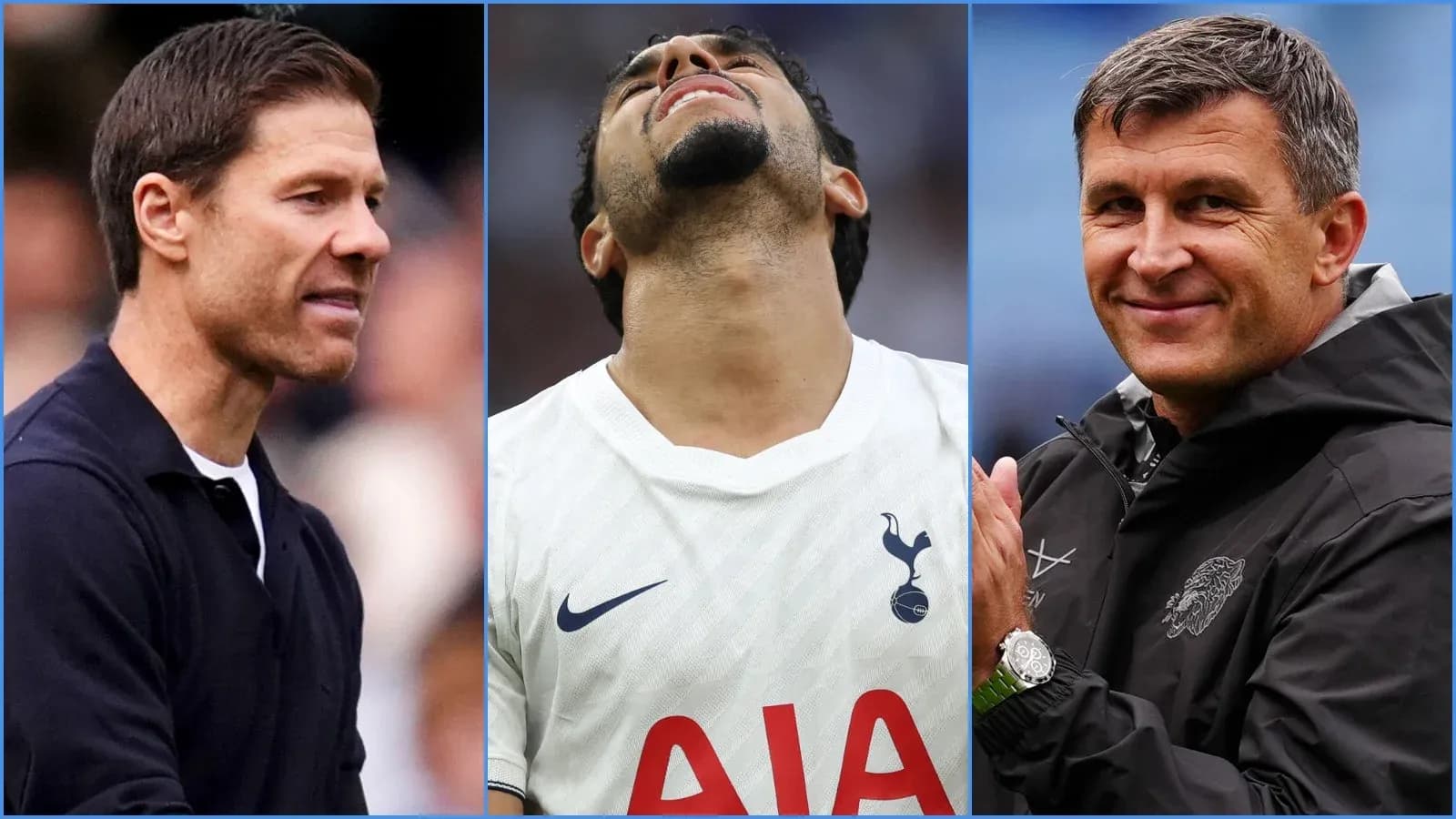
Roberto De Zerbi cut straight to it after Spurs’ latest stumble: “You can’t find the right mentality in the transfer market.”
For a club about to push the record for most money spent in a single window to the brink, that stings.
“It’s the biggest problem, it’s the biggest challenge and the biggest target is to find the right mentality,” he said. “After the goal we conceded, I think we lost the confidence. The reaction was not good enough, not the reaction I want to see on the pitch… the solution is not to put down the head, but to react, because we had 20 minutes again to score one, two or maybe three goals.”
Harsh? Maybe. De Zerbi has had four months to address an issue he identified on arrival. But Spurs have spent enormous sums, and against Newcastle they started five new signings, including two Premier League champions and a Serie A winner.
This shouldn’t be the least prepared team in the division. Not at home. Not against a side they stripped of a £92.5m midfielder and who only appointed their manager a few weeks ago.
The money is there. The medals are there. The mentality, once again, is not.
Palace run out of gas
Crystal Palace look like a team stuck between eras and running on fumes.
Pierre Sage admitted he was “frustrated” that his players “gave up a little” and couldn’t “do it for the duration of the game” against Everton. Glasner had already flagged the split personality: Palace “played well during the first half and it’s not normal that we played as we did in the second half” in his first match.
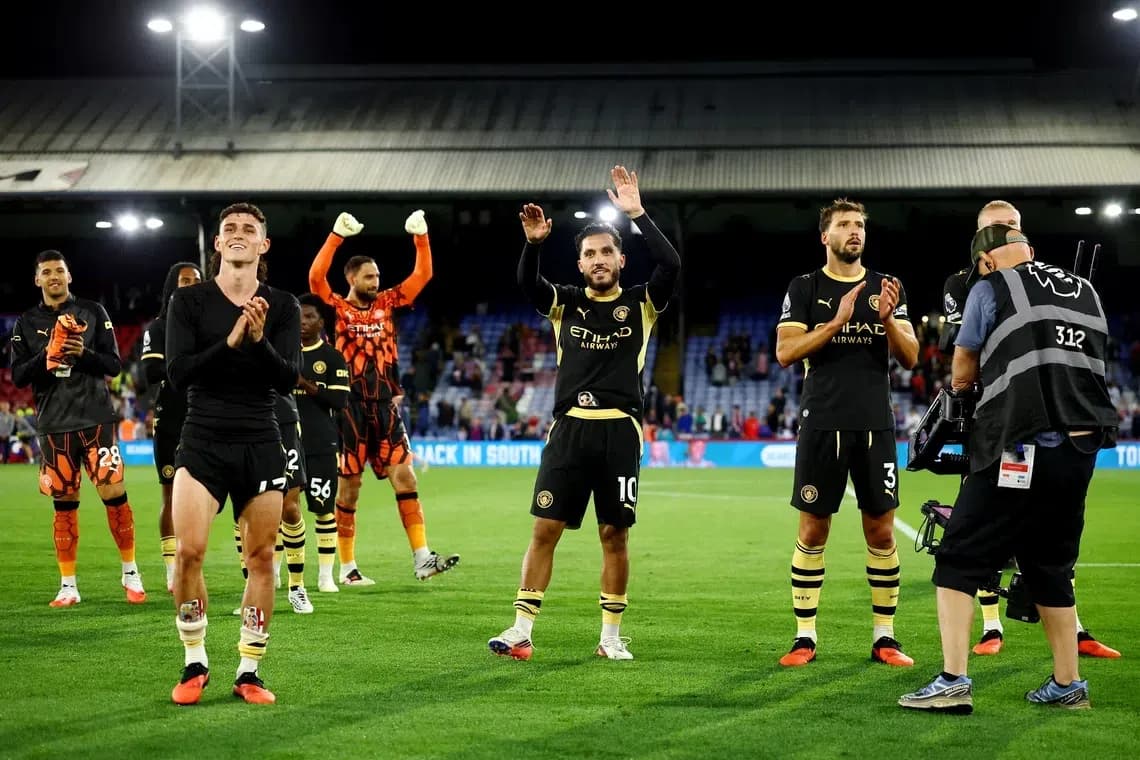
The pattern held again. They lasted about an hour before fading against Manchester City. On that evidence, Fulham are in for an intense 75-minute test next week, and then something altogether different.
The context isn’t kind. Palace sent a strong contingent to the World Cup, have been hit by UEFA SCR complications and are coming to the end of a cycle that’s seen key players and their manager depart. No Premier League club has had a smoother summer, but Palace might have had the roughest.
Glasner joked he would “have a pint of beer and celebrate the transfer window being closed”. His successor – and most of his peers – will probably raise the same glass.
Liverpool’s old question, new name
Liverpool have been here before. In January 2016, they beat Norwich in a wild game that showcased their attacking potential and defensive chaos. The question then was framed around one name: how do you solve those problems with Teixeira?
They chose not to. No mid-season fix, no panic buy. They coached, adapted, and waited for the right summer moves to lay the foundations of a dynasty.
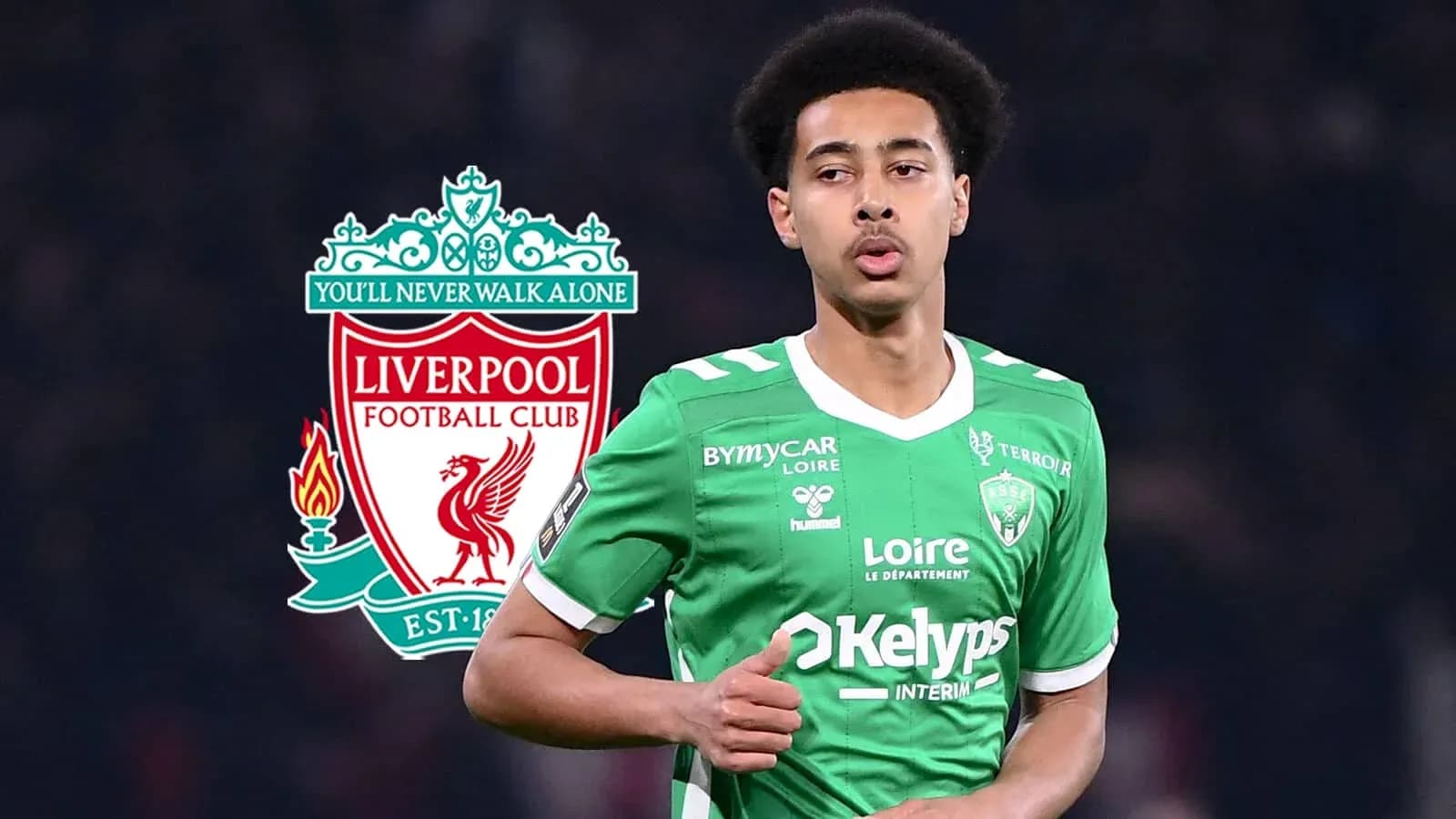
This time the name is Bradley Barcola. The comparison isn’t perfect – Barcola is a better player and a more compelling opportunity, especially if Cody Gakpo is on his way out – but the principle is familiar. One signing, however exciting, doesn’t fix a team with issues all over the pitch.
Watching Liverpool concede from a goalkeeper’s punt and then a penalty given away from a quick throw-in, only to respond with two beautifully constructed equalisers, told the story. They clearly need more before the deadline. Just not necessarily in attack. And certainly not all on one player.
Andoni Iraola needs more tools. Not another plaster for the front line.
Bournemouth’s cruel start
Bournemouth have somehow drawn both short straws of Premier League cliché in the opening fortnight: can’t defend set pieces, can’t hold a lead.
They have a single point from two games despite being ahead in the 83rd and 90th minutes. All three goals they’ve conceded have come from defenders. Both equalisers? Corners. It’s brutal. It’s also the kind of thing that can harden a team quickly, or break it just as fast.
O’Neil, Coventry and Lampard’s “details”
Gary O’Neil’s Ipswich were comfortably beaten at Old Trafford. The bigger indignity remains on his Premier League record: he is still the only manager to lose a league game to Frank Lampard since October 2022, across 19 matches. That’s a statistic no one wants on their CV.
Coventry, back in the top flight at last, look undercooked on and off the pitch. Their schedule hasn’t helped: opening away at the champions, then facing the Championship play-off winners at home. No team has had to rip up and rewrite their tactical plan so drastically between the first two games.
It gets no easier. Manchester City await next, and with Lampard talking about moving on from “The Basics” to “the details”, the concern is obvious. The basics still don’t look nailed down.
Some clubs are already building something. Others are still trying to remember how. The season will be merciless in exposing which is which.