.svg&w=384&q=75 "Naijagoal logo")

Liverpool's Transfer Issues and Villa's Chelsea Dilemma
Liverpool’s summer window was always going to be a test of the new regime. Right now, it feels more like an indictment.
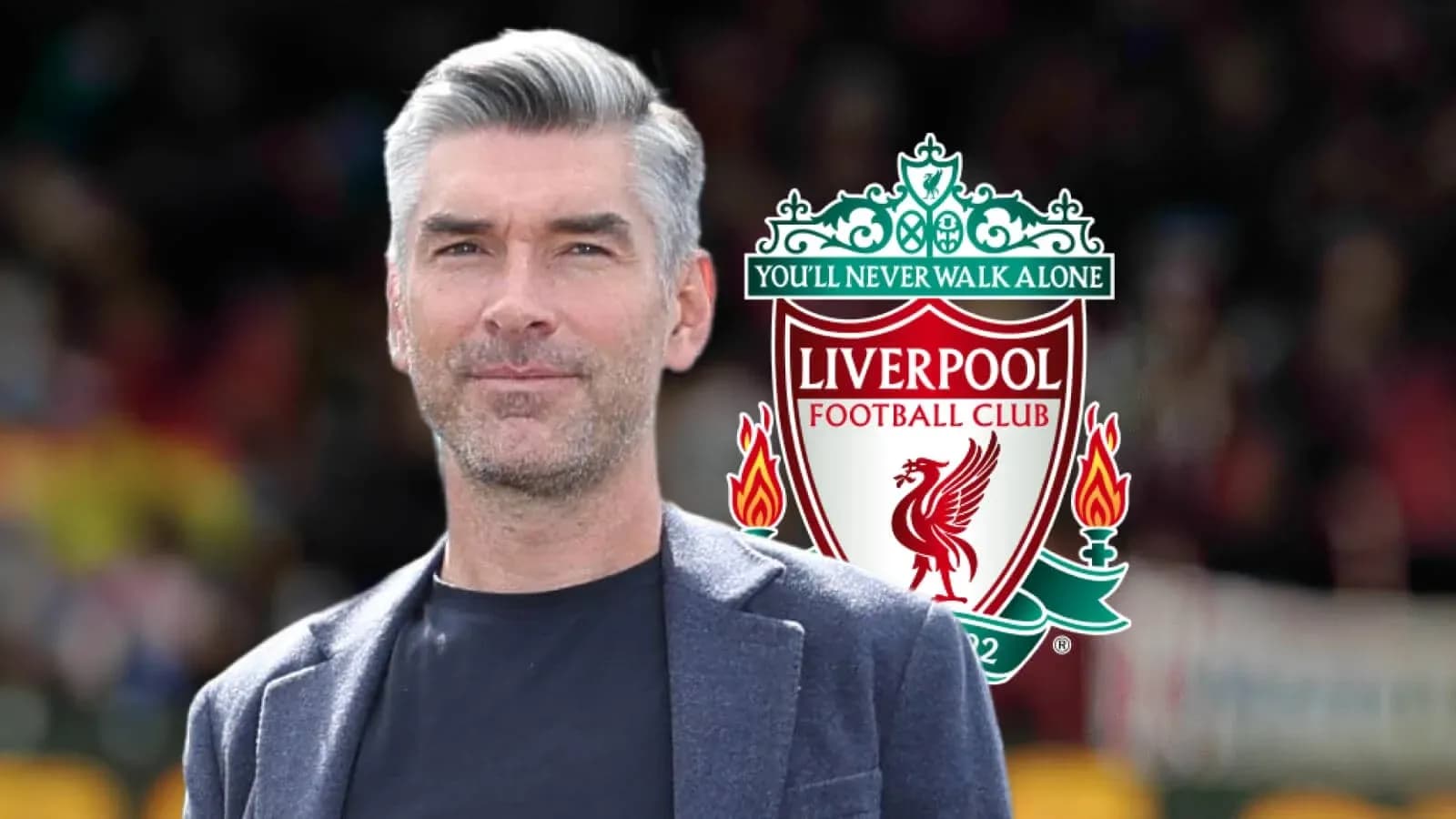
Richard Hughes has barely had time to find his seat at Anfield and already a section of the fanbase want him out of it. The frustration isn’t subtle. Liverpool, Premier League champions only a season ago, are accused of lurching from one extreme to the other in the space of 12 months.
Last year, the club threw its weight – and its wallet – around. Florian Wirtz and Jeremy Frimpong arrived as Bundesliga winners. Hugo Ekitike was prised away from Newcastle in what some supporters gleefully framed as a two-fingered statement. Then came Alexander Isak, at the time arguably the most complete centre-forward in the division. Rival fans winced. Liverpool were anointed title favourites before a ball was kicked.
Reality was less kind.
Now, with the memory of that misfire still raw, the transfer committee has swung hard in the opposite direction. Key players are being moved on without obvious replacements. Even Stefan Bajcetic has been sold. Behind the first-choice midfield three, the depth chart looks alarmingly thin. Mohamed Salah, a generational figure at Anfield, has gone, and Liverpool have had the best part of six months to prepare for that moment. They still don’t have a nailed-on successor.
Supporters can see the structural issues. They’re not subtle. The new full-backs play like wingers in possession and like afterthoughts without it. The centre-backs need a shield. Yet there is still no specialist holding midfielder. No new winger through the door. Just a carousel of names – Bradley Barcola, Yankuba Minteh, Ismaila Sarr – with little to show for months of “discussions” and “proposals”.
For some fans, that is unforgivable. They argue that anyone with a games console or a half-decent grasp of squad building can see the gaps. Ex-players, pundits, even the current captain have all talked about the need for a defensive midfielder and wide reinforcements. The view from the stands is blunt: if Hughes and his team were in any other high-paying role and repeatedly ignored the basics, they’d be sacked.
There are, of course, bright spots. Victor Muñoz is being held up as the sort of shrewd, low-pressure signing Liverpool built their recent era on – affordable, promising, and not expected to carry the club from day one. But he is the exception in a window that feels muddled and reactive.
The mood among some Liverpool supporters has shifted. The anger that once flew towards the dugout now points upstairs. One fan, who admits to having shouted at the television even during the Jürgen Klopp years, says he’ll watch this season without “glaring expectations”. If opponents slice through Liverpool’s midfield again, as Newcastle did with worrying ease, he won’t blame the coach.
The stakes are clear. Either Andoni Iraola produces something extraordinary, a season that punches through the flaws and lands one of the major trophies, or Liverpool slide into the kind of purgatory Spurs and late-era Arsenal knew all too well: entertaining, competitive, but always a step short.
Right now, the calls are growing louder: get Hughes and his committee out, before this becomes the new normal.
Another anxious Red, same conclusion
The unease is not confined to one corner of the fanbase. From Limerick comes a similar lament, this time with a touch more disbelief.
Liverpool knew Salah was going. They knew it for months. Yet the club finds itself scrambling around mid-window, chasing Barcola, Sarr and “bloody Mintah” with the season already underway. It feels, to that supporter, like a club that used to move with surgical precision in the market has suddenly started fumbling its lines.
The Newcastle defeat didn’t create the concerns; it merely underlined them. The midfield still lacks a natural destroyer. The back line, particularly the full-backs, induces panic every time someone runs at them. The problems look like a continuation of last season’s flaws, not a reset.
Meanwhile, Arsenal, Manchester City, Chelsea, Spurs and even Aston Villa appear to be strengthening with clarity and purpose. Liverpool, by contrast, are described as standing there “with our proverbials in our hands”.
The fear isn’t just about missing out on the title. It’s about missing out on the Champions League entirely, barely a year after strolling to the league crown. Unless there is a late, spectacular flurry – three or four high-level signings in the key positions – some fans already sense a season of regret.
Villa’s Chelsea conundrum
If Liverpool’s window feels chaotic, Aston Villa’s dealings with Chelsea look, to one Villa fan, downright self-sabotaging.
The list of departures to Stamford Bridge is troubling enough. Morgan Rogers has gone for a fee that looks inflated, but he is young, English, and a genuine game-changer on his day. With years left on his contract, Villa were under no pressure to sell. Austin MacPhee, the set-piece specialist whose fingerprints were all over Villa’s dead-ball threat, has also gone. His work was visible in goals like Youri Tielemans’ opener in the Europa League final, and in the way players routinely celebrated with him after well-worked routines.
Then there is the spectre of Emi Martínez. The transfer isn’t done, but the signing of Zion Suzuki and Chelsea’s glaring need for a goalkeeper make the scenario feel uncomfortably plausible. Martínez, voted the world’s best keeper by FIFA for two straight years and still only 33, would transform Chelsea’s spine overnight.
And what comes the other way? Alejandro Garnacho, a high-profile arrival who, in this fan’s eyes, risks becoming another Jadon Sancho: big name, big noise, limited end product. Villa have already cut loose one underwhelming winger in Guessand and still have Leon Bailey on the books. Did they really need another question mark out wide?
Then there’s Nicolas Jackson. Bought by Chelsea for £32m, now valued at £65m. The numbers have doubled without the performances to match. Villa are paying a premium for a player Chelsea were happy to move on.
The wider concern is strategic. Villa are trying to smash through the glass ceiling and become a regular Champions League side. Yet they are selling key assets to a direct rival and sending serious money the other way for players deemed surplus to requirements at Stamford Bridge. It looks, to some, like strengthening the very club they are trying to overtake.
Unai Emery has earned enormous credit and trust for the transformation he has overseen. But the arithmetic, as one supporter put it, “ain’t mathing”. If Villa want to live among the elite, they can’t keep feeding them.
Unai on the move?
That uncertainty around Emery’s project has not gone unnoticed elsewhere. One Manchester United fan sees a simple solution if Michael Carrick doesn’t work out: go and get Emery.
The logic is straightforward. Emery is a serial winner, a coach who consistently turns good squads into overachieving ones. He builds systems that elevate the collective rather than indulge individuals. That’s something United have conspicuously lacked in the post-Sir Alex Ferguson era.
If Villa keep selling his best players, the argument goes, Emery might eventually look for a project with firmer foundations. For United, that could be a rare win-win: a proven elite coach, hungry to prove himself at the very top again, inheriting a squad being reshaped around younger, more coherent parts.
A different kind of United mood
Not every United supporter is staring into the abyss. One, writing from Worthing, sounds almost… content.
The defeat to Hull dented the early optimism, but it also highlighted the obvious: when you overhaul an entire midfield, it will take time. The new players need to learn each other’s movements. Carrick needs to work out the right combinations and roles. Playing Youri Tielemans as part of a double pivot, for instance, exposes his lack of legs. Using him as a like-for-like Bruno Fernandes alternative makes far more sense, allowing both to stay fresher.
If United can add a left-back and a back-up striker before the window shuts, this fan believes it could be a “decent season”. The squad feels more likeable. Marcus Rashford is back and, with the right handling, could rediscover his joy and edge. Trophies might be a stretch, but a return to the Champions League and a sense of forward momentum is enough for now.
For a club that has spent a decade lurching between crises, that sort of measured optimism is almost radical.
Time, age and the search for joy
The emotional weight of all this – transfers, managers, missed chances – hits differently for some supporters. One United fan, responding to a fellow Red turning 40, admits the milestone can be brutal. Life choices crystallise. Regrets sharpen. Songs like “Forever Young” suddenly cut a little deeper.
In that context, football is supposed to be the weekly escape, the 90 minutes that makes everything else feel lighter. When your team can’t even provide that, the advice is simple: find something that does. Go back to the gym. Pick up an old sport. Reclaim a bit of control from a game you can’t influence.
The Saudi question and the cost of the dream
Beyond the Premier League bubble, the moral and financial pull of Saudi Arabia still divides opinion. One writer, replying to a measured defence of players chasing huge contracts, doesn’t dispute their right to do so. But he questions the logic when they are already multi-millionaires, especially those from poorer backgrounds where their existing wealth already goes so much further.
He cites N’Golo Kanté as the model: a genuine all-time great who drives a modest car and channels vast amounts of money into helping others, rather than wringing every last penny out of his career. That stands in stark contrast, in his view, to someone like Jordan Henderson.
Then comes a wider, darker point. Sport devours people. The statistics in American football are stark: a tiny fraction of those who play at high school ever reach the NFL. The rest, especially those who get close and go all-in, often have nothing to fall back on. The same pattern, scaled differently, exists in football.
We see the Raheem Sterlings crashing expensive cars. We rarely see the countless hopefuls who never make it, whose bodies and minds are battered by the attempt. The NFL’s own research on brain damage – with serious issues affecting one in four – only underlines how brutal the pursuit can be.
For every star who cashes out in Saudi, there are thousands who are quietly spat out by the system. They don’t get the headlines. They just live with the consequences.
Clubs like Liverpool and Villa, United and Chelsea, operate at the sharp end of that world. Their decisions in this window will shape not just seasons, but careers and legacies. The fans can see that clearly.
The question now is whether the people in charge can.