.svg&w=384&q=75 "Naijagoal logo")
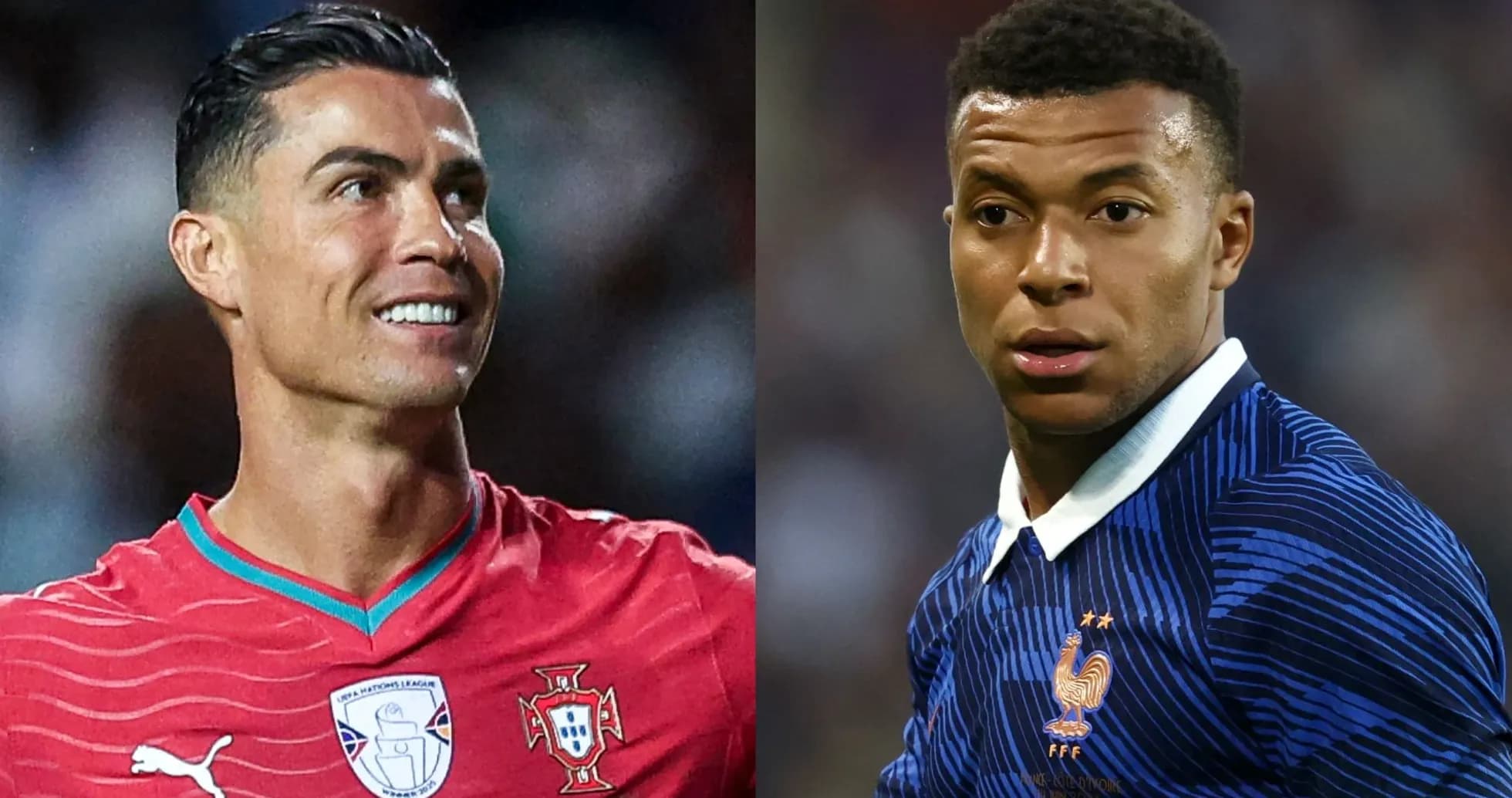

Kylian Mbappé: A Superstar Struggling with Team Dynamics
Kylian Mbappé has spent his entire life being told he was destined to be the main event. At eight, he was the prodigy. In his teens, the phenomenon. Now 27, he is the superstar who delivers under the harshest lights, churning out numbers that drag him into the rarefied company of Lionel Messi and Cristiano Ronaldo.
But what happens when a footballer built to be the centre of everything is asked to be just one piece of the puzzle?
That is the question Frank Leboeuf keeps circling back to. The former France and Chelsea defender, speaking to GOAL, painted a picture of a player shaped from childhood to be “the main man”, then dropped into a sport that keeps proving the opposite: the team, not the individual, is the real star.
“He doesn’t have that in his computer”
Leboeuf’s view is blunt. Mbappé, for all his brilliance, still fights a battle with the collective.
“He's been created to be the main man,” Leboeuf said. From the moment the young Mbappé dazzled onlookers, the path was laid out for him: do the right things, work, score, shine, and you become one of the best. That prophecy has largely come true. His record for Real Madrid – 86 goals in 103 games – and 56 for France underlines it.
Yet Leboeuf believes the modern game has exposed a blind spot.
Football, he insists, keeps hammering home the same lesson: no matter how bright the individual, the team wins the trophies. He points to Liverpool’s Champions League triumph, to the way Paris Saint-Germain finally found a more coherent shape, to Real Madrid’s extraordinary runs in Europe when, by rights, they should have been knocked out.
“When Real Madrid played awfully and they shouldn't have gone to the final against Liverpool,” Leboeuf recalled, they still survived Chelsea, PSG, Manchester City. “No way they should have won those games but they managed to because of the collective spirit.”
That, in his eyes, is where Mbappé falls short.
“Kylian doesn't have that in his computer,” he said. And once that instinct is missing, Leboeuf argues, it is very hard to upload it later, especially in a football culture obsessed with individual stardom. He calls it a “dictator of emergency” – a world that demands instant heroes and elevates the Ballon d’Or to a kind of annual referendum on greatness.
In his era, Leboeuf says, you won the Ballon d’Or and five minutes later it was forgotten. Now it shapes careers, narratives, egos.
Stars without a constellation
Leboeuf does not lay the blame solely at Mbappé’s feet. He sees a system that rewards the soloist and then wonders why the orchestra sounds off-key.
“We create importance on some spots where it shouldn't be and we are absolutely wrong,” he said. Football keeps offering evidence. Neymar, Messi and Mbappé in the same PSG side. Now Vinícius Jr and Mbappé together at Real Madrid. Galácticos everywhere, but the chemistry never quite right.
“It doesn't work because they don't fit into a collective spirit,” Leboeuf argued. For him, these are constellations of stars that never quite form a team.
His counter-example is Liverpool at their peak under Jürgen Klopp. Who was the star there? Mohamed Salah, of course. But Virgil van Dijk was just as vital. Alisson, too. Andy Robertson and Trent Alexander-Arnold, the two full-backs, drove the team forward and crossed to each other to score. Everyone shone. Everyone grafted.
“That was insane,” Leboeuf said. That is the football he loves.
He is unmoved by Mbappé slaloming past four defenders if, in his opinion, the forward “doesn't see the game”. His admiration goes elsewhere: to Rodri and Kevin De Bruyne, players who seem to know where the ball will go before it even reaches them.
“Anticipation is the special skill for me,” he said. One-touch passes, vision, the ability to read the pattern before it emerges – that is what captivates him, even more than the genius of a Diego Maradona dribble.
A restless star and the Premier League question
Mbappé’s numbers at Madrid and with France are staggering, but his body language in recent months has often told a different story. Frustration. Irritation. The questions follow naturally: is he already thinking about another challenge?
The Premier League, as always, hovers in the background.
Leboeuf has seen both versions of England’s top flight – the bruising, more direct league of his playing days and the high-tempo, technically rich competition it has become. Once, he would have doubted Mbappé’s fit. Not anymore.
“If it was the Premier League from when I played, I would have said no he's not ready for that,” he admitted. “But with the pace that he has and the possibility that you can find in England when you play in the Premier League, yes I think Kylian Mbappé can play in any league in the world.”
The prospect of Mbappé trading goals with Erling Haaland in an English title race clearly appeals to him. “That would be nice to see,” he said. “That would be insane.”
Reality, though, bites. The fee, the wages, the overall package. Leboeuf does not see a realistic buyer right now. Not among the clubs expected to contend next season.
System clashes and tactical headaches
Even if someone could afford him, there is the tactical question. Where, exactly, does Mbappé fit?
Leboeuf casts an eye over Arsenal. They need a striker, he says, but they rarely use a traditional one. Their forwards rotate, drop off, drift wide, combine. The central striker often becomes a reference point rather than the main finisher.
Mbappé, in that setup, might find himself playing a role similar to Viktor Gyökeres: waiting for crosses and passes that never quite come often enough. For a player who craves involvement, that could grate.
He contrasts that with Haaland’s role at Manchester City. The Norwegian has accepted long stretches without the ball, sometimes touching it only “one or two balls per period” in Pep Guardiola’s intricate system. Haaland lives with that, then explodes in the penalty area.
Leboeuf is not convinced Mbappé would tolerate the same. He imagines the Frenchman dropping deeper, drifting into a No.10 zone, demanding touches, demanding influence. That, he warns, risks tearing at the coach’s tactical plan and the team’s balance.
So the paradox remains. Mbappé is one of the most destructive forwards on the planet, a player whose numbers scream superstardom. Yet the debate that follows him is no longer just about goals or trophies. It is about something more subtle, and harder to measure.
Can a man built to be the main character truly surrender himself to the collective script that modern football keeps writing?