.svg&w=384&q=75 "Naijagoal logo")

Japan 1–1 Sweden: Elanga's Goal Secures Knockout Stage
For 45 minutes, this was a match stuck in neutral. Japan and Sweden prodded and probed, but the first half drifted by without rhythm, without incision, and with the feeling that both sides were waiting for someone else to take a risk.
Then the second half started, and everything snapped into focus.
Maeda sparks it, Elanga rips it open
Japan struck first. On 56 minutes, a sharp, incisive passing move sliced through the Swedish lines and Daizen Maeda arrived to apply the finish. It was the kind of goal that looked rehearsed, then ruthlessly executed. Sweden, briefly stunned, suddenly stared at the prospect of an early flight home.
The response was instant.
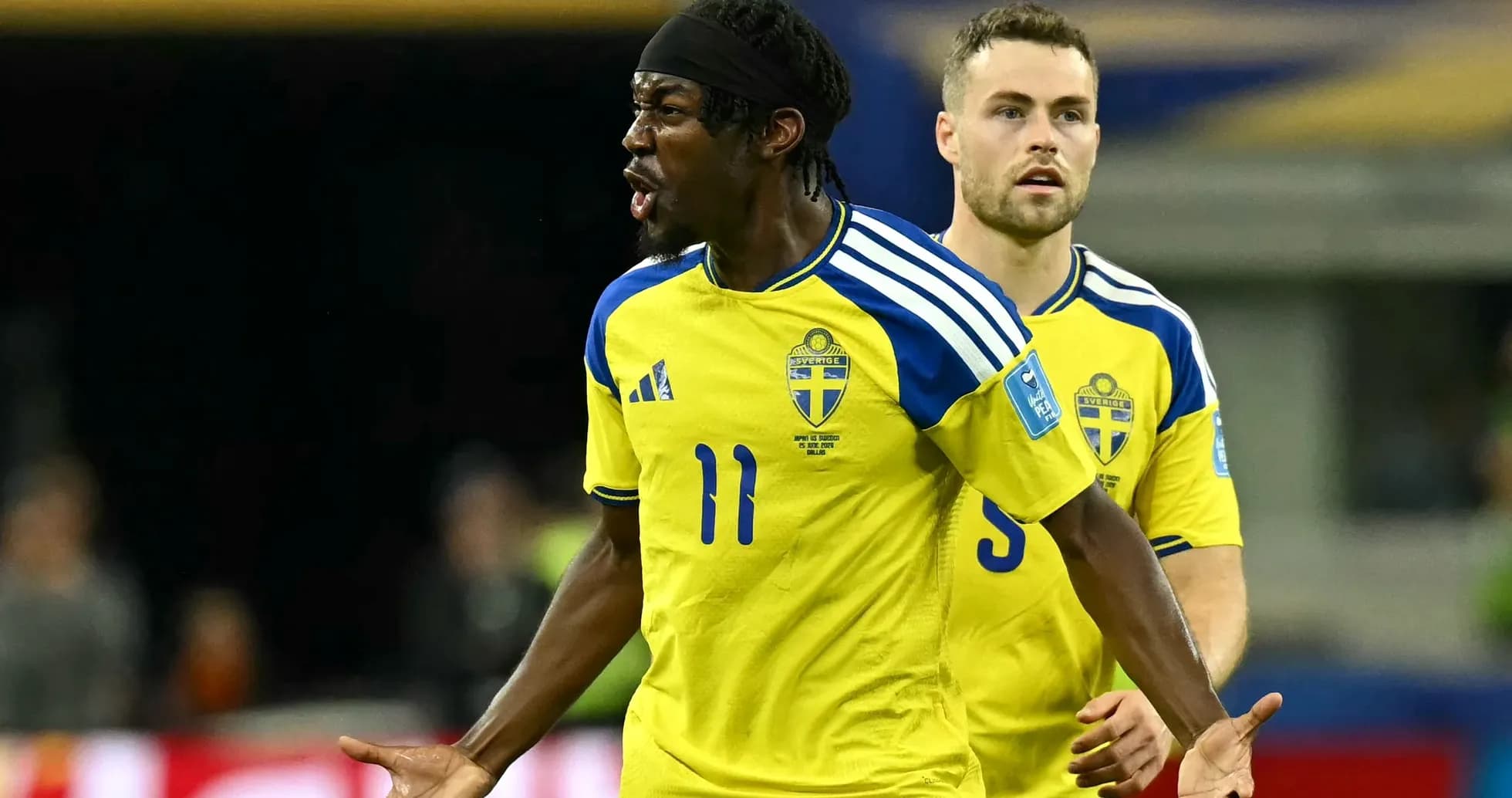
Anthony Elanga, restored to the starting XI, picked up the ball on the right. He drove infield, defenders backpedalling, and with his weaker left foot he whipped a sublime strike beyond the goalkeeper. Level again. Tournament alive again.
It was Elanga’s second goal of the competition and, in the end, the moment that sealed Sweden’s passage as one of the best third-placed teams. One swing of his “wrong” foot, and the entire complexion of Group F shifted.
Crossbar, calculators and a winger who refused to stop
The final stages frayed every nerve. Sweden knew a point might be enough, Japan kept threatening to turn one into none, and the match opened up into a frantic end-to-end contest.
Alexander Isak came within inches of stealing it. His late header crashed against the crossbar, the woodwork shaking as Swedish players clutched their heads. That close to glory, that close to disaster, all in the same heartbeat.
On the touchline, the Swedish bench had their eyes on another contest: the group permutations. Staff members, calculators in hand, scrambled through the scenarios as the clock ticked down. On the pitch, Elanga wanted no part of the arithmetic.
"I was just screaming: 'Come on, we can go for more'. I’m glad we’re through, I didn’t know that at the end," he admitted afterwards. While Sebastian Larsson and the backroom staff tried to shout instructions and updates about the standings, Elanga tuned it all out.
"I think they were trying to scream to me," he said. "I obviously wanted to keep running. I got cramp at the end but didn't want to stop running. I'm happy and the whole team is too."
Isak later revealed he had given his teammate “a bit of a telling-off” once he realised Elanga had no idea of the stakes. "He was a little frustrated towards the end of the match, and you can understand why now," the Liverpool striker sighed, half exasperated, half amused.
Graham Potter could only laugh. "That explains a few things. We couldn't have been clearer... Bless him! But I love him," the Sweden manager joked, while captain Victor Lindelof quipped that Elanga must have slept through the pre-match briefing on permutations: "He can't have been awake enough."
Oblivious to the numbers, relentless in his running, Elanga became the embodiment of Sweden’s refusal to wilt.
Potter’s gamble pays off
This was not a night for half-measures from the coach either. Potter rang the changes for a game Sweden simply could not afford to lose. Elanga came into the starting lineup, and Jacob Widell Zetterstrom was handed the gloves.
After a bruising defeat to the Netherlands, Sweden needed more than a reaction; they needed a reset. Potter trusted the depth of his squad, and the response was as gritty as it was necessary.
"We analysed the game against the Netherlands. We had to defend the box and wide areas better [today]," he said. The decision to start Widell Zetterstrom was deliberate. "We decided to use Jacob's attributes because I think he's a fantastic goalkeeper. His distribution was very impressive. Anthony comes in and offers a counter-attack threat and his pace is destabilising for the opponent."
Sweden did not produce a flawless performance, but they did produce a resilient one. They bent when Japan took control. They did not break.
A brutal road ahead
Finishing third in Group F carries a peculiar reward. Sweden avoid a direct collision with Brazil, who now face Japan, but there is no soft landing in this tournament.
Potter’s side are likely to meet the winner of Group I on June 30, with France and Norway still to decide that pool. Germany, already winners of Group E, also lurk as a potential opponent. These are the fixtures that define eras and reputations, not just campaigns.
Elanga, at least, is not blinking.
"Both are good teams. It will be a challenge. All teams are good, but we are ready for what comes," he insisted, refusing to flinch at the prospect of facing the sport’s heavyweights on its biggest stage.
Four points. A balanced goal difference. A recovery from a heavy defeat. Sweden emerge from the group not as one of the headline acts, but as a side that has found its footing just in time.
They have a winger who will run until the cramp bites, a manager unafraid to make big calls, and a squad that has already stared down the brink once.
The next question is simple, and far more daunting: who really wants to face them now?