.svg&w=384&q=75 "Naijagoal logo")

Luka Modric, Cristiano Ronaldo, and Lionel Messi: A Legacy Since 2006
Can you remember what you were doing on 1 March 2006?
Some were at Anfield, watching England edge Uruguay 2-1. Others saw Switzerland put three past Scotland at Hampden Park. On the same night, in Basel, a slight, long‑haired midfielder in a red No 14 shirt walked out for his country for the first time.
Luka Modric made his Croatia debut that evening. Argentina were the opponents. Croatia won 3-2. Lionel Messi scored his first international goal. In another stadium, Cristiano Ronaldo struck twice in Portugal’s 3-0 win over Saudi Arabia, a 21‑year‑old winger with frosted tips and a future nobody could quite grasp yet. He could hardly have imagined he would one day live and work in that same country.
From that night, the conversation was supposed to belong to Messi and Ronaldo. The goals, the Ballons d’Or, the endless arguments. Yet, quietly, insistently, Modric stayed with them. Not as the headline act, but as the rhythm section: passing more than shooting, dictating more than dominating the highlight reels, always there, always at the very top.
Now, almost two decades on, the three of them stand in a tiny, rarefied group. Only four men have reached 200 or more international caps. Ronaldo. Modric. Messi. And one more, the trivia answer that still catches people out.
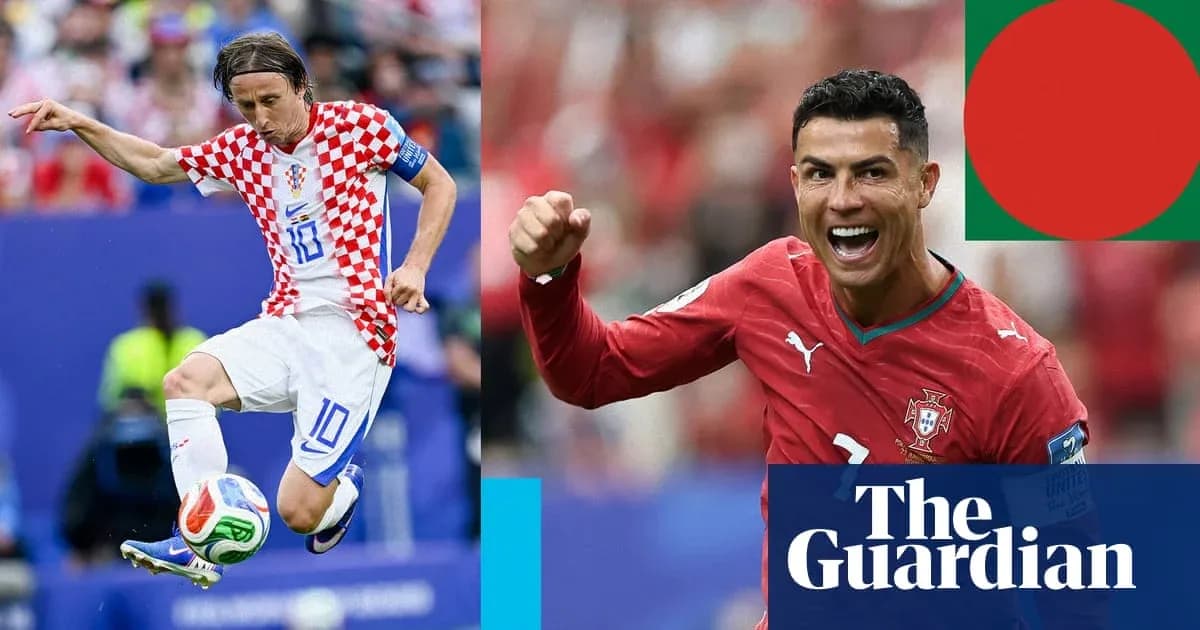
Ronaldo, now 41, and Modric, 40, will step out for their 232nd and 202nd caps respectively when Portugal face Croatia in the last 32 of the World Cup. It is a knockout tie wrapped in nostalgia. It might be the final time these giants of 21st‑century football share a pitch, after careers that have overlapped as rivals, teammates and, for long stretches, co‑conspirators in greatness.
Their commitment to the international game is remarkable. When Modric first pulled on the Croatia shirt in 2006, Ronaldo already had 29 caps. More than 20 years later, that gap has grown by just one. The numbers show it clearly: whenever the phone rang from Lisbon or Zagreb, they picked up. Year after year. Tournament after tournament. Their international calendars have moved almost in parallel.
Their paths crossed properly in 2008‑09. Modric, newly arrived in England and still adjusting to the pace, lined up for Tottenham in the Carling Cup final. Ronaldo, already a superstar, led the line for Manchester United. They both played the full 120 minutes at Wembley, both earning a rating of 7 in the reports, before United beat Spurs on penalties.
Soon the stage grew bigger. By the 2010‑11 season, Ronaldo had gone to Spain, and the Champions League drew them together again. Tottenham met Real Madrid in the quarter‑finals. Madrid went through, as they so often would in the years that followed.
Those years turned into an era. Once Modric swapped north London for the Bernabéu, the pair became the spine of a dynasty. Across six seasons together at Real Madrid, they lifted the Champions League four times and reached the semi‑finals in the other two campaigns. Ronaldo the finisher, Modric the architect. One tore games apart; the other stitched them together.
If there was a single image that captured their shared peak, it came in Cardiff in 2017. Juventus had threatened a comeback in the Champions League final. Madrid needed a moment to tilt the night back their way. Modric found space on the right, darted to the byline and cut the ball back. Ronaldo arrived, as he so often did, at exactly the right second, sweeping Madrid 3-1 up. The contest was effectively over. Another European crown was on its way to the Spanish capital.
That goal was just one scene in a long-running partnership. Across club and country, Ronaldo and Modric have shared a pitch 222 times. No central midfielder has played more often alongside Ronaldo. That statistic underlines what the eye has long told us: when Ronaldo went hunting for goals, Modric was usually somewhere close by, quietly setting the tempo.
Now they meet again, not in white shirts but in the colours that shaped them first. Portugal against Croatia. Ronaldo’s 232nd cap. Modric’s 202nd. Two careers that began on the same night in 2006, still intertwined, still refusing to let go of the biggest stages.
At some point, the whistle will blow on both of them. The question is whether this World Cup, and this tie, is the last chapter they write together on it.