.svg&w=384&q=75 "Naijagoal logo")

Graham Potter's Sweden Shines with 5-1 Victory Over Tunisia
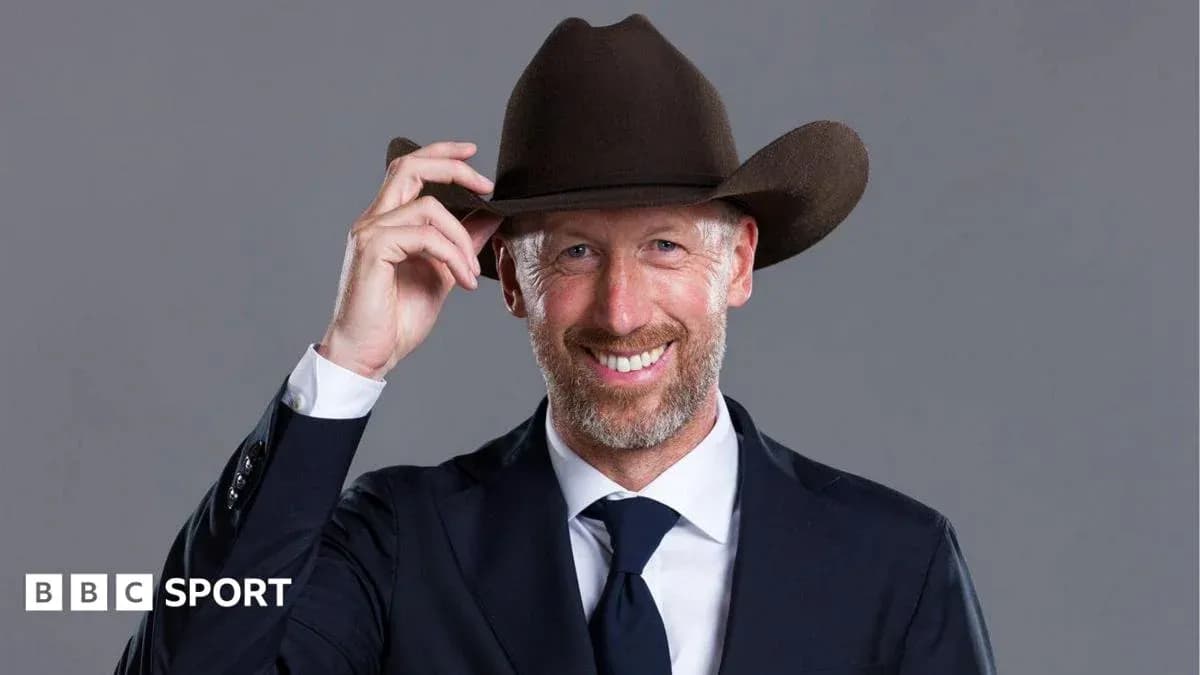
Graham Potter walked out to Sweden training in Texas last week wearing a Stetson, a playful nod to the World Cup’s host state. It looked like a costume. It felt like a metaphor.
Cowboy hat, last‑chance saloon.
After bruising, back-to-back sackings at Chelsea and West Ham, Potter arrived at this World Cup as a coach many had already filed under “bright idea that didn’t quite work in England”. Yet at Estadio Monterrey in Mexico, his Sweden side ripped that script to shreds.
They didn’t just beat Tunisia. They dismantled them.
Five goals. A 5-1 win. A statement.
From rock bottom to lift-off
For a coach ushered out of West Ham in September after winning only six of 23 Premier League games, and who had seen his reputation dim at Chelsea after the heights of Brighton, this was not the path anyone had mapped out.
“You never know, that's the truth,” Potter said afterwards. “You never know how things are going to go. We were optimistic because we felt confident in the work. But until the game is played you don't know for sure. That's the beauty of sport. We are delighted with how we performed tonight and it's a great start for us.”
A great start, and a stark contrast.
Sweden scored more goals against Tunisia than they managed in their entire qualifying group stage. Five here; four across all of qualifying, most of that under former boss Jon Dahl Tomasson. It was under the Dane that automatic qualification slipped away, Sweden sinking to the bottom of a group behind Switzerland, Kosovo and Slovenia, without a single win in six games.
The damage looked terminal. Potter arrived in October, but he could not rescue that doomed campaign. Sweden’s route to this World Cup came not through dominance, but through the back door of their Uefa Nations League ranking, sneaking into the play-off path as the 34th-ranked side.
That lifeline gave Potter something more than a shot at a tournament. It gave him a chance to rebuild a career.
He took it. Sweden beat Ukraine. Then Poland. Suddenly, the coach who had been bundled out of two Premier League jobs in 15 months was leading a nation back to the global stage, and now, after this demolition of Tunisia, towards the knockout rounds with a tailwind.
Back where he became “very Swedish”
This was never the plan for Potter’s season. He began it in east London, not Stockholm. Yet in many ways, this is the most natural setting of his career.
Sweden is where he truly learned to coach. At Ostersunds FK he climbed from the fourth tier to the Allsvenskan, won a domestic cup and took a tiny club into Europe. Those seven years carved out his reputation and, in his own words, reshaped his identity.
“I feel very Swedish when I'm working,” he told BBC Sport before the tournament. “I even look a bit Swedish. Two of my children were born in Sweden. I had seven unforgettable years at Ostersunds, with memories that will stay with me for life.
“I came from the fourth tier of Swedish football, which is quite low, and worked my way up through the system to the Allsvenskan. You almost become Swedish in a coaching sense because of the experiences you have. I think it has definitely helped.
“Now I'm working for the Swedish FA as head coach of the national team, so I feel very Swedish.”
His Instagram is full of lakes, forests, Nordic novels and cultural events. The image is of a man who has immersed himself in the country. But Monterrey showed he has done far more than sightseeing.
This Sweden side looks drilled, aggressive and liberated.
A £125m spearhead and a dangerous partnership
The return to full fitness of Alexander Isak is central to that. The Liverpool striker, valued at £125m, gives Sweden a focal point they simply did not have in qualifying. Against Tunisia, his understanding with Arsenal’s Viktor Gyokeres lit up the night.
They scored. They assisted each other. They looked like a partnership built for tournament football.
An attack of that value and variety is a luxury Sweden have rarely enjoyed. Back on the World Cup stage after missing Qatar 2022, they suddenly possess a front line that can trouble anyone if it clicks. For Potter, who once coaxed miracles from modest resources at Ostersunds, this is a different kind of challenge: blending stars into a coherent whole.
He will need to. Experience is thin. Only Victor Lindelof has actually played in a World Cup match before; goalkeeper Kristoffer Nordfelt watched from the bench in Russia in 2018. The rest of this squad is feeling the tournament for the first time.
They will need guidance. They will get it from a coach who has lived both the romance and the brutality of the game.
The format helps. With this expanded structure, a heavy opening win leaves Sweden well placed to reach the last 32. The numbers are suddenly in their favour.
Tougher trails ahead
Reality bites again on Saturday. Tunisia, ranked 56th in the world, were obliging opponents. Netherlands will not be.
“We just focus on what we can do, we focus on our performances,” Potter said in his post-match press conference. “It doesn't matter what people think from the outside or opinions.
“That's the beauty of the World Cup everyone has predictions and forecasts but we have to focus on our job and how we play as a team. We will meet another top team at the weekend who are one of the favourites for the competition.”
That is the next examination: can this new Sweden stand up to a heavyweight?
History offers a whisper of encouragement. The country’s best World Cup finishes – third place in 1958 and 1994 – both came with a twist of English influence or American backdrop. George Raynor, an Englishman, led them on home soil in 1958. In 1994, they reached the semi-finals in the USA.
Now an English coach leads them again, with the tournament once more rooted in American soil.
Good omens? Perhaps. What is certain is that the man in the cowboy hat, once dismissed as a misfit in England’s elite, has found a team ready to ride with him.
The World Cup will reveal how far.