.svg&w=384&q=75 "Naijagoal logo")

La Liga Returns After Spain’s World Cup Triumph
La Liga returns in the shadow of Spain’s World Cup triumph
Less than a month after Spain lifted the World Cup, the domestic grind starts again. La Liga is the first of Europe’s major leagues to step back onto center stage this weekend, though the curtain-raiser feels strangely subdued.
One game is already off the board, two giants are delayed, and a fungus has literally eaten into the schedule.
A muted opening weekend
The season should burst into life, but the calendar tells a different story. Defending champion Barcelona and a revamped Real Madrid under José Mourinho will not appear until the following weekend, with both clubs granted extra rest after sending a heavy contingent to the World Cup.
Celta Vigo’s planned home opener against Osasuna on Sunday has been pushed back to August 27 after a fungus outbreak damaged the Balaídos pitch. It’s an unusual hitch for a league eager to capitalize on Spain’s global success.
So the first ball of the new campaign will be kicked by Alaves, who host Getafe on Saturday. Later that day, Sevilla open at home to Rayo Vallecano.
Sunday brings a more emotional note. Racing Santander return to the top flight after 14 long years away, welcoming last season’s third-place finisher Villarreal. Espanyol, who must wait a little longer for Real Madrid’s visit, start instead with Levante at home.
The European season already has its first piece of silverware: Paris Saint-Germain edged Aston Villa 2-1 in the UEFA Super Cup final on Wednesday. Now it’s Spain’s turn to get moving.
Barcelona chase a three-peat
Barcelona, champions in each of the last two seasons, go hunting a third straight league title with a squad dripping in world champions. Hansi Flick’s side will not open until August 23, away to Elche, but the spine of his team has barely had time to put the World Cup medals away.
Lamine Yamal, Dani Olmo, Gavi, Pedri and Pau Cubarsí all return from Spain’s second world crown and now pivot straight into another title defense. The core is familiar. The expectations are not shrinking.
One hero from that World Cup final is unlikely to be part of it. Ferran Torres, who scored Spain’s extra-time winner against Argentina, is reportedly in talks over a move to PSG. His departure would strip Barcelona of a clutch scorer just as the season begins.
Flick has been handed a different kind of weapon. England forward Anthony Gordon has arrived to help offset the loss of veteran striker Robert Lewandowski. How quickly Gordon adapts to Barcelona’s demands will shape the early weeks of their campaign.
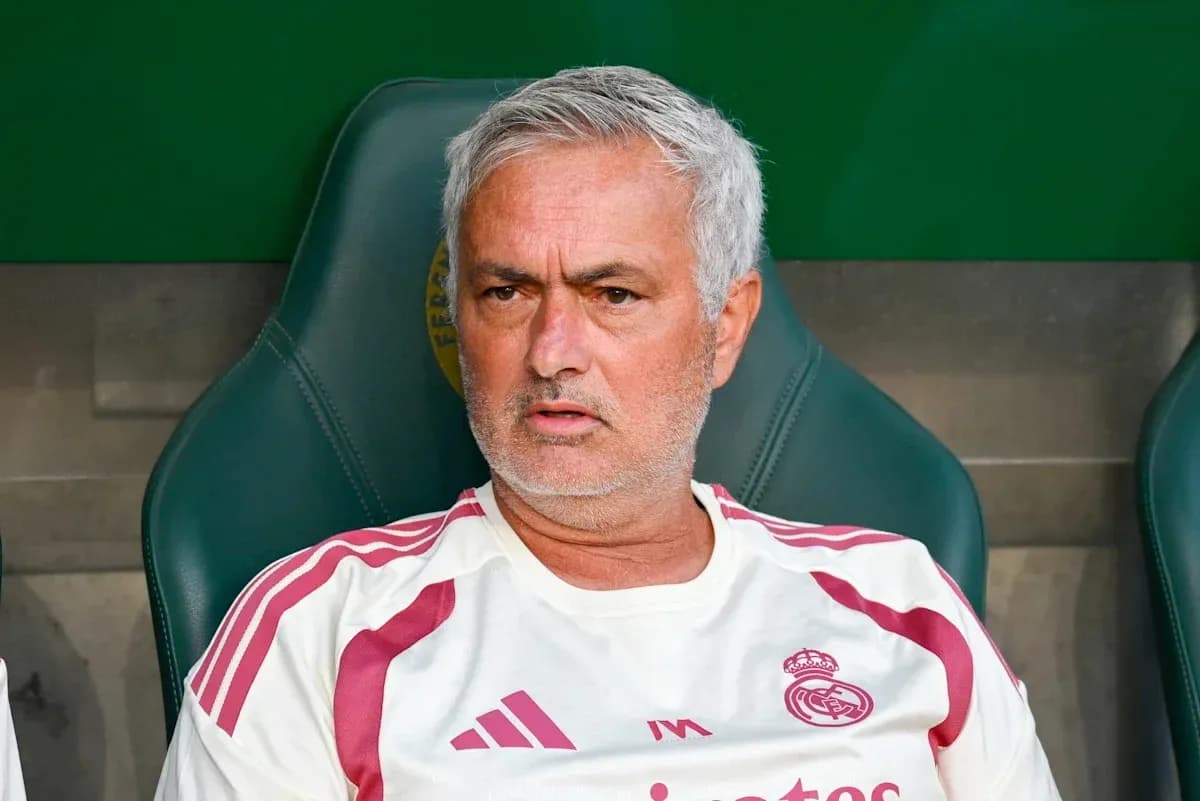
Mourinho’s Madrid, rebuilt and restless
Across the capital, the mood is more urgent. Real Madrid have gone two straight seasons without a major trophy. That is usually the point when the club reaches for something drastic.
They have turned again to José Mourinho.
Madrid’s opener is set for August 22 at Espanyol, and Mourinho will walk into that technical area with a squad that looks sharply retooled. The club’s star axis remains intact: Kylian Mbappé, Vinícius Júnior and Jude Bellingham all stay at the heart of the project.
Around them, the names have changed. World Cup winner Marc Cucurella joins, along with Ibrahima Konaté, Denzel Dumfries, Bernardo Silva and Yan Diomande. It is a rebuild with clear intent: power, depth, and versatility in almost every line.
Some long-serving figures have gone. Dani Carvajal and David Alaba are among the veterans who have left, closing a chapter that delivered multiple trophies but ended in frustration.
Mourinho’s task is blunt. Stop the drift. Stop Barcelona. Turn a star-heavy squad back into a ruthless title machine.
Atletico reshuffle amid Álvarez uncertainty
Atletico Madrid, serial top-four finishers, open at home to promoted Malaga on Wednesday, but the storyline around the club is not the opponent. It’s Julián Álvarez.
The forward, who played — and scored — for Argentina in the World Cup final, asked to leave during the tournament. Interest has come from the very clubs Atletico must chase: Real Madrid and Barcelona. The board insists he is not for sale, and Álvarez has returned to training, yet doubts over his future hang over Diego Simeone’s preparations.
Atletico sent three players to Spain’s World Cup squad — Marcos Llorente, Marc Pubill and Álex Baena — a sign of their continued influence on the national team. But Simeone has already seen several key names walk out the door: Antoine Griezmann, Thiago Almada, Nahuel Molina and Clément Lenglet have all departed.
The rebuild is already underway. Alejandro Grimaldo, Morten Hjulmand and Lee Kang-In have come in, while Cristian “Cuti” Romero is also set to arrive, adding edge and aggression to the back line. It feels like a new cycle for Simeone, but one that could look very different if Álvarez does force a move.
A league wired for the future
While squads change, La Liga is betting on technology to sharpen its product. This season, it becomes the first league in the world to deploy “connected ball” technology on a large scale.
Each match ball carries a radio-frequency sensor that sends a constant stream of data: the ball’s exact position, the precise instant of every touch. Around 12 antennas in each stadium pick up the signal and feed it into the league’s technological system.
The promise is clear — cleaner offside decisions, more accurate analysis, richer broadcast detail. The ball itself becomes another data source in a league already obsessed with marginal gains.
Old powers, fallen giants, and three new faces
Three clubs climb into the spotlight from the second division: Racing Santander, Malaga and Deportivo La Coruña. For Deportivo, once a title winner and a familiar Champions League name, this marks the end of eight seasons in the wilderness. Their return brings a storied badge back to the top table.
Dropping out are Mallorca, Girona and Oviedo, all relegated at the end of last season. Their absence shifts the landscape at the bottom, opening space for new survival stories — and new crises.
Spain has barely finished celebrating its world champions. Now the same players must swap confetti for grind, parades for packed schedules, and knockout drama for 38 rounds of attrition.
Barcelona chasing history. Mourinho back in Madrid. Atletico in flux. Deportivo reborn. A ball that can talk.
If this is La Liga’s “muted” start, what happens when the volume really goes up?