.svg&w=384&q=75 "Naijagoal logo")
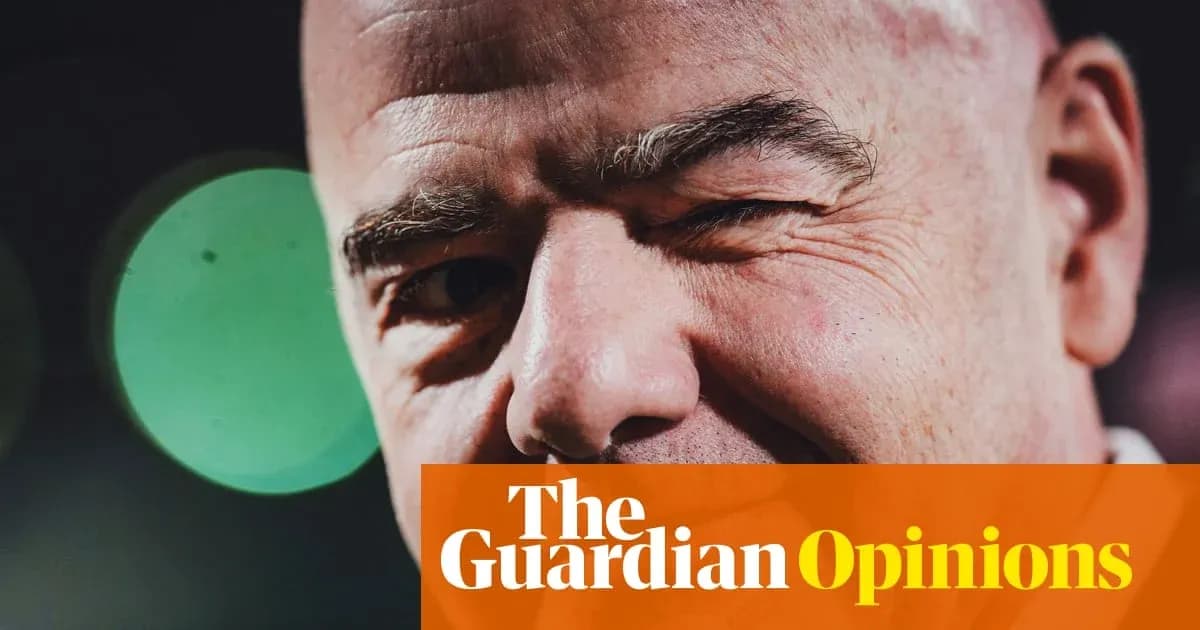

Gianni Infantino Must Resign for Football's Future
There is no room left for euphemism. Gianni Infantino has to go – either by resignation or by legal removal. The man at the top of Fifa has burned through trust, shredded what was left of football’s governing credibility and turned the organisation that oversees the world’s game into a running joke.
His retreat on Saturday morning only underlined the scale of the damage. Faced with a fierce backlash, Infantino abandoned his plan to carve up parts of the World Cup and sell them to private investors under the Fifa Forward Enterprise (FFE) scheme. He tried to reframe it, speaking of “shared interest in our game” and renewed dialogue over football’s growth.
It was not contrition. It was self-preservation. And every extra day he clings to office deepens the stain on an institution whose reputation is already on the floor.
A presidency at war with its own rules
Even without the FFE fiasco, Infantino’s position would be untenable at most serious organisations. The idea of handing vast influence over football’s future to venture capitalists, on terms barely explained and barely scrutinised, was a staggering overreach. But it sits on top of a record that has long mocked Fifa’s own statutes.
Article 10.3 of Fifa’s regulations spells out the president’s duties: to ensure the organisation’s objectives, mission, strategic direction, policies and values are “sustainably pursued, protected and implemented” and to foster “a positive image of Fifa”. It also demands the promotion of “friendly and peaceful relations within Fifa”.
Look at the landscape now. Federations and senior figures across the game are openly distancing themselves from Infantino. The slogan “football unites the world” has never felt more hollow.
None of the rules, written in black and white, grants licence to run side projects with private partners, often aligned with the current US administration or its satellites, pushed forward with minimal oversight and scant explanation. Yet that has become the hallmark of this presidency.
From Balogun to Trump to Saudi Arabia
The Folarin Balogun affair pushed many already-frustrated powerbrokers in Europe and beyond close to the edge. It landed on top of a series of decisions that had already provoked bafflement and anger.
There was Infantino’s presentation of a new Fifa peace prize to Donald Trump in December, an award dropped on the game with little transparency about the process and highly contestable claims about the US president’s supposed achievements. There was the introduction of “hydration breaks” at this summer’s World Cup, a fundamental tweak to the rhythm and fabric of matches that arrived with minimal consultation of key stakeholders.
Then came the 2034 World Cup bidding process. Rushed, opaque and effectively cleared for Saudi Arabia’s candidature by December 2024, it drew fierce criticism from across the football map. And now, as if the list were not long enough, fresh revelations show that plans for a 64‑team World Cup are already well advanced.
This is only the last 20 months. A rolling sequence of controversies, each one eroding confidence, each one reinforcing the sense that Fifa’s president is steering the game into ever more dangerous waters.
Uefa’s breaking point
On Saturday, Uefa finally snapped in public. Its statement did not bother with diplomatic varnish. It called for an end to “secret schemes on fast track timescales, cooked up by faceless individuals and of dubious benefit to the game”. The FFE project was the immediate trigger, but the target was far broader: the entire culture of backroom deals and sidelined decision-makers that has flourished under Infantino.
This time, words were backed by leverage. Uefa’s member associations pledged to boycott future Fifa tournaments if Infantino refused to drop the FFE plan. That threat mattered. It helped force his climbdown and handed Aleksander Ceferin, the Uefa president, a defining moment of his own tenure.
But a tactical victory is not the same as real change. If Infantino is allowed to regroup – and he has already brought in a major consultancy firm to soothe relations with federations – he will try to reset the narrative, dangle new promises and slowly haul the game back towards the old, comfortable status quo.
No way back
Inside Uefa and across other confederations there is a clear understanding: the pressure cannot ease now. Senior figures are adamant that Infantino cannot survive this scandal. The next move may be decisive.
Many member associations had already written letters pledging support for Infantino’s re‑election next March. Those letters now hang over them like a bad debt. Recalling them would require a formal request to Fifa, but if enough associations acted, the effect would be unmistakable – a de facto vote of no confidence in the president.
Fifa lobbied hard to secure those pledges. Today, many FAs would blush if their declarations of loyalty were splashed into the public domain. Yet the responsibility lies with them. They cannot claim to defend football while quietly propping up a presidency that threatens its integrity.
To step back now would be to leave the job half done.
A battle for football’s future
Uefa has already promised to work on a new model for distributing Fifa’s wealth, drawing on the organisation’s multibillion cash reserves without “selling the family silver” to outside investors. Behind the curtain, conversations have started with other confederations to identify credible candidates to replace Infantino, ready to stand if he somehow clings on until the election.
This crisis could become a turning point. With the right leadership, football’s governance can be rebuilt on something sturdier than slogans and secrecy. But that will not happen while the current president retains the power to block, dilute or derail reform.
The alternative is brutally simple. Fifa – and with it the global game – keeps stumbling from one manufactured disaster to the next, trapped in the orbit of a single man, his ego and his brazen schemes.
How long can football afford to live like that?