.svg&w=384&q=75 "Naijagoal logo")

Frenkie de Jong's Recovery Journey: Navigating Injury and Barcelona's Fixture List
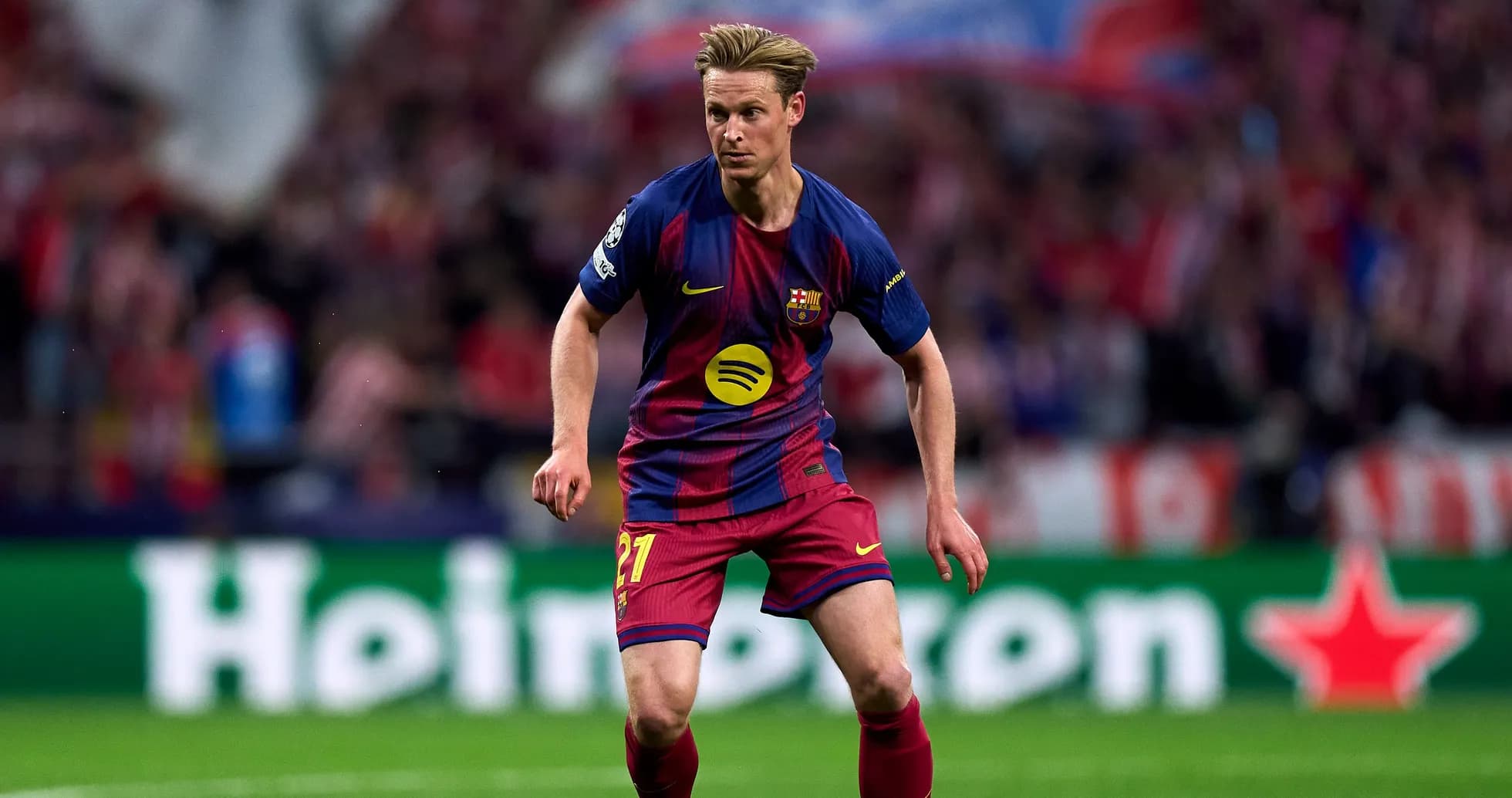
Frenkie de Jong’s road back to the Barcelona midfield is turning into a long, delicate negotiation between pain, patience and a brutal fixture list.
The 29-year-old Dutchman is still recovering from the knee injury he suffered at the start of September and, barring a surprise acceleration, he is not expected to be fully fit before October. That timeline only holds if his right knee responds cleanly, without fresh pain or setbacks that could derail the current programme.
A World Cup injury that wouldn’t go away
According to Spanish newspaper Mundo Deportivo, De Jong tore the medial collateral ligament in his right knee during the World Cup. Barcelona made the diagnosis public on 23 July, but the information reaching Hansi Flick’s staff suggests the actual damage dates back to a Netherlands training session around 16 June.
The delay in understanding what really happened has shaped everything since. The Dutch national team doctors initially misread the injury, which allowed – and encouraged – De Jong to keep playing. His World Cup ended on 30 June, yet instead of returning straight to Barcelona’s training ground, he headed to Ibiza for a two-week holiday.
Only then did the full picture begin to emerge. Barça went weeks without grasping the true severity of the problem, with the first accurate diagnosis inside the club not arriving until 13 July.
Conservative path against medical advice
Once the extent of the ligament tear became clear, De Jong faced a choice. Club doctors pushed for surgery. He refused.
The midfielder opted for conservative treatment, a non-surgical route that the medical staff did not consider ideal for this type of injury. Barcelona, though, respected his decision. Player and club agreed on a monitored plan: his sensations, pain levels and reaction to each phase of treatment would dictate the next step.
That approach has made timing critical. Sources within the coaching staff point to the period after the upcoming international break as the next key checkpoint. The break starts on 21 September, with league action resuming on 10 or 11 October.
De Jong wants to squeeze everything he can out of those weeks without club fixtures. His target is clear: by 8 October he hopes to be ready to rejoin group training, the same date his international teammates are due back at Barcelona.
The clock, the knee and a brutal calendar
Several conditions still stand between him and a competitive return. The ligament in his right knee must be pain-free. The joint must tolerate full-intensity work. Then comes the football element: he needs a minimum level of match rhythm before Flick can risk him in games.
And those games are unforgiving.
Once the break ends, Barcelona walk straight into a storm: Getafe, Galatasaray, Real Betis, Paris Saint-Germain and then Real Madrid in the Clásico on 25 October. These are not fixtures that allow gentle reintroductions or half-fit midfielders searching for rhythm.
That is where Flick’s judgement becomes decisive. The coach must balance De Jong’s desire to push the conservative treatment to its limit with the demands of a season that is about to spike in difficulty. Rush him, and the knee could react badly. Hold him back, and Barcelona face their toughest run of opponents without one of their key reference points in midfield.
The calendar will not wait. The question now is whether De Jong’s knee can.