.svg&w=384&q=75 "Naijagoal logo")
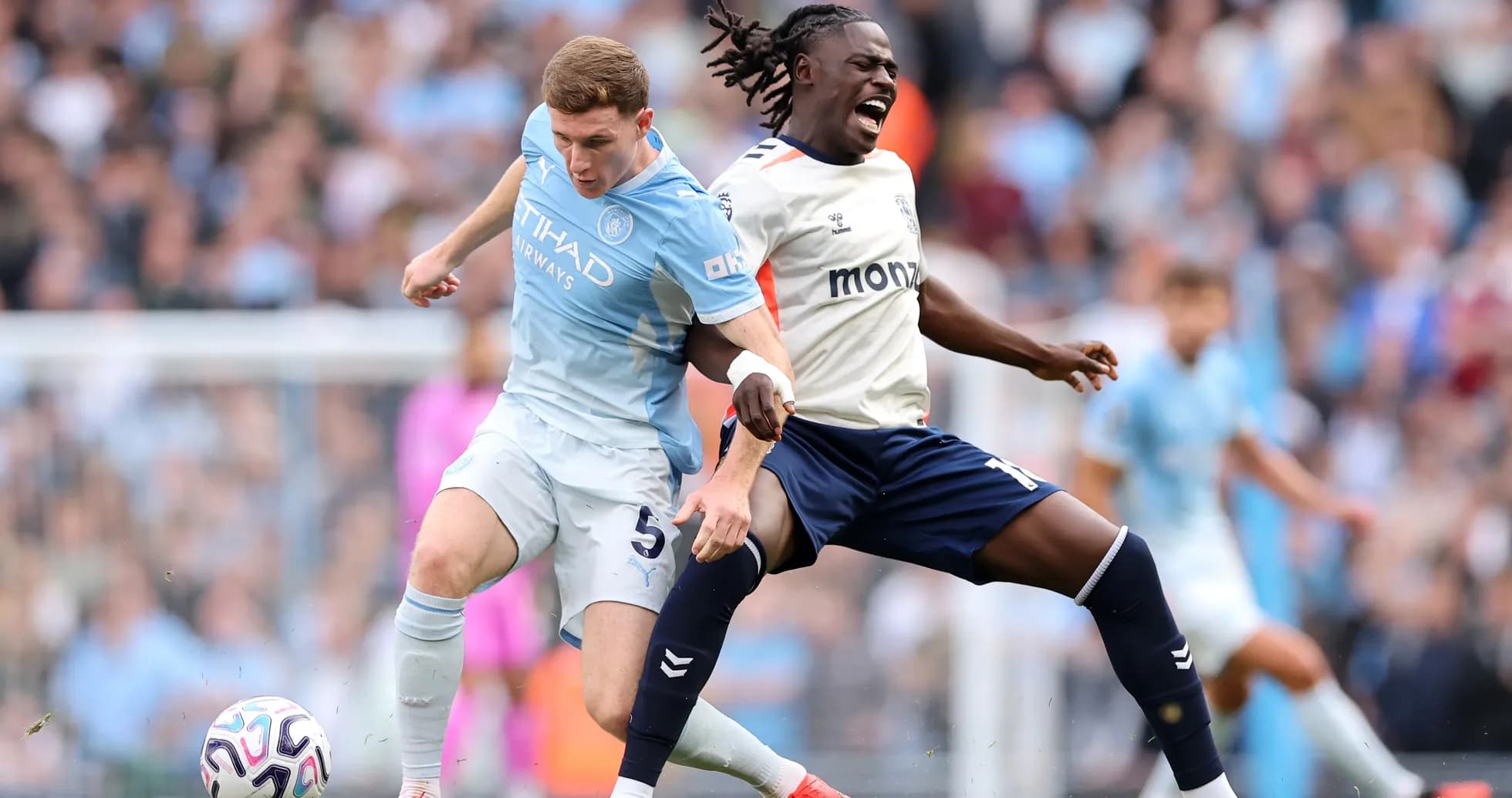

Manchester City vs Coventry: Tactical Analysis of a 1-0 Victory
The Etihad Stadium has already staged the verdict: Manchester City 1–0 Coventry, a third straight league win that keeps Enzo Maresca’s side top of the Premier League after 3 matches. Coventry, beaten again, remain bottom without a goal. But beneath the narrow scoreline lies a clear tactical story about two squads moving in opposite directions.
I. The Big Picture – Structures and Seasonal DNA
City’s season so far has a distinct profile. Overall they have 3 wins from 3, with 7 goals scored and 2 conceded, giving a goal difference of +5. At home, they have played 2, won 2, scored 3 and conceded 1; on their travels, they have 1 win from 1, with 4 scored and 1 conceded. The attacking averages are stark: at home City average 1.5 goals for and 0.5 against, while away they average 4.0 scored and 1.0 conceded, for a total scoring rate of 2.3 goals per match across the campaign and 0.7 conceded.
Maresca has doubled down on a single identity. City have used 4-2-3-1 in all 3 league games, and here again the shape was the platform: Gianluigi Donnarumma behind a back four of A. Khusanov, Rúben Dias, Marc Guéhi and Joško Gvardiol; a double pivot of Enzo Fernández and E. Anderson; a fluid band of three in Antoine Semenyo, Rayan Cherki and Iliman Ndiaye behind Erling Haaland.
Coventry arrive at the opposite extreme of stability. They sit 20th with 0 points, a goal difference of -5 (0 scored, 5 conceded). At home they have played 1 and lost 1, conceding 1; on their travels they have lost both matches, conceding 4. Their overall defensive average is 1.7 goals against per game, split as 1.0 at home and 2.0 away, while their attack has yet to register a single goal, home or away, with an overall scoring average of 0.0.
Frank Lampard has been searching for a shape, using three different systems in three matches: 4-1-4-1, 4-2-3-1, and now a 3-4-2-1 at the Etihad. Against City, C. Rushworth was shielded by a back three of A. Amenda, B. Thomas and Ethan Pinnock, with M. van Ewijk and Jay Dasilva as wing-backs, a central pairing of F. Onyeka and Matt Grimes, and a narrow attacking pair of J. Rudoni and E. Mason-Clark behind Taiwo Awoniyi.
II. Tactical Voids – Absences and Discipline
Both managers had to navigate notable absences. For City, J. Doku missed out with a calf injury, removing a pure one‑v‑one winger from the bench options and nudging Maresca further towards a possession-heavy, interior-focused attacking plan built around Cherki and Semenyo between the lines.
Coventry’s list was heavier: Y. Gboho (transfer negotiations), K. Kesler-Hayden and H. Wright (muscle injuries), S. Mfuni (loan agreement) and L. Woolfenden (knee injury) all unavailable. The effect was twofold: reduced depth at wing-back and centre-back, and fewer options to stretch City in transition. It pushed Lampard toward a compact, low-risk 3-4-2-1, prioritising survival over ambition.
Disciplinary trends across the season underline how each side lives the game. City’s yellow cards are spread evenly: 25.00% of their cautions arrive in each of the 31-45, 46-60, 76-90 and 91-105 minute windows. It suggests a team that maintains intensity – and tactical fouling – across phases rather than losing their heads in a single spell. Coventry’s yellows are more clustered: 50.00% come between 16-30 minutes, with a late-game spike as 25.00% arrive in 76-90 and another 25.00% in 91-105. Under pressure, they lurch between early over‑eagerness and late desperation.
Caleb Marfo Yirenkyi, who features on both the yellow and red card leaderboards for the league, embodies Coventry’s disciplinary edge. Across 3 appearances he has committed 4 fouls and already picked up 1 yellow. Even though he was only a substitute option here, his profile underlines the risk of Coventry’s midfield being forced into reactive, card-prone defending against City’s technical core.
III. Key Matchups – Hunter vs Shield, Engine Room Battles
The headline duel is obvious: Haaland versus a Coventry defence that, on their travels, concedes 2.0 goals per game and has yet to keep a clean sheet anywhere. Haaland’s league campaign is already humming: 3 goals from 3 appearances, 13 shots with 8 on target, and a rating of 7.8. He is not just a finisher; he has won 10 of 20 duels, drawn 2 fouls and occupies entire back lines by himself.
Against him, the trio of Pinnock, B. Thomas and Amenda were tasked with playing both shield and springboard. Coventry’s season-long defensive numbers – 5 conceded overall, including 4 away – show a unit that can be compact for stretches but eventually yields. With City having failed to score in 0 matches this season and Coventry having failed to score in all 3, the dynamic was always likely to be City probing relentlessly while Coventry clung to Awoniyi’s ability to hold up the ball and win fouls.
Behind Haaland, Cherki is fast becoming the creative conductor. Across the season he has 2 goals and 2 assists, 10 key passes, 8 dribble attempts with 5 successful, and a stellar 92% pass accuracy. He also has 2 successful blocks, underlining his work against the ball. His duel here was primarily with Onyeka and Grimes, whose remit was to close the central lanes and deny him the half-spaces. Yet Coventry’s midfield is not built to keep the ball; Grimes has passing range, but the team overall averages 0.0 goals for and has failed to score in all 3 matches, which forces them into long clearances rather than controlled counters.
On the flanks, Semenyo’s role is critical. With 2 assists already this season and 6 key passes at a 91% pass accuracy, he offers both vertical thrust and safe recycling. Up against van Ewijk and the right side of Coventry’s back three, his ability to drive at defenders and combine with Ndiaye and Gvardiol pins Coventry’s wing-back deep, reducing their outlet options.
At the back, Gvardiol is the understated fulcrum. Across the season he has 1 goal and 1 assist, 174 passes at 83% accuracy, 7 tackles, 1 successful block and 5 interceptions. He is the first builder and the insurance policy, stepping into midfield when City have the ball and dropping wide when Khusanov advances. For Coventry, Awoniyi’s task is to disrupt that rhythm, using his physicality to contest Gvardiol and Dias in direct duels, hoping for second balls for Rudoni and Mason-Clark.
IV. Statistical Prognosis – What This Match Tells Us Going Forward
Following this result, the numbers and the eye test converge. City’s overall xG profile is not given, but their real-world output – 7 goals from 3 matches, no penalties awarded, none missed – suggests a side creating enough from open play and not reliant on spot-kicks. Defensively, 2 goals conceded in 3, with 1 clean sheet at home and 1 away, points to a structure that rarely gets exposed.
Coventry, by contrast, project like a relegation-threatened side: 0 goals scored in 3, 5 conceded, no clean sheets, and an attack that has not yet found a pattern in any of the three formations used. Their defensive averages away from home – 2.0 goals conceded per match – combined with their disciplinary spikes in the 16-30 and 76-90 minute windows, indicate a team that starts nervously, then tires and fouls late.
The “critical intersection” in any future meeting remains City’s sustained attacking pressure against Coventry’s brittle away defence. With Cherki threading passes, Semenyo and Ndiaye rotating between lines, and Haaland’s penalty-box gravity, City’s 4-2-3-1 is a mature, repeatable mechanism. Coventry’s 3-4-2-1, built on emergency defending and hopeful breaks, can survive phases but not full matches against this level.
In narrative terms, this 1–0 feels less like a narrow escape for City and more like a controlled, almost routine exertion of superiority. For Maresca, the squad looks balanced, with clear roles and statistical backing for their dominance. For Lampard, the numbers are a warning: unless Coventry find a settled shape, a reliable goal source, and more composure in those early and late card-heavy windows, the gap between top and bottom will only widen as the season unfolds.