.svg&w=384&q=75 "Naijagoal logo")

England's Defensive Dilemma: Stones, Konsa, and Guehi's Future
England’s forwards lit up Dallas. Their defenders did not.
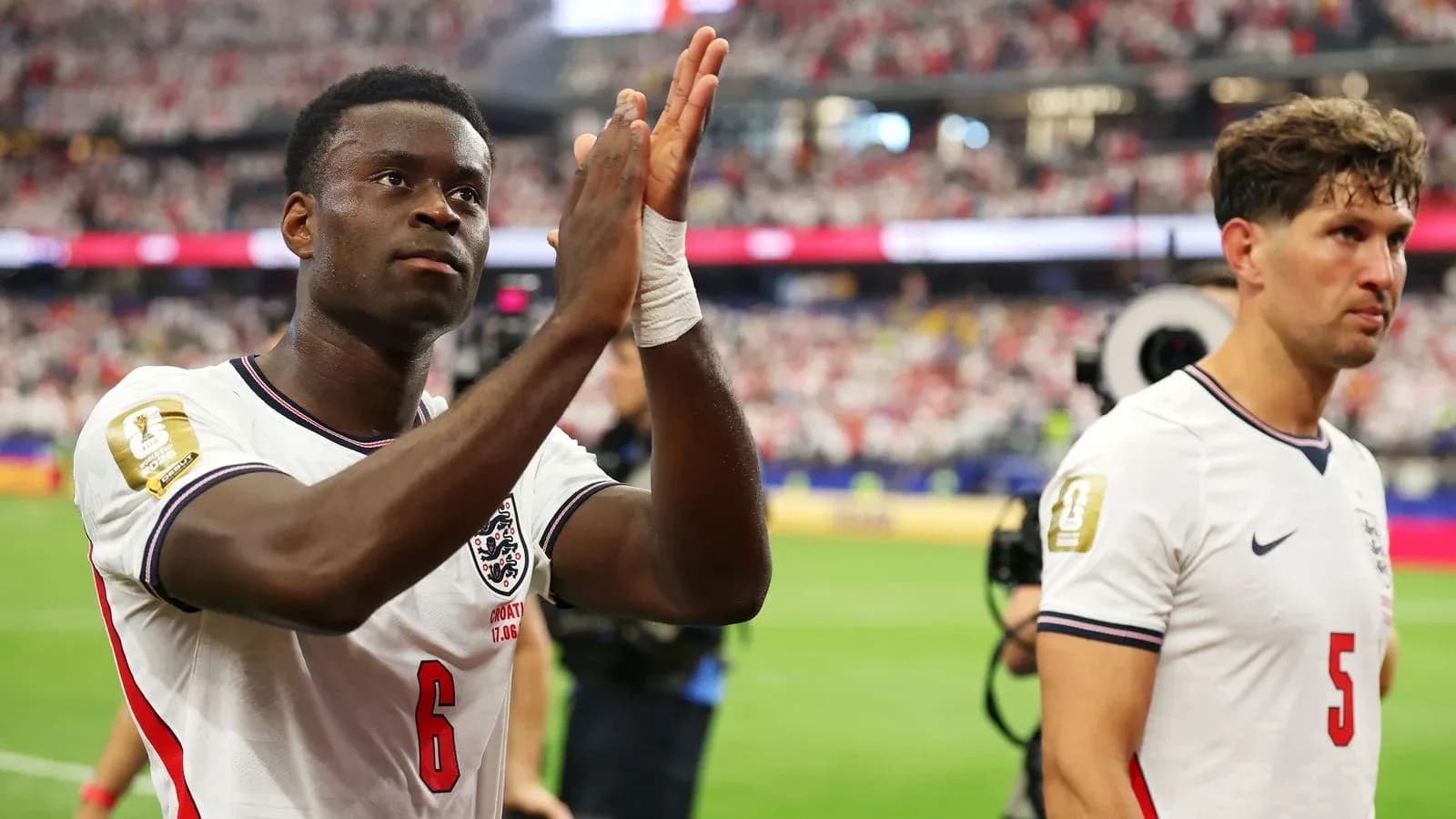
Thomas Tuchel walked away with three points and a statement attacking performance against Croatia, but the other side of the ledger was far less flattering. The centre-back pairing of Ezri Konsa and John Stones, a selection that benched Marc Guehi and raised eyebrows before kick-off, did little to silence the doubts.
By half-time, the questions were already sharpened on the studio desk.
“Is Konsa and Stones a partnership that can win us the World Cup?” asked Gary Neville on ITV, moments after Stones had gone to ground too easily for Croatia’s first goal and Konsa had misread a simple chipped pass in the build-up to the second. Neville’s conclusion was blunt: Declan Rice and Elliot Anderson would have to do far more to shield a back line that looked anything but watertight.
England’s problems did not stop at those headline errors. The early stages saw Croatia’s high press rattle the back two. Stones and Konsa, usually so assured in possession, coughed up the ball in dangerous areas as England tried to play out from deep. The passing numbers eventually looked tidy enough on paper, but the underlying picture was far more troubling.
Stones finished his 87 minutes with just one tackle attempted – and missed – plus a single clearance. He won four of seven duels. Konsa’s figures were starker: three wins from eight duels, one success in five aerial contests, and no tackles or interceptions at all. For a World Cup opener, under pressure, that lack of bite jarred.
Jamie Carragher did not sugar-coat it on Sky Sports News the following morning. England, he argued, “probably lack something defensively to go all the way,” a sobering note after the exhilarating, full-throttle second half that had Croatia on the ropes.
Guehi waiting in the wings
Tuchel is expected to restore the Manchester City defender to the starting XI for the next Group L game against Ghana. On form and profile, it is a compelling move.
Guehi, now 25, has accelerated since his days at Crystal Palace. His January switch to City was seamless; he stepped straight into Pep Guardiola’s side, collected a second successive FA Cup winners’ medal in May and, crucially, posted numbers that place him among the Premier League’s most effective defenders.
From his debut for City in January, Guehi ranked 10th for possession won in the defensive third and fourth for interceptions. On the ball he was just as influential, sitting sixth for forward passes and fifth for passes completed over that period. That blend of aggression and composure is exactly what England appeared to lack against Croatia.
His rise has come at a cost for Stones. Once a fixture at City and a first-choice pick for Gareth Southgate at the Euros two years ago, he found himself squeezed out by Guehi’s emergence. Stones has made it clear he was fit and available during the run-in, but Guardiola still turned to Guehi. The consequence: Stones played just five times for City in 2026 and started only five league matches in the past year, four of which ended in defeat.
Tuchel, though, values what Stones brings. Experience. Leadership. Quality on the ball. Those attributes earned him a ticket to this World Cup even as his club minutes dwindled. The question now is not whether Stones should be involved, but how.
The left-side gamble
Tuchel’s call to start Stones on the left of the pairing, shifting him from his natural side to accommodate Konsa on the right, looks increasingly like a misstep.
The combination had a dress rehearsal against Costa Rica in the final warm-up game, but the numbers from Stones’ club career underline how unusual that role is for him. Across the past three seasons, he has logged just 371 minutes at left centre-back for City, compared with 1,151 on the right. At this level, those habits matter.
Guehi, by contrast, has spent much of his career operating on the left despite being right-footed, notably anchoring that side of a back three at Palace. At City he has shown he can also slide across to the right when required, but the left is where his game feels most natural.
He himself highlighted the challenge of switching sides when speaking to Sky Sports in December. “When you have been playing on one side for a long time and you switch to the other side it can throw you off a little bit,” he said. England’s performance in Dallas was a live illustration of that point.
Reuniting Guehi and Stones in their more familiar roles – Guehi on the left, Stones on the right – could instantly restore a measure of calm. Tuchel leaned on that pairing in England’s first World Cup warm-up against New Zealand and it always felt like the logical foundation for this tournament.
But then comes the awkward part. What happens to Konsa?
Konsa, James and the Tuchel trade-off
Konsa has been one of Tuchel’s most trusted lieutenants. Only Jordan Pickford and Harry Kane have played more minutes for England under the German. Guehi has actually started more games alongside Konsa than with Stones in this era. Dropping him after one World Cup outing – one England still won – would be ruthless in the extreme.
Tuchel does have another card to play: use all three.
We saw that template against Wales in October, when Konsa started at right-back with Stones and Guehi in the middle. It told its own story about Tuchel’s preferences. He has consistently favoured physically robust defenders in that role, turning away from a more creative option like Trent Alexander-Arnold in search of solidity.
If Konsa moves to right-back against Ghana, the knock-on is obvious. Reece James would likely step aside.
That would be a harsh call on a player who impressed late on against Croatia, stepping into midfield and helping England wrest control of the game. James is also, by selection history, Tuchel’s go-to right-back, with five starts there under this regime – more than anyone else.
But his fitness record hangs over every decision. Before starting back-to-back games for England against Costa Rica and Croatia, James had not done so for Chelsea since March. There is a strong argument for managing his workload in the group stage, not gambling with his availability for the knockout rounds.
The dilemma is timing. Rest him now, with qualification and top spot in Group L still in the balance against a dangerous Ghana side? Or wait for the final group game against a weaker Panama team and risk another jittery defensive display in the meantime?
Tuchel’s answer will reveal how he really sees this England team. Are they bold enough to lean into their attacking strengths and live with the risk? Or does he believe a reshaped back line, built around Guehi and a repositioned Stones, is essential if England are to turn that firepower into a genuine World Cup challenge?