.svg&w=384&q=75 "Naijagoal logo")

Lionel Scaloni's Vision for Argentina's Game
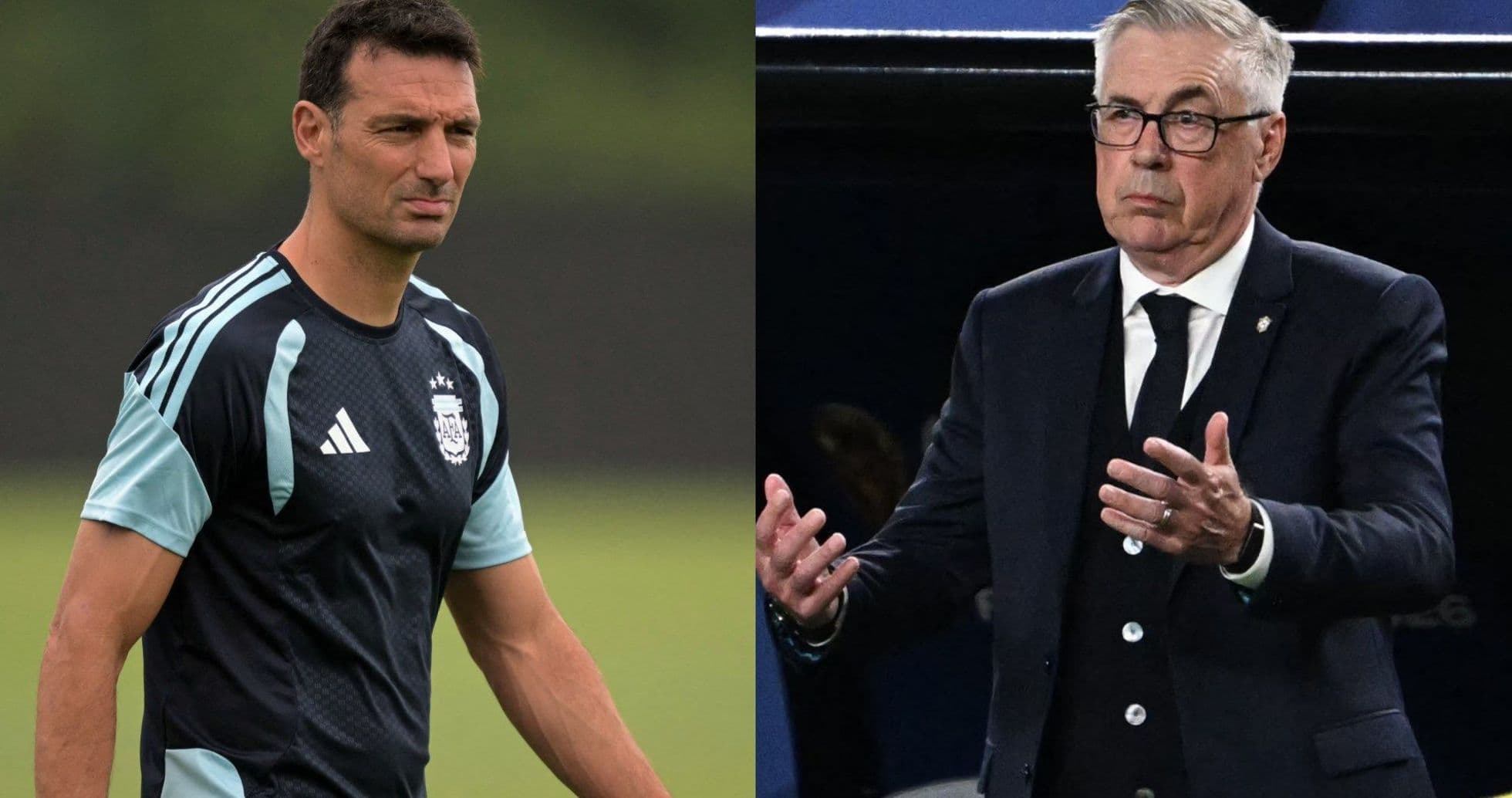
In Dallas, Lionel Scaloni walked into the press room and quietly dismantled a brewing debate before it had any chance to catch fire.
Argentina’s coach had been drawn into the slipstream of comments from Carlo Ancelotti, who recently observed that the world champions do not base their game on relentless pressing or extreme physical intensity. In the age of pressing metrics and heat maps, the remark quickly turned into a talking point about Argentina’s supposed lack of high-octane output.
Scaloni refused to bite.
“I take it in a good way,” he said, making sure the tone matched the words. Ancelotti, he stressed, had spoken well of his team. “He spoke highly of us, he didn't speak badly. I understood well what he said. Since he spoke a mix of Spanish, Italian, and Portuguese, perhaps it wasn't entirely clear. I understood it as a compliment and not a criticism. I'm very sure of that.”
No feud. No subtext. Just one champion coach interpreting another.
Scaloni’s idea of intensity
What followed was not a defence of Argentina’s running stats, but a small manifesto on how he sees the modern game.
Scaloni pushed back against the obsession with constant high pressing as the only proof of “intensity”. For him, the game is decided elsewhere.
“You have to see what is understood by intensity,” he said. “When you don't have the ball, you have to try to ensure they don't hurt you. There aren't many who press you high and man-to-man. Teams become strong in the middle of the pitch and that's where the game is being defined.”
That is Argentina under Scaloni in a sentence: control, not chaos. He made it clear that structure and timing matter more to him than raw sprint numbers. Whether his side line up with three forwards or pack the back line with three or five defenders, the key moment is always the same.
“Whether you win with three forwards or defend with three or five at the back, the reaction when losing the ball is what matters.”
It is a coach’s view shaped by tournament football, by long seasons and tired legs, and by the reality that no side can press at full tilt for 90 minutes every three or four days and survive deep into a competition.
A champion squad, quietly refreshed
Scaloni also lifted the lid on how his squad has evolved since lifting the trophy in Qatar. The core remains, but the edges have been sharpened.
He highlighted the emergence of younger options such as Nico Paz and Giuliano Simeone, players who bring different profiles and give him more direct attacking possibilities from the bench. The idea is not revolution, but variation: new tools for old problems.
“The team is on the right track even though three and a half years have passed,” he said. “They haven't shown signs of taking their foot off the gas and that’s why they are here. There is always room for improvement and they understood the message very well.”
He did not hide the physical strain his players carry after packed club seasons. Reaching peak condition in this context is almost impossible, he admitted, but he delivered the key update any Argentina supporter wants to hear.
“It is very difficult for everyone to arrive at 100 per cent because of the number of games played, but all 26 players are available and ready to play.”
For a coach who prizes options and adaptability, that is gold.
Austria next, and the group on the line
All of this now funnels into a decisive second Group J match in Dallas. Argentina and Austria sit level on three points, and the stakes are clear: a win for the world champions would all but lock up top spot in the group.
Austria arrive with momentum and confidence, a side that can disrupt rhythm and punish any drop in concentration. Scaloni’s talk of control in midfield and intelligent transitions will be put under real stress here, in the Texas heat, with qualification and seeding on the line.
Across the bracket, Brazil have already given themselves room to breathe. Ancelotti’s team brushed aside Haiti 3-0, a result that leaves them needing only a draw against Scotland to secure passage to the round of 32.
So the picture is forming. Brazil can manage their final group game. Argentina cannot. For Scaloni’s men, this is exactly the kind of night they have built their identity for: not about who runs the most, but who thinks the clearest when the group stage tightens and the margin for error disappears.