.svg&w=384&q=75 "Naijagoal logo")

Behind the Scenes of World Cup Portraits
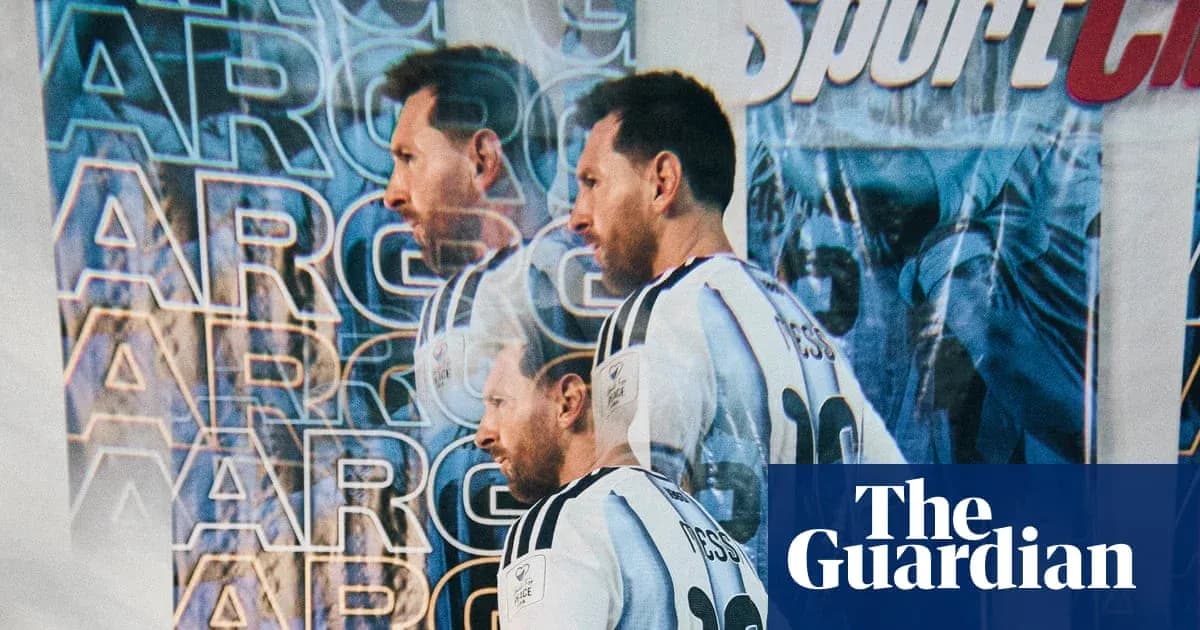
Lionel Messi doesn’t dance for the camera. He stands bolt upright, eyes fixed, as if he’s waiting for a free-kick rather than a flash. Across the room, Marc Cucurella is all movement – hair flying, shoulders rolling, like he’s stepped into a nightclub by mistake. Diego Moreira lifts a forearm across his face, half-hiding, half-revealing an unsettling tattoo. Harry Kane drops on to one knee, looking as if he’s not entirely sure why he’s there.
Welcome to the World Cup’s quietest production line.
At this tournament, 1,248 players and 48 managers have all filed through the same ritual: the official portrait session. No one escapes it. Superstars, squad players, stern coaches. Fifteen seconds of stillness that will follow them everywhere for the next month.
Shot by Getty Images on behalf of Fifa in recent weeks, the portraits form a gallery of micro-performances. Some players smirk, some glare, some barely move a muscle. Each frame offers a tiny clue to how they see themselves – or how they want the world to see them.
Behind the camera, the story looks very different.
Getty’s behind-the-scenes images show the set-up as a kind of high-speed theatre. Two photographers are assigned to each team, working in tandem. One shoots against a plain backdrop, stripped back and almost old-fashioned. The other works with a more distinctive set, ready to spin something a little stranger, a little louder. Players and managers are shuttled between the two, ushered in, posed, and released with ruthless efficiency.
The lighting is simple by design. A big studio strobe with a softbox punches light across the body, while a couple of rim lights carve out shoulders and jawlines from behind. No elaborate rigs, no time for experimentation on the fly. The experimentation happens in the glass.
Those vivid, dreamlike frames – Messi fractured into kaleidoscopic shards, colours bleeding at the edges – come from special lens filters. They bend and blur the light, throwing up unpredictable patterns that feel almost analogue in an age of digital perfection. The backdrops might be more muted than the 2022 World Cup set, but the lenses drag drama back into the frame.
Tom Jenkins, The Guardian’s long-time sports photographer, knows the drill as well as anyone. Photographing elite footballers can be hard work when you have all day. Here, you get minutes. Sometimes less.
“With these kinds of shoots, you only get a few minutes with each player and you have to bash out various pictures and think incredibly quickly,” he says. You don’t ease into it. You arrive fully loaded.
The checklist is non-negotiable. First, the “school photo” – the classic, front-on, neutral expression that used to define tournament portraits. Then, something else. Something with a bit of feeling. Arms folded, collar tugged, stare down the lens. A hint of a goal celebration. A flash of personality.
“A lot of players will have their own poses and goal celebrations already but you’ve also got to have a list in mind,” Jenkins explains. The clock is ticking. The next superstar is already in the corridor.
For once, the balance of power shifts. On the pitch, these players dictate everything. In the studio, the photographer calls the shots.
“The interesting thing is that you’re in control of these superstars and every aspect of the shoot,” Jenkins says. “There’s a lot of pressure that comes with that. You have to make sure you’ve set things up and tested everything before they arrive, so that when the shoot starts you can just focus on them.”
Nothing is left to chance. Name cards sit ready for every player – even Messi, in case anyone in the editing chain somehow blanks on the most recognisable face in football. Players step in, see their name, see the lights, and slip into character.
They also want to see the result. Immediately.
Between takes, many lean over to check the back of the camera, approving, rejecting, adjusting their angle. This generation understands the value of an image as well as any brand executive.
“Most football players are very aware of their own image these days and they know how powerful it can be, especially through Instagram,” Jenkins says. This isn’t new to them. It’s just another campaign.
Eberechi Eze has posed for Burberry. Declan Rice has fronted L’Oréal. They know what to do with a lens. They know their “good side”. And some, frankly, enjoy it.
Of course, comfort in front of the camera doesn’t guarantee a flattering outcome. England’s portraits triggered the usual social media pile-on. Rice’s sunburn became a talking point of its own. Anthony Gordon was compared – relentlessly – to Princess Diana. Dean Henderson’s sideways glare spooked more than a few observers.
The internet did what the internet always does. It mocked. It memed. It moved on.
Yet the more imaginative frames, particularly of Jude Bellingham and his England teammates, show what can still be created in-camera when photographers push the limits of a tight brief. Even when a player offers little, the glass and the light can still find something.
And then there is the portrait that has cut through all of it.
The most talked-about image of this World Cup isn’t of a player at all. It belongs to Uruguay’s head coach, Marcelo Bielsa.
Shot by Michael Regan at Uruguay’s base in Cancún, Mexico, it breaks every unwritten rule of the media day. Bielsa doesn’t square up to the camera. He doesn’t perform. He doesn’t even look up. Instead, he stares down at his feet, shoulders slumped, as if he’d rather be anywhere else.
In an environment built on control and polish, the frame feels almost subversive. It captures not a brand, but a refusal. The famously unorthodox Argentinian later brushed it off with a simple line: “I’m not a model.”
He didn’t need to be. The picture did the work.
For Jenkins, that’s the point. “Ultimately I think the best portrait is one that displays the individual’s personality, and that’s why the Bielsa picture is so brilliant. It’s perfectly him.”
On a World Cup stage obsessed with image, the most powerful portrait might be the one that refuses to play along.