.svg&w=384&q=75 "Naijagoal logo")
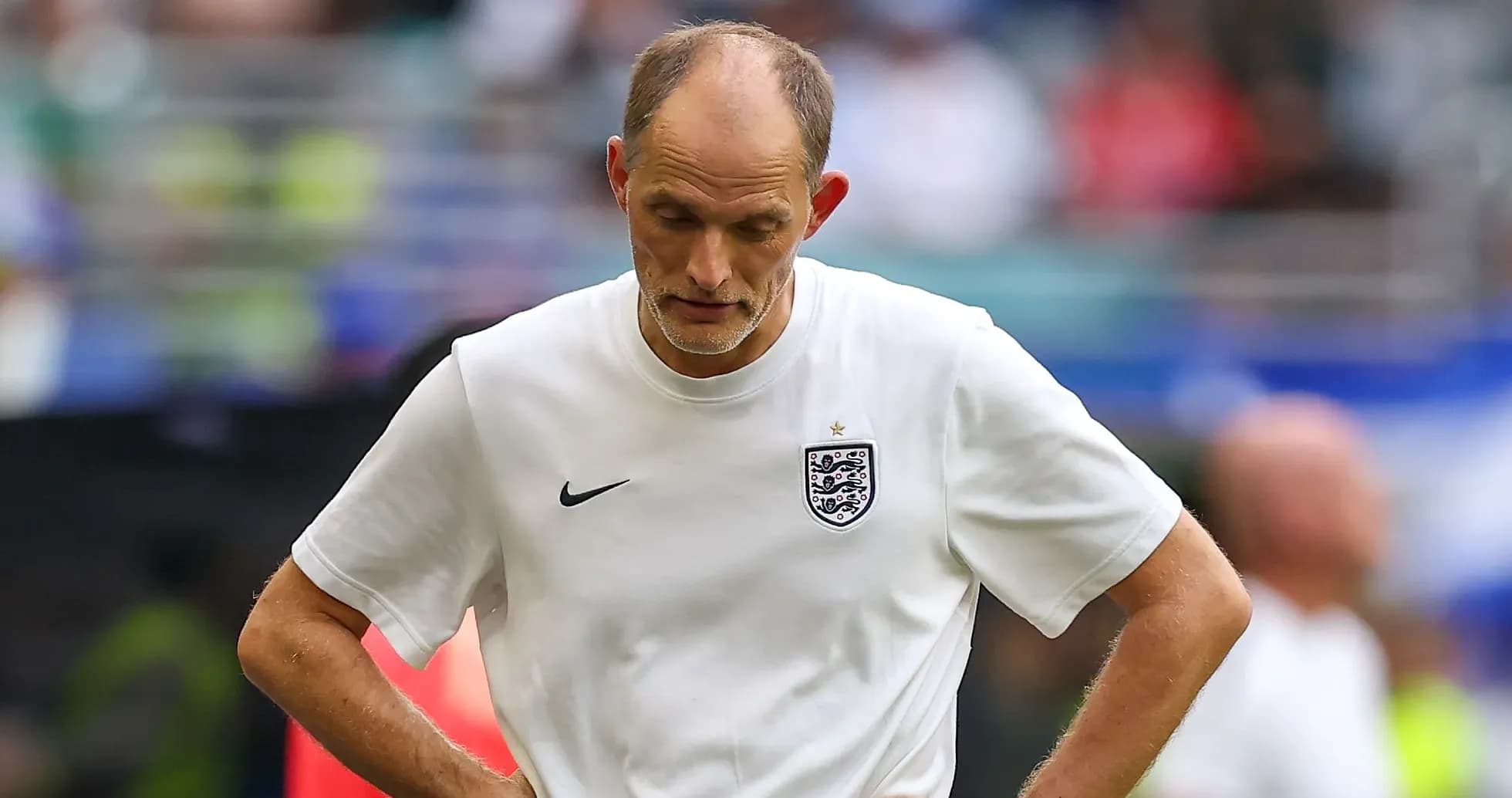

England's Collapse Against Argentina: Tuchel's Tactical Reflection
Anthony Gordon’s opener was supposed to be the launchpad. Instead, it became the prelude to one of the most harrowing collapses in recent England history.
The Three Lions led Argentina, sensed something special, and then watched it all disintegrate in the closing stages as the South Americans mounted a ruthless late surge. At the time, the England manager pointed the finger at a familiar national failing: an inability to keep the ball when it really matters, a supposed flaw baked into the country’s footballing DNA.
He doesn’t see it that way anymore.
Tuchel’s tactical admission
On the FA’s documentary Reflections: England's World Cup Journey, Thomas Tuchel lays the blame squarely at his own door. Not on English culture. Not on his players. On a decision he now sees as fatally cautious.
Feeling his squad were mentally overwhelmed by the occasion and physically drained from a brutal schedule that had dragged them through multiple time zones and extreme altitudes, Tuchel chose to retreat. He moved England into a defensive shape, a back five, long before the clock demanded it. The shift gave Argentina the initiative, and they never handed it back.
“The agony is of epic proportions,” Tuchel said. “I watched the clips with my coaches just last week when we were at SGP. My mind always works forward, forward. Painful. I see it now for the first time from the commentators’ point of view. It’s my scar, the players’ scar, I have to live with it. No-one is hurt more than me. It is torture.”
He still cannot face the full 90 minutes. Only recently has he forced himself to sit through short sequences at St George’s Park, replaying the key moments that turned a controlled performance into a nightmare.
‘This is death’: the turning point
Tuchel pinpoints the moment the fear took over.
“We conceded a chance just before the water break. I thought we will not survive. This is death,” he admitted. “I thought: ‘OK, let’s change to a back five, a 5-4-1.’ It was too early for that mindset. It was Congo, Miami and Norway and then Mexico and altitude. We were super tired.”
The travel log reads like a warning label: long-haul flights, time-zone swings, heavy legs. Tuchel saw a group running on fumes and tried to protect them. Instead, the early retreat sent a different message – one that Argentina seized on.
England had started well. Gordon’s goal gave them something to cling to, and Tuchel insists the opening 45 minutes justified the game plan.
“You have to have football quality. We prepared so well. I think we did quite well in the first half, it was quite an even match and I felt we were there,” he said.
Then came the second half, and with it, the moment that flipped the mood.
“From the start of the second half, I saw a change. The famous tackle of Djed Spence. And it did something to me, it did something to the players and it was a shift in the mindset. We played like we had four minutes left but there was half an hour left.”
England stopped playing the game in front of them and started playing the scoreboard. They dropped deeper, cleared longer, and waited for the final whistle that was still miles away.
Argentina smelled it instantly.
Argentina’s response and England’s scar
“We relied on our brotherhood, our mentality. Individual quality,” Tuchel said. “Argentina have that as well – brotherhood, mentality, they bring it all to the table and it means the world to them. Argentina played very, very quickly. They had nothing to lose.”
Once England’s line sank and their passing evaporated, Argentina turned the match into a siege. Every attack carried menace, every loose ball seemed to fall their way. The comeback felt less like a twist and more like an inevitability.
Tuchel, usually the master of in-game detail, now sees that his own fear accelerated the collapse. The back five came too soon. The mindset followed it. The players mirrored their manager’s anxiety.
And the scar, as he calls it, is still raw.
Pride, pain and what comes next
Out of the wreckage, England still found a way to finish third, beating France to salvage something tangible from a campaign that had promised more.
“You learn as a coach. You have to play as if it is 0-0. That includes me as well,” Tuchel said. “I have a lot of people who want to see my medal. We did not achieve what we wanted. But I am still very proud of what we achieved. These players will come back hungry.”
The medal sits as a reminder of both. Of how close they came, and how quickly it slipped away. The question now is simple: when that hunger meets another moment like Argentina, does Tuchel trust his instincts again—or rewrite the ending?