.svg&w=384&q=75 "Naijagoal logo")

U.S. Men’s National Team's Crucial Four-Game Stretch
Mauricio Pochettino is about to show his hand.
Across the next four games, the U.S. Men’s National Team will step into the kind of stretch that defines ideas, exposes weaknesses and clarifies who belongs in the core of a World Cup cycle. Peru and Chile in late September, then Mexico and Canada in early October. Four matches, four different types of questions for a project still being built in the Argentine’s image.
This isn’t just another camp. It’s a stress test.
Pepi out, Downs in
The first twist arrived before a ball was even kicked. Ricardo Pepi, a symbol of the program’s next generation of goalscorers, is out.
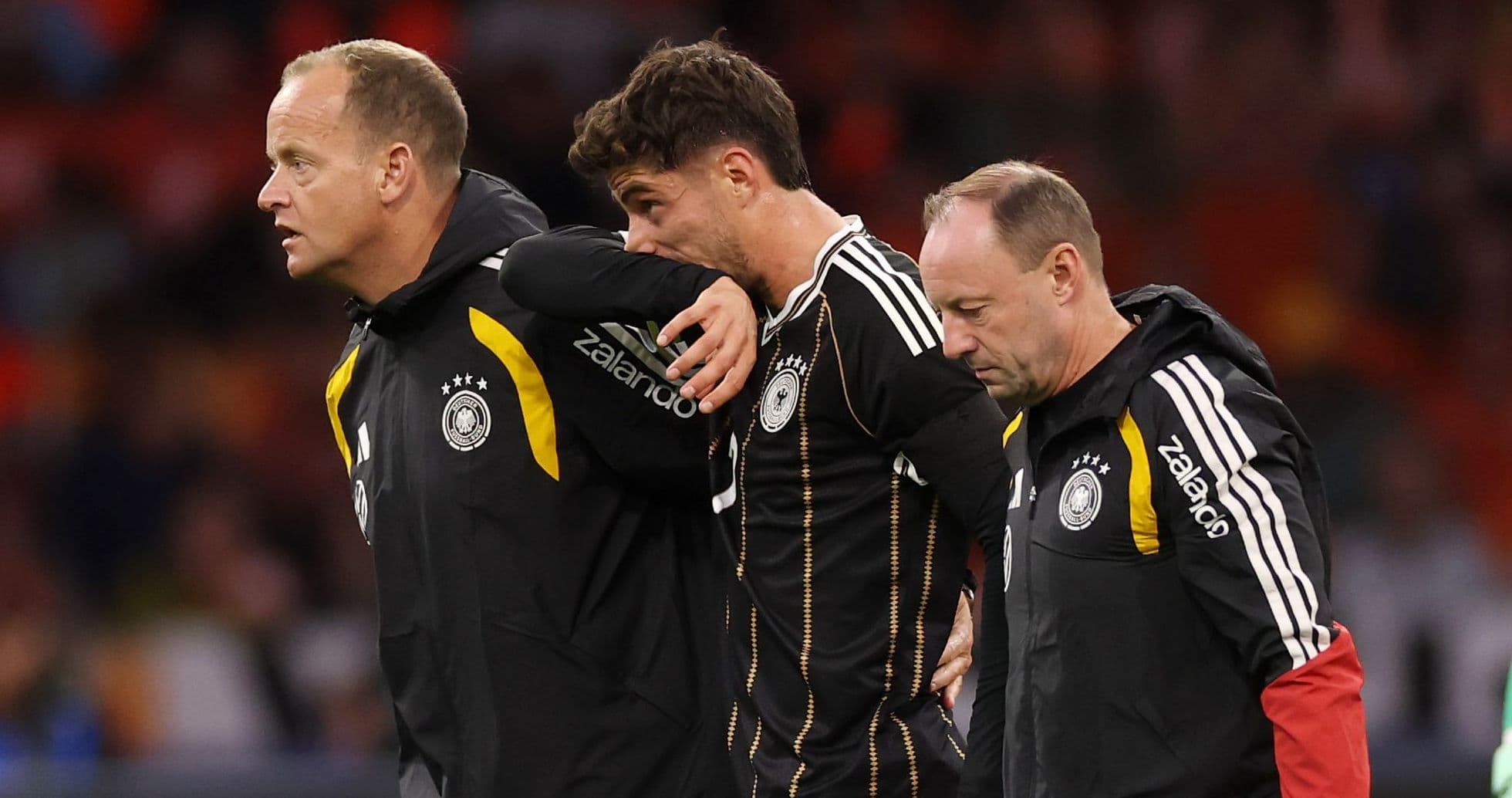
The PSV Eindhoven striker was forced to withdraw after coming off injured in PSV’s 3-2 defeat to FC Twente. For Pochettino, it’s a blow. For someone else, it’s a door swinging wide open.
That someone is Damion Downs.
The 22-year-old forward, on loan at St. Louis City SC from Southampton, has been drafted into the squad. It’s not a token gesture. It’s another step in a quiet, steady climb toward a bigger role with the national team.
Downs, a dual U.S.-German citizen, already has a moment on the international stage that sticks in the memory. During the United States’ run to the 2025 Concacaf Gold Cup final, he buried the winning penalty in the shootout against Costa Rica in the quarterfinals. One kick, high pressure, no fuss.
Now he arrives at this camp with a strong club season behind him. He helped FC Köln earn promotion back to the Bundesliga in 2024-25, contributing 10 goals and five assists in the 2. Bundesliga. Those aren’t empty numbers; they belong to a forward who influenced a promotion race.
Back in Major League Soccer with St. Louis City, Downs will likely feel at home when the U.S. hosts Chile at Energizer Park. The surroundings will be familiar. The stakes will not.
Pochettino’s reshaping of the pool
For years, the United States leaned heavily on a small inner circle of trusted names. The spine rarely changed. The depth chart often felt theoretical.
Pochettino has pushed against that.
One of his clear priorities has been to widen the pool and inject real competition into almost every position. Training sessions, not just matchdays, now carry a sharper edge. Pepi’s injury only sharpens that reality. His absence is a setback, but it also hands a live audition to a player like Downs.
Across this four-game window, the staff gets more than just a look at the next man up at striker. They get a laboratory. Different combinations, different roles, different solutions when the first-choice XI isn’t available. In a long campaign, the players behind the headline names can decide whether a team survives injuries, suspensions and dips in form.
Results always matter, especially in this region. But for a team still being molded, discovering which players can be trusted when it gets uncomfortable might be just as important as the scorelines.
Aggression with a blueprint
Pochettino’s club teams have long carried a clear stamp: high pressing, quick transitions, relentless work without the ball. He doesn’t hide from that identity. He embraces it.
Transferring that style to a national team is never straightforward. There’s less time on the training ground, fewer chances to drill the details, fewer matches to test them. Patterns that club players rehearse daily must be condensed into short bursts in camp.
Yet the intent has been obvious. The United States wants to play higher, to suffocate opponents earlier, to turn defense into attack in a heartbeat — without losing its structure. That balance is the challenge. Get it wrong, and the team becomes stretched and vulnerable. Get it right, and the U.S. can impose itself even against stronger opponents.
Peru and Chile arrive at exactly the right moment for that experiment. Neither side is likely to sit back and simply allow the Americans to dictate every phase. They will challenge the U.S. press, test its spacing, ask questions in transition. Perfect rehearsal conditions before the volume turns up.
Mexico, Canada and the real verdict
Because the volume will turn up.
After Peru and Chile, the window swings open to Mexico and Canada — two opponents who now see themselves as peers, not underdogs, in the regional hierarchy. These are the fixtures that linger in the public memory, that shape narratives around a national team manager.
Mexico on October 3 at State Farm Stadium is the centerpiece. USA-Mexico never feels like a friendly, whatever the label. Form goes out the window. Rankings don’t matter. The rivalry strips things down to mentality, organization and sheer competitive edge.
Canada, too, has grown into a genuine measuring stick. Their rise has forced the United States to respond, to evolve, to prove that its own progress is real and not just a story it tells itself.
By the end of this four-match run, the picture around Pochettino’s U.S. will be sharper. We’ll know more about Downs and the rest of the supporting cast. We’ll see whether the high press and quick transitions can hold up under real fire. And we’ll have a better sense of whether this team is merely promising on paper, or ready to stand up to its fiercest neighbors when it matters most.