.svg&w=384&q=75 "Naijagoal logo")

England Advances in Thrilling 3–2 Victory Over Mexico
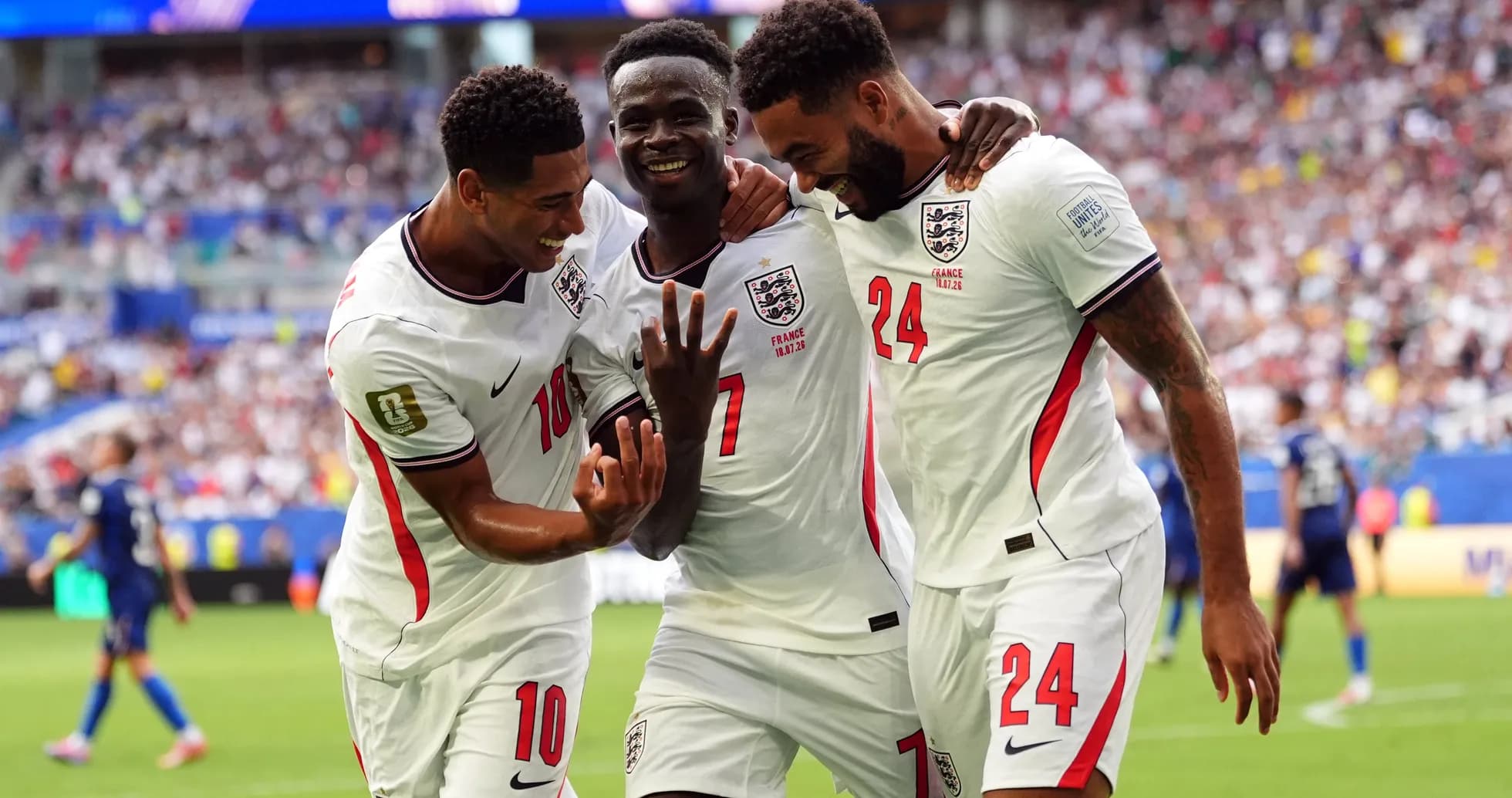
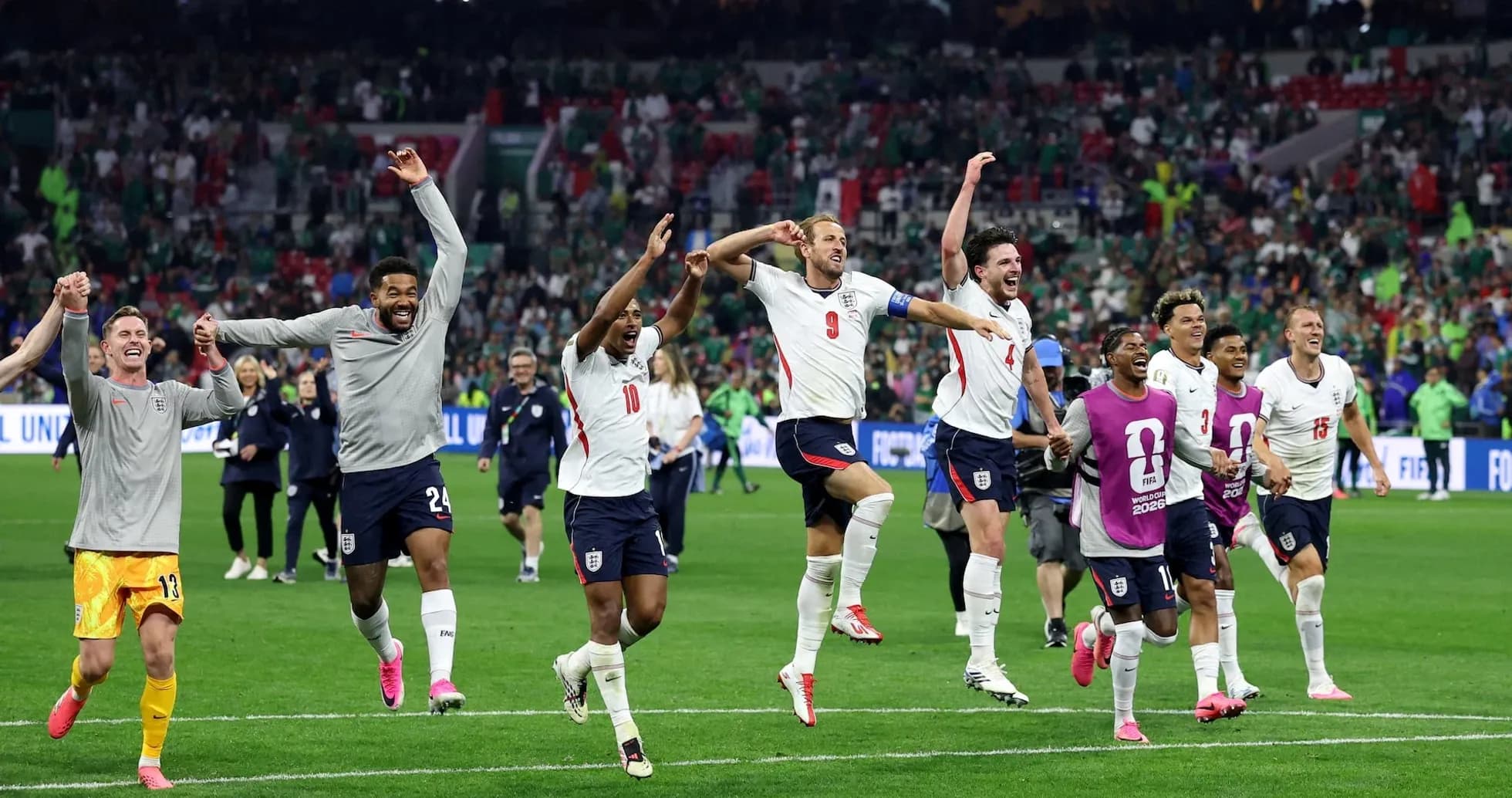
Under the lights of Estadio Banorte in Mexico City, a Round of 16 that felt like a final in disguise tilted, finally, towards England. A 3–2 away win in regular time pushed Thomas Tuchel’s side through and halted a Mexican campaign that, until this night, had been close to flawless.
Coming into the knockout phase, Mexico’s seasonal identity was clear: front-foot, aggressive, and comfortable as protagonists. Overall this World Cup, they had played 5 matches, winning 4 and losing just 1, with 10 goals scored and 3 conceded. At home they had been particularly assertive, with 4 fixtures, 3 wins, 1 defeat, 7 goals scored and only 3 allowed, an average of 1.8 goals for and 0.8 against. England arrived with a different kind of authority: unbeaten overall in 5 fixtures, 4 wins and 1 draw, scoring 11 and conceding 5. On their travels they had been efficient rather than spectacular, with 2 away games, 2 wins, 5 goals scored and 2 conceded, averaging 2.5 goals for and 1.0 against.
The match itself reflected those identities: Mexico in a 4‑3‑3 under Javier Aguirre, England in a 4‑2‑3‑1 under Tuchel. But within those familiar shapes, the individual stories and structural tensions decided everything.
Mexico's Formation
For Mexico, the back four of J. Gallardo, J. Vasquez, C. Montes and J. Sanchez shielded R. Rangel, with a midfield three of L. Romo, E. Lira and G. Mora tasked with both circulation and counterpressing. Ahead of them, R. Alvarado and J. Quiñones flanked R. Jimenez in a front line that had been one of the tournament’s most productive. Overall this campaign, Mexico’s attack had averaged 2.0 goals per match, with J. Quiñones contributing 4 goals and 1 assist and R. Jimenez adding 3 goals. Alvarado, one of the competition’s leading creators with 3 assists and 13 key passes, was the conduit between midfield and the front three.
England's Structure
England’s structure was built around a different axis. J. Pickford anchored a back line of N. O’Reilly, M. Guehi, E. Konsa and J. Quansah. In front, D. Rice and E. Anderson formed the double pivot, releasing a band of three — A. Gordon on the left, J. Bellingham central, B. Saka on the right — behind H. Kane. Statistically, this was a group primed for knockout football: Kane entered as one of the World Cup’s top scorers with 6 goals and 1 assist from 5 appearances, Bellingham had 4 goals and 1 assist with 58 duels contested and 30 won, while Saka’s 3 assists in just 192 minutes underlined his status as England’s most incisive wide creator.
Disciplinary Underpinnings
The disciplinary undercurrent was always going to matter in a contest this finely balanced. Across the tournament, Mexico’s yellow cards had clustered in the 61–75 minute band, where 50.00% of their cautions arrived, with a further 25.00% between 16–30 minutes. They had also seen a red card in the 91–105 window, a reminder of how emotional their late-game phases could become. England’s bookings were more evenly spread, but with a noticeable rise between 61–75 minutes (28.57% of their yellows). Their red card profile was sharper: one dismissal between 46–60 minutes, and J. Quansah himself carried that history into this fixture, having already been sent off once in the tournament, with 1 red and 1 yellow card in just 117 minutes.
Tactical Dynamics
Those patterns framed the tactical voids. Mexico’s defensive discipline had been excellent overall — 3 goals conceded in 5 matches, 4 clean sheets, and no penalties missed or conceded from the spot. But the presence of C. Montes on the red-card list, sent off once in earlier play, hinted at a centre‑back willing to defend on the edge. Against an England side whose attack was calibrated around Bellingham’s late runs and Kane’s penalty‑area craft, any mis-timed challenge carried a cost.
In midfield, the “engine room” duel between Rice and Bellingham on one side and Romo, Lira and Mora on the other defined the rhythm. Rice, with 166 passes at 91% accuracy and 12 key passes in the tournament, is not only England’s shield but also a deep playmaker. His ability to break Mexican lines and find Bellingham between Romo and Lira forced Mexico’s midfield three to compress centrally, leaving more space for Saka and Gordon to attack the full-backs. For Mexico, Romo’s work rate and Lira’s positional discipline were essential to protect the half-spaces in front of Montes and Vasquez, especially once England began rotating Bellingham and Saka inside to overload the right half-channel.
Confrontation Up Front
Up front, the “hunter vs shield” confrontation was Kane and Bellingham against a Mexican defence that had, until this match, allowed just 0.6 goals per game overall. Yet England’s front line had been operating at 2.2 goals per match across the tournament, with a penalty record of 2 scored from 2 and no misses. Mexico’s own penalty record was similarly perfect — 1 scored from 1, none missed — but England’s ability to generate contact around the box through Bellingham’s dribbling (15 attempts, 9 successful) and Saka’s direct running meant that any lapse from Gallardo or Sanchez risked tilting the tie from open play into set-piece jeopardy.
Wide Corridors
The wide corridors were another decisive battleground. Alvarado, with 7 successful dribbles from 8 attempts and 21 duels won from 36, consistently offers Mexico progression on the right, drifting inside to combine with Quiñones. Against O’Reilly and Gordon, who had to balance forward thrust with tracking, this was Mexico’s best route to isolate England’s full-back. On the opposite flank, Saka versus Gallardo was structurally mirrored: Saka’s 8 dribbles attempted, 4 successful, and 3 assists made him England’s primary outlet to stretch Mexico’s back four horizontally, opening lanes for Kane’s movement across the front of Montes and Vasquez.
Emotional Control
Discipline and emotional control were always likely to bend the contest in one direction. England’s card distribution — yellows spread across all phases but with that 61–75 spike — suggested a team that tightens its grip just as games enter their decisive quarter. Mexico’s tendency to collect cards in that same window, plus a previous red deep in extra time, hinted at a side that can be dragged into chaos when chasing or protecting a narrow margin.
Following this 3–2 result, the statistical prognosis that had loomed over the tie is crystallised in narrative form. Mexico’s attacking averages and home dominance were not enough to offset England’s greater variety in the final third and their capacity to manage high‑stress phases without structural collapse. The blend of Kane’s penalty-box efficiency, Bellingham’s all‑court presence, Saka’s creative edge and Rice’s control of tempo has carried an unbeaten England through a hazardous Round of 16, while Mexico’s brave, expansive 4‑3‑3 leaves the tournament with its identity intact but its margins exposed at the very highest level.