.svg&w=384&q=75 "Naijagoal logo")

Egypt Edges Australia in Penalty Shootout at AT&T Stadium
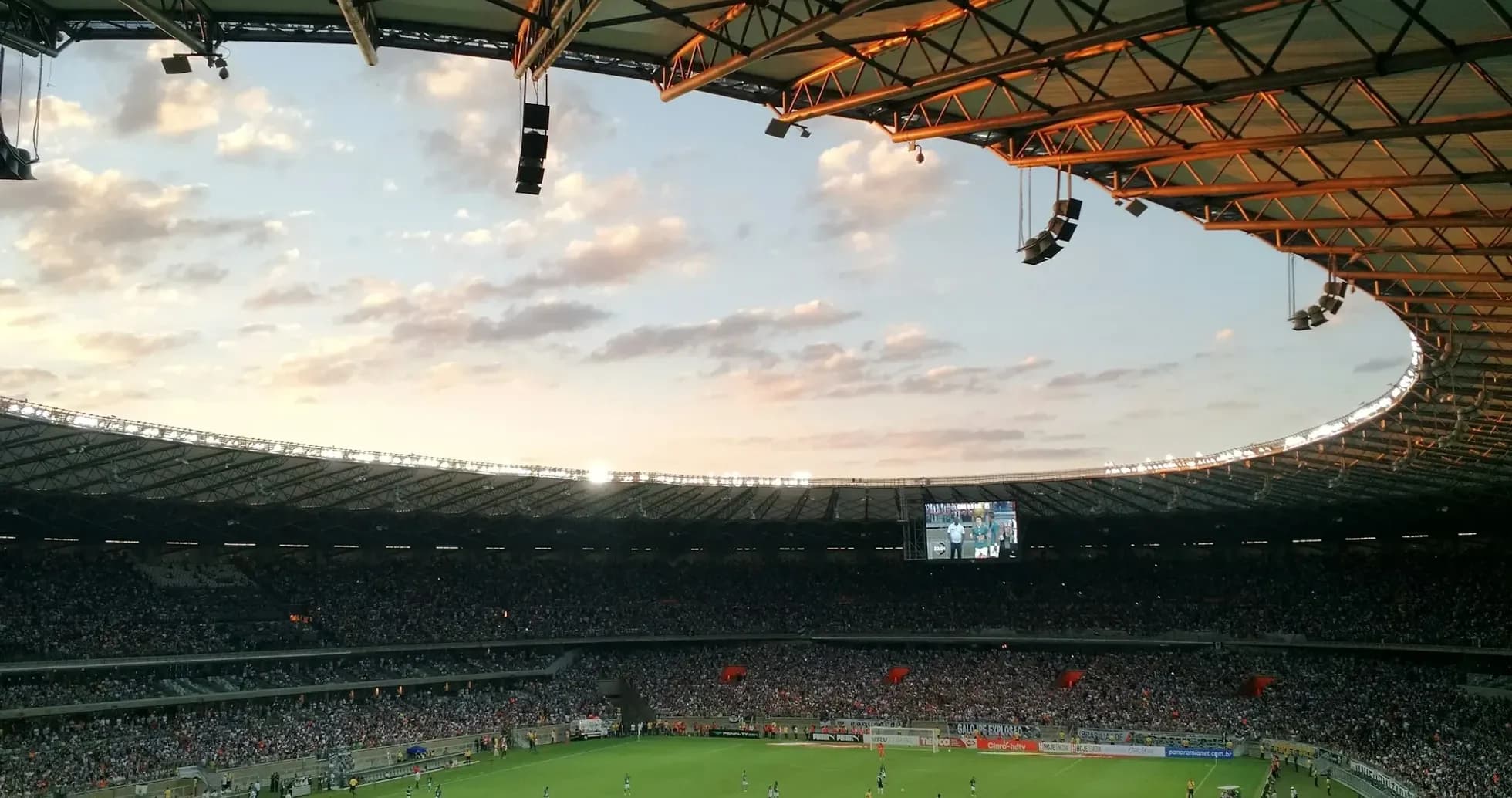
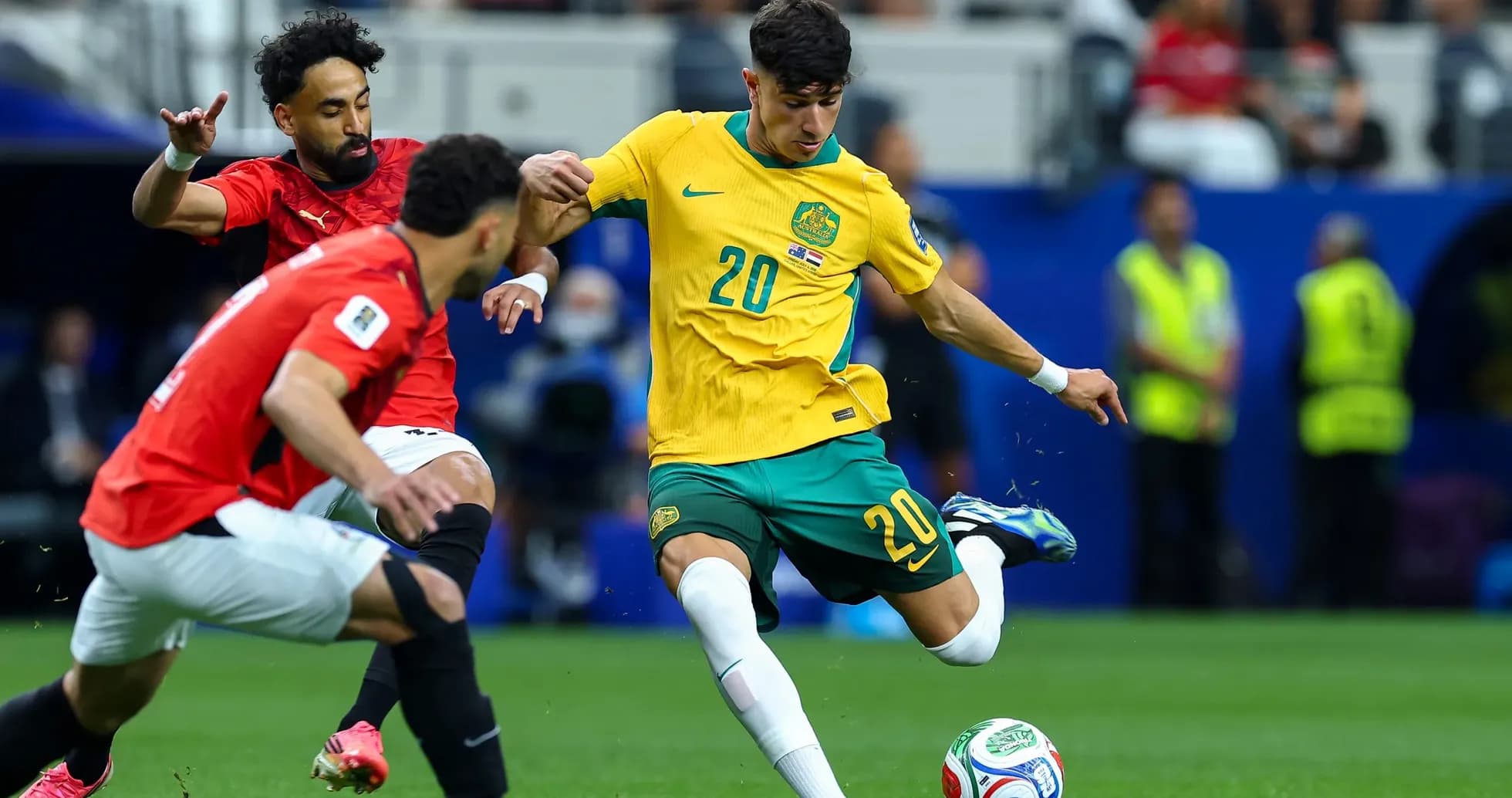
Under the roof of AT&T Stadium in Dallas, Australia and Egypt went the full distance and beyond, dragging their Round of 32 tie through 120 minutes before Egypt finally edged it 4–2 on penalties after a 1–1 draw. It was a contest that mirrored their tournament identities: Australia stubborn, system‑driven and often short of attacking punch; Egypt more fluid in possession, reliant on star quality and late‑game nerve.
Australia's World Cup Profile
Heading into this game, Australia’s World Cup profile was that of a balanced but blunt side. Overall they had played 4 matches, winning 1, drawing 2 and losing 1. At home in this tournament they had 2 matches, with 1 win and 1 draw, scoring 3 goals and conceding 1. On their travels they had played 2, failed to score at all, and conceded 2. That gave them overall averages of 0.8 goals scored and 0.8 conceded per match, with a total goal difference of 0 (3 for, 3 against). The numbers painted a team that stayed in games, but rarely blew anyone away.
Tony Popovic leaned into that identity with a 3‑4‑2‑1 that prioritised structure. P. Beach started in goal behind a back three of A. Circati, H. Souttar and L. Herrington. The wing‑backs, J. Bos on the right and A. Behich on the left, were asked to stretch Egypt’s 4‑4‑2 while doubling as auxiliary full‑backs when the ball was lost. In central midfield, J. Irvine and A. O’Neill formed a hard‑running, combative pair, leaving the creative burden to the line of three ahead: C. Volpato and C. Metcalfe operating between the lines, and the explosive N. Irankunda as the nominal striker.
The selection underlined Popovic’s reality: Australia’s threat at home in this tournament had been modest but efficient. At home they averaged 1.5 goals scored and 0.5 conceded, helped by a biggest home win of 2–0, but overall they had already failed to score twice in 4 matches. With M. Leckie missing through a hamstring injury and J. Italiano out with ankle problems, Australia lacked two potential difference‑makers in the final third. The bench, featuring A. Mabil, A. Hrustic, M. Toure, T. Yengi and N. Velupillay, offered variety but not a proven tournament scorer.
Egypt's Statistical Profile
Egypt arrived with a more assertive statistical profile. Overall they were unbeaten in 4 matches, with 1 win and 3 draws. On their travels they had played 3, winning 1 and drawing 2, scoring 5 and conceding 3. That translated to an away average of 1.7 goals scored and 1.0 conceded; overall they were at 1.5 for and 1.0 against, a total goal difference of +2 (6 scored, 4 conceded). They had yet to keep a clean sheet, but they had also never failed to score.
Hossam Hassan’s 4‑4‑2 in Dallas was a subtle departure from the 4‑2‑3‑1 that had been his default (3 matches) in this World Cup. O. Shobeir started in goal, shielded by a back four of M. Hany, Y. Ibrahim, R. Rabia and K. Hafez. In midfield, E. Ashour and H. Fathy flanked the central pairing of M. Attia and O. Marmoush, with M. Salah and M. Ziko up front.
That shape told its own tactical story. Salah, listed as a forward here, had been Egypt’s creative hub throughout the tournament. Across his 4 appearances he had scored 1 goal and delivered 2 assists, with 16 key passes and 6 successful dribbles from 13 attempts. His 113 total passes at 77% accuracy and 9 fouls drawn underlined how often he was the reference point when Egypt needed to advance the ball or win territory. In this structure, Marmoush’s nominal midfield role allowed him to drift inside and combine with Salah, turning the 4‑4‑2 into a 4‑2‑3‑1 in possession.
The absences on Egypt’s side were significant but cleverly managed. Hossam Abdelmaguid was suspended through a sports court decision, while Mohamed Abdelmonem missed out with ankle problems; both could have challenged for starting roles in central defence. Instead, Y. Ibrahim – one of the World Cup’s leading yellow‑card collectors with 2 bookings, 7 tackles and 3 blocked shots – anchored the back line. His aggression in duels (52 contested, 22 won) was both a strength and a risk against Australia’s late surges.
In midfield, Mohanad Lasheen’s suspension for accumulated yellows removed a ball‑winning presence who had amassed 13 tackles, 4 blocks and 4 interceptions. Without him, the onus fell more heavily on H. Fathy and M. Attia to control the central spaces and disrupt Australian counters.
Discipline and Tactics
Discipline was a quiet but important subplot. Australia’s yellow‑card distribution this tournament skewed late: 40.00% of their bookings had arrived between 76–90 minutes, with a steady 20.00% in each of the 16–30, 31–45 and 46–60 windows. In knockout football, that late‑game spike hinted at a team that increasingly fouled under pressure as legs tired and lines stretched. Egypt’s cautions, by contrast, were more evenly spread, with 25.00% of yellows in each of the 16–30, 31–45 and 91–105 ranges, and 12.50% in both 0–15 and 106–120. It suggested a side that defended on the front foot early, then managed transitions in extra time with controlled fouling rather than panic.
The “hunter versus shield” dynamic was clear. Egypt’s attack, averaging 1.7 away goals, revolved around Salah’s ability to slip into half‑spaces and feed runners like Marmoush and Ziko. Australia’s shield was a home defence conceding just 0.5 goals per match, built on Souttar’s aerial command and the compactness of a back three plus double pivot. The first half reflected that balance: Egypt found the early breakthrough, Australia held their shape and waited for moments to break, and the contest slowly stretched as fatigue and urgency grew.
In the engine room, J. Irvine and A. O’Neill were tasked with disrupting Egypt’s rhythm, closing the lanes into Salah and Marmoush, and giving Volpato and Metcalfe a platform to play. For Egypt, Attia and Fathy had to be both screen and springboard: protecting Ibrahim and Rabia from Irankunda’s pace while progressing the ball quickly enough to exploit the spaces behind Australia’s wing‑backs.
Over 120 minutes, neither side could find a second goal. That stalemate was entirely in keeping with the underlying numbers: Australia’s overall average of 0.8 goals for and 0.8 against pointed to fine margins; Egypt’s 1.5 scored and 1.0 conceded suggested they would create but also offer chances. With neither team awarded a penalty in regulation or extra time in this tournament – both had taken 0 overall, with 0 scored and 0 missed – the shootout at AT&T Stadium was an abrupt new frontier.
In the end, Egypt’s higher attacking ceiling and Salah’s big‑moment temperament tilted the balance from the spot. Following this result, the statistical narratives held firm: Australia departed as a disciplined, defensively credible side that struggled to consistently turn structure into goals; Egypt advanced as an unbeaten, offensively reliable outfit whose stars and psychological resilience in the 91–120 window made the difference when the World Cup’s margins narrowed to a single kick.