.svg&w=384&q=75 "Naijagoal logo")

Cagliari vs Inter: A Tactical Battle in Serie A 2026
Under the hot August glare at the Unipol Domus, Cagliari’s return to home soil in Serie A 2026 carried a different kind of weight. This was not a relegation scrap or a mid-table dead rubber; it was an early-season measuring stick against an Inter side already moving with title-contender rhythm.
The table told its own story heading into this game. Cagliari sat 12th with 3 points from 2 matches, their overall goal difference perfectly balanced at 0 after scoring 1 and conceding 1 in total. The split, though, was revealing: away they had been efficient and ruthless in a 1-0 win, but at home they had lost 0-1, failing to score and conceding once. Inter, by contrast, arrived in Sardinia as early pacesetters. Second in Serie A with 6 points from 2 games, they had already built an overall goal difference of +4, scoring 5 and conceding just 1 in total. At San Siro they had blown opponents away 4-1; on their travels they had been pragmatic and controlled in a 1-0 victory.
Those numbers framed a clash of identities. Cagliari’s season so far had been defined by narrow margins: overall they averaged 0.5 goals for and 0.5 against per match, with a clean sheet on their travels but no goals at home. Inter, meanwhile, were operating at a different attacking altitude, averaging 2.5 goals for per game overall while still keeping their defensive line tight at 0.5 conceded.
Fabio Pisacane doubled down on stability, sending Cagliari out in a 4-2-3-1 that has been their structural constant, used in both league fixtures so far. E. Caprile guarded the goal, shielded by a back four of J. Pedro, A. Deiola, J. Rodriguez and A. Obert. In front of them, the double pivot of A. Romano and H. Winks was tasked with compressing the central lanes where Inter’s creativity usually flows. Ahead of them, M. Adopo, D. Maldini and J. Fazzini formed a narrow band of three behind lone forward P. Mendy.
The shape spoke of caution and compactness. Cagliari’s statistical profile this season underlined that approach: in total they had one clean sheet, achieved away, but had already failed to score in one match at home. Their card distribution also hinted at a team that tends to grow more combative as games progress, with 50.00% of their yellow cards coming between 46-60 minutes and another 25.00% in the final quarter-hour of normal time. It is a side that often has to chase, and that chasing can turn into fouls and bookings.
On the opposite bench, Cristian Chivu leaned into Inter’s continuity: a 3-5-2 that had already delivered two wins from two. J. Martinez started in goal, behind a back three of B. Pavard, M. Akanji and A. Bastoni. The wing-backs, Luis Henrique on the right and F. Dimarco on the left, offered the width, while the central trio of N. Barella, H. Calhanoglu and P. Sucic controlled the engine room. Up front, L. Martinez and F. Esposito formed a partnership that blends movement, pressing and penalty-box presence.
Inter’s spine is not just star-studded; it is statistically dominant. H. Calhanoglu arrived in Cagliari as one of the league’s standout early performers. In total he had scored 2 goals in 2 appearances, both of his 2 shots on target, while completing 125 passes with 91% accuracy and chipping in 3 key passes. His defensive contribution was equally sharp, with 3 tackles, 1 blocked shot and 3 interceptions. He was already on the disciplinary radar too, with 1 yellow card in the league, underlining his willingness to foul to break rhythm.
Alongside him, F. Esposito had emerged as a dangerous all-rounder in attack. In total he had 1 goal and 1 assist from 2 appearances, with 6 shots (3 on target), 4 key passes and 9 duels won out of 15. His presence as both finisher and facilitator made him a key piece in Inter’s attacking puzzle. From the bench, A. Diouf offered another creative dimension; in just one league appearance he had already delivered 2 assists, completing 35 passes at 94% accuracy and providing 3 key passes. If Chivu wanted to tilt the game further in Inter’s favour in the second half, Diouf was the obvious lever.
For Cagliari, the creative responsibility fell heavily on J. Fazzini and D. Maldini. Fazzini’s early-season numbers painted him as a high-risk, high-impact carrier: in total he had attempted 4 dribbles and completed all 4, adding 1 key pass and 46 total passes at 82% accuracy. But his aggression without the ball had a cost: he had committed 3 fouls and already taken 1 yellow card in the league. Against Inter’s midfield, every mistimed challenge risked conceding dangerous set-pieces in Calhanoglu territory.
The absences added another layer to the tactical story. Cagliari were without R. Idrissi and Y. Trepy, both ruled out through injury. That reduced Pisacane’s options for wide rotation and late-game pace from the bench, pushing more responsibility onto the likes of M. Felici, A. Fadera, G. Borrelli, Kevin and R. Ciervo as potential impact forwards if the game state demanded a more aggressive posture. Inter, for their part, were missing D. Spence and M. Spinacce, but Chivu’s bench remained deep and balanced: J. Stones and Carlos Augusto offered defensive adjustments, while H. Mkhitaryan, P. Zielinski, C. Jones and A. Diouf could all reshape the midfield, and M. Thuram and A. Bonny provided alternative profiles up front.
The disciplinary undercurrent promised to be significant. Inter’s yellow cards this season had been evenly spread: 33.33% in the opening 15 minutes, 33.33% between 31-45, and 33.33% between 46-60. This is a side that is happy to foul early to set the tone, then again around the break to kill momentum. Cagliari, by contrast, tend to heat up after half-time, with that 46-60 window their most card-heavy. The intersection is clear: the start of the second half was always likely to be the most combustible phase, with Inter potentially turning the screw in possession and Cagliari responding with more aggressive pressing and tackles.
Structurally, the key matchup was always going to be Inter’s midfield “hunter” versus Cagliari’s “shield”. Calhanoglu, Barella and Sucic had the passing range and mobility to pull Romano and Winks out of position. If Cagliari’s double pivot was stretched horizontally, the half-spaces between full-back and centre-back would open, inviting Luis Henrique and Dimarco to attack those corridors and overload Cagliari’s back line. From there, L. Martinez’s movement between the lines and Esposito’s runs across the defence could create the kind of chances that Inter have been ruthlessly converting in this young season.
Cagliari’s best route into the game lay in transition. With Inter averaging 4.0 goals for at home but just 1.0 on their travels, Chivu’s side have shown they are more conservative away, often protecting their overall defensive average of 0.5 goals conceded per match. If Cagliari could survive the initial waves and keep the scoreline level, the match might tilt towards the kind of scrappy, low-margin contest where one dribble from Fazzini or a clever pocket run from Maldini could unlock space for Mendy.
From a statistical prognosis, though, the scales were tilted. Inter’s overall attacking output of 5 goals in 2 matches, combined with a defence that has allowed just 1 goal in total and kept a clean sheet away, suggested they would generate the higher xG and the clearer chances. Cagliari’s overall record of 1 goal scored and 1 conceded, plus a total of 1 failed-to-score performance already at home, pointed to a side still learning how to create consistently against elite defensive blocks.
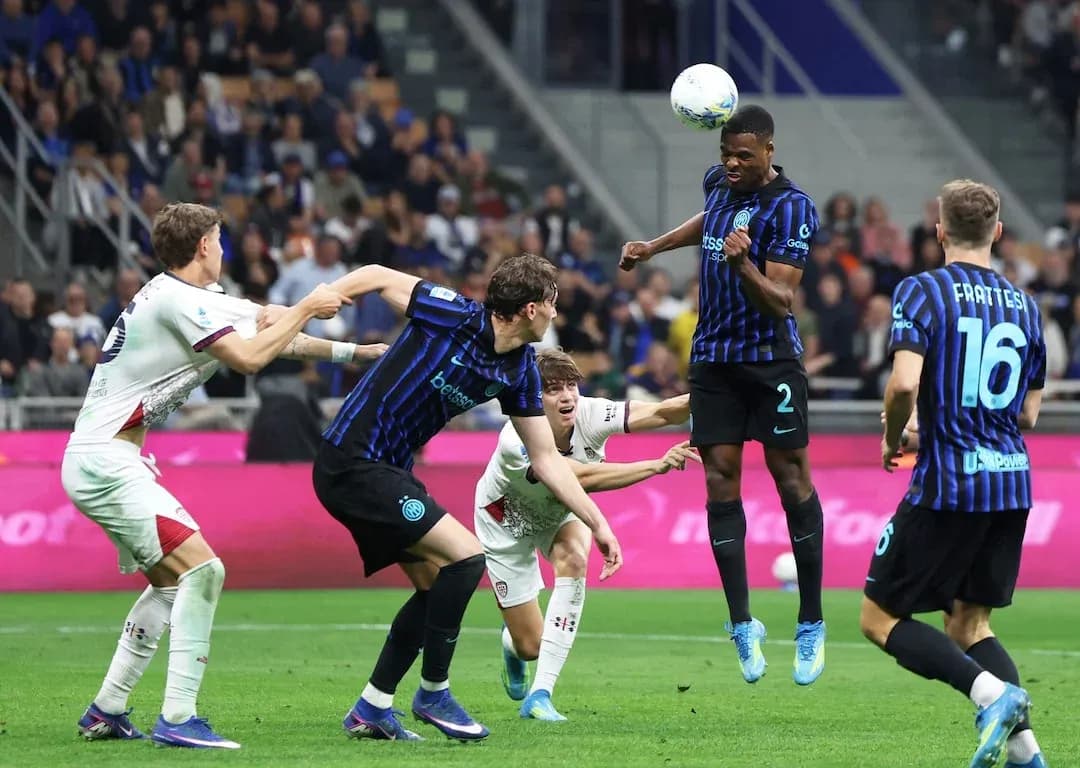
In the end, the 0-1 full-time scoreline at the Unipol Domus felt like a crystallisation of those trends rather than a surprise. Inter’s structure, depth and individual quality in the engine room gave them just enough control to edge a Cagliari side that defended bravely but lacked the cutting edge to truly unsettle one of Serie A’s early heavyweights.