.svg&w=384&q=75 "Naijagoal logo")

Juventus vs Parma: Serie A Clash Highlights Dominance
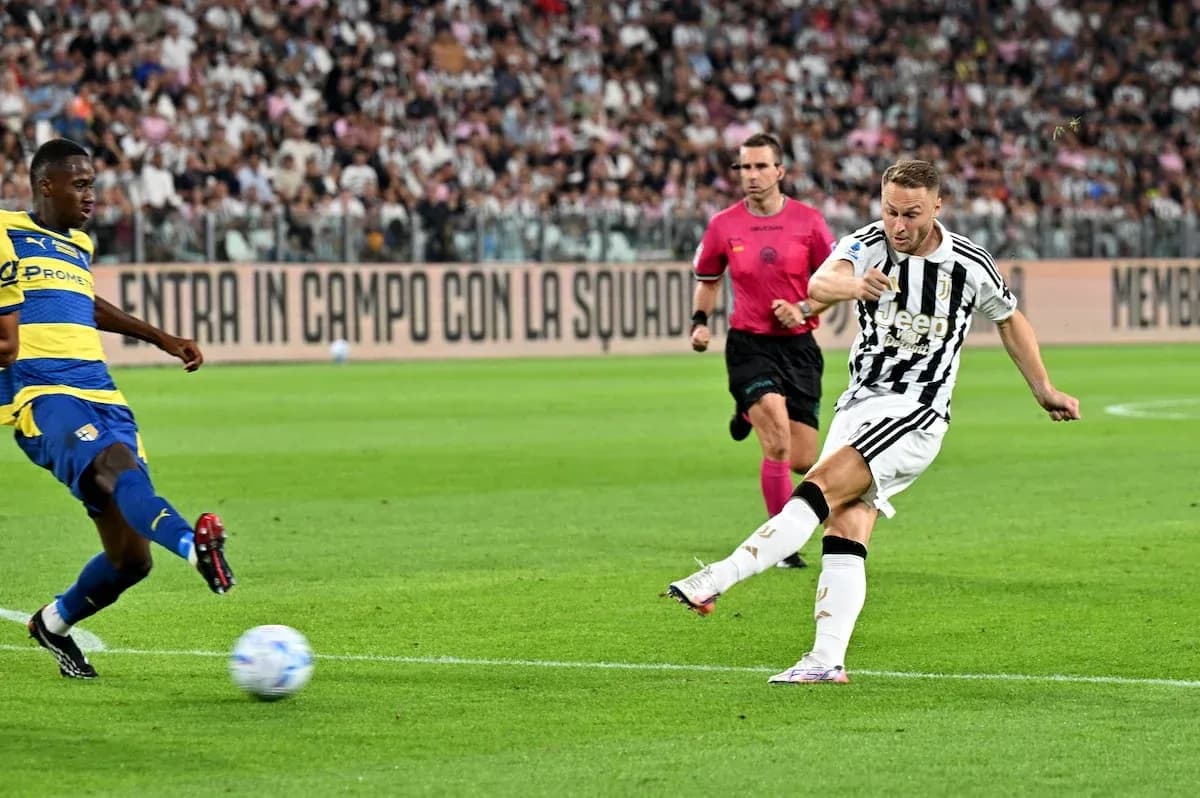
Under the Turin floodlights of Allianz Stadium, Juventus and Parma walked out for a Serie A evening that felt less like Round 2 and more like a statement of intent. By the final whistle, the scoreboard read 2–0 to Juventus, a result that crystallised the gulf between a side already tuned to Champions League standards and a newly returned club still adjusting to the division’s rhythm.
Following this result, Juventus sit 3rd with 6 points from 2 matches, their overall goal difference a pristine +3 from 3 goals scored and none conceded. At home they have played 1, won 1, scored 2 and conceded 0; on their travels they have matched that perfection with 1 win, 1 goal scored and 0 conceded. Parma, by contrast, leave Turin with a mirror image of that record. They are 16th, still pointless after 2 defeats, with an overall goal difference of -3 from 0 goals scored and 3 conceded. At home they have played 1, lost 1, conceding 1; away from home they have now played 1, lost 1, conceding 2.
Tactical Setups
Luciano Spalletti’s Juventus lined up in a classic 4‑4‑2, but nothing about it was old‑fashioned. Guglielmo Vicario in goal was protected by a back four of Zeki Çelik, Jhon Lucumí, Bremer and Pierre Kalulu – a blend of physicality and front‑foot defending. Ahead of them, a flat‑looking midfield on paper became a dynamic carousel in practice: Francisco Conceição wide right, Jeremie Boga wide left, with Manuel Locatelli and Douglas Luiz knitting the centre. Up front, Randal Kolo Muani and Jonathan David offered vertical menace and constant movement.
Carlos Cuesta mirrored the 4‑4‑2, but Parma’s version told a different story. Elia Corvi started in goal behind Enrico Delprato, Mariano Troilo, D. Drobnic and Enrico Valeri. The midfield four of S. Britschgi, C. Ordonez, Adrián Bernabé and M. Keita carried the burden of both resisting and launching transitions, while S. Lontani and E. B. Toure led the line, often isolated against Juventus’ aggressive centre‑backs.
Injuries and Absences
The tactical voids were clear even before kick‑off. Juventus were without Weston McKennie (muscle injury), Khéphren Thuram (knee), Kenan Yildiz (foot) and Edon Zhegrova (muscle). That stripped Spalletti of some vertical running and creative rotation from the bench, forcing him to lean heavily on Locatelli’s control and Conceição’s one‑v‑one threat. Parma, missing Hans Nicolussi Caviglia through a groin problem, lost a valuable metronome who might have helped them breathe under Juventus’ press.
Juventus' Midfield Control
Yet Juventus have built a squad to absorb such absences. Locatelli, already among Serie A’s top assist providers with 1 assist in 2 appearances and 159 passes at 90% accuracy, orchestrated from deep, dropping between Bremer and Lucumí to launch attacks. His 7 interceptions overall this season underline how he doubles as regista and shield. Douglas Luiz complemented him by stepping higher, pinning Parma’s midfield and opening lanes for the wingers.
On the flanks, Conceição and Boga were the game’s accelerators. Conceição, who has already produced 1 assist in the league with 6 key passes and 12 dribble attempts (6 successful), repeatedly attacked Valeri’s channel. His tendency to receive wide and drive inside forced Parma’s block to tilt, creating half‑spaces for Kolo Muani and David to attack. Boga, from the left, stretched Delprato and Troilo, ensuring Parma’s back line could never compact fully.
Parma's Defensive Structure
For Parma, the defensive “shield” was centred on Troilo and Delprato. Troilo’s season numbers – 2 successful blocks, 1 interception, 145 passes at 91% accuracy – show a defender comfortable both clearing danger and building from the back. Delprato, with 2 blocks, 3 interceptions and 10 duels won from 14 overall, is usually a reliable one‑v‑one defender. But against a Juventus side averaging 2.0 goals at home and 1.0 away this campaign, their margin for error was razor thin.
Discipline and Control
The “Hunter vs Shield” duel tilted inexorably towards Juventus. Even though T. Koopmeiners, the club’s early top scorer with 1 goal from the bench, started among the substitutes, Spalletti’s front four generated enough volume to overwhelm a Parma defence conceding an overall average of 1.5 goals per match – 1.0 at home and 2.0 away. With Parma yet to score this season, their forwards were constantly forced backwards, turning the supposed front two into auxiliary midfielders.
Discipline added another layer of narrative. Juventus’ season‑long yellow‑card distribution shows a clear pattern: 25.00% of their bookings arrive in the opening 0–15 minutes, 50.00% between 46–60, and another 25.00% in the 76–90 window. That late‑game surge in cautions mirrors a side that continues to press and compete deep into matches. Andrea Cambiaso and Çelik have already been booked once each this season, symbols of an aggressive full‑back culture. Parma, meanwhile, tend to pick up their yellows in the second half and stoppage time – 33.33% between 46–60, 33.33% from 76–90 and 33.33% in added time – a sign of fatigue and reactive defending as matches slip away.
Statistical Overview
In midfield, the “engine room” battle framed the contest’s control. Locatelli and Douglas Luiz faced Bernabé and Ordonez, with Abdou Konate lurking as Parma’s most combative option from the bench. Konate’s 3 tackles, 2 interceptions and 13 duels overall show a player capable of disrupting rhythm, but Parma’s structure rarely allowed him or Bernabé to press high in numbers. Juventus’ double pivot, by contrast, could choose their moments, safe in the knowledge that a back four yet to concede this season would mop up transitions.
From a statistical prognosis, Juventus’ trajectory is clear. Overall they average 1.5 goals scored per match and 0.0 conceded, with 2 clean sheets in 2 games and no failures to score. Parma sit at the opposite pole: 0.0 goals scored on average, 1.5 conceded, no clean sheets and 2 matches without finding the net. Even without explicit xG data, the structural indicators are stark. Juventus create volume from wide areas, have a deep bench with players like Koopmeiners and Cambiaso capable of changing tempo, and maintain defensive control without resorting to chaos.
Parma’s path forward is narrower but not closed. Troilo’s composure, Delprato’s duelling and Bernabé’s passing hint at a spine that can stabilise once the schedule softens. But in Turin, against a Juventus side already playing with Champions League poise, they were cast as survivors rather than protagonists.
In the end, the 2–0 scoreline felt less like a flourish and more like a baseline. Juventus have built a platform: solidity at the back, intelligence in the engine room, and enough flair in wide areas to tilt matches without losing control. For Parma, the lesson is harsh but clear – in Serie A’s upper tier, organisation and resilience are merely the entry fee. To climb from 16th, they will need goals, and soon, or nights like this at Allianz Stadium will become their norm rather than their exception.