.svg&w=384&q=75 "Naijagoal logo")

Brazil's VAR Controversy and CBF's Confrontation with FIFA
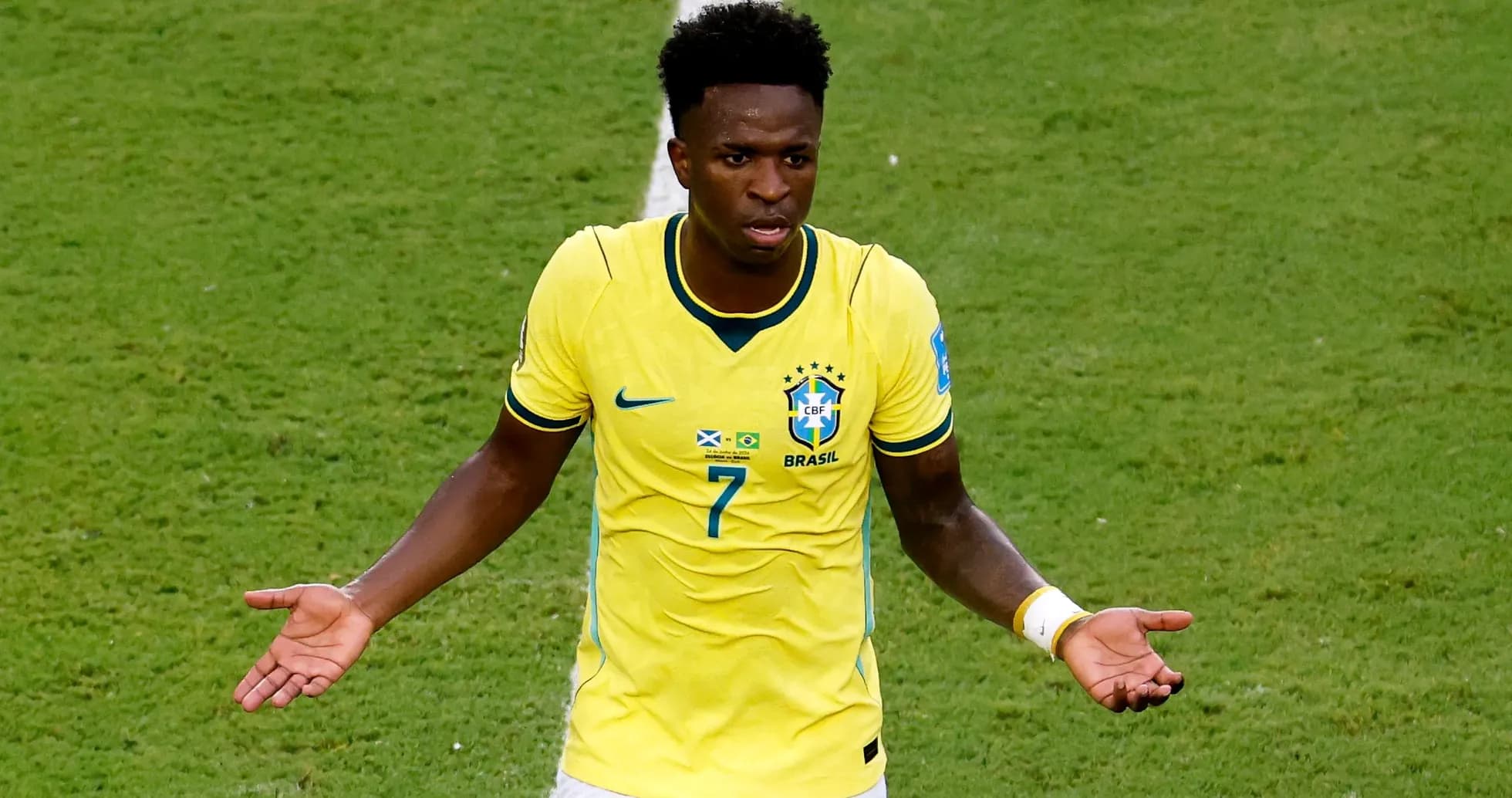
The storm broke in the 21st minute. Brazil were already in front against Scotland, Vinicius Jr on the scoresheet and in full command, when the Real Madrid forward seemed to kill the contest.
He robbed Jack Hendry, glided clear and slipped the ball past Angus Gunn with the cold assurance of a man who has done it on the biggest stages. Cesar Ramos pointed to the centre circle. Goal. Brazil celebrated. Scotland braced for a long night.
Then came the now-familiar pause. VAR stepped in. Replays rolled. The contact on Hendry, judged in real time as part of the duel, suddenly became the centre of the world. Moments later, Ramos reversed his decision and ruled the goal out for a foul in the build-up.
The fury from Brazil’s bench was instant and incandescent. Arms flailed, voices rose, and the sense of injustice that has followed the Selecao through more than one major tournament roared back into life. For Carlo Ancelotti’s staff, the challenge was minimal, the threshold for intervention nowhere near the “clear and obvious” bar that is supposed to govern the technology.
That anger has not stayed on the touchline.
CBF Takes the Fight to FIFA
In the days since, the Brazilian federation has moved from protest to formal confrontation. CBF president Samir Xaud has written directly to FIFA president Gianni Infantino, demanding answers on what they see as a pattern of inconsistency in officiating across the tournament.
The letter does not pull its punches. Brazil have asked that Mexican referee Cesar Ramos be removed from their future fixtures in North America, pointing to what they describe as a “negative history” with the official. The document, reported by Brazilian outlet Estadao, reaches back to the 2018 World Cup group match against Switzerland, when Brazil felt they were denied both a clear penalty and a foul in the build-up to the Swiss equaliser.
For the CBF, that night has never fully faded. The argument is simple: with that previous friction on record, Ramos should never have been appointed to a decisive Brazil match in the first place.
The federation has gone further, widening its case beyond one incident or one game.
Messi, Argentina and the Double Standard Claim
In a twist that underlines just how far Brazil are prepared to go, the CBF used their greatest rival as Exhibit A. Within the same letter, they highlighted a goal scored by Lionel Messi for Argentina against Austria earlier in the tournament, pointing to similar physical contact in the build-up that, in that instance, did not trigger a VAR intervention or an annulment.
The implication is stark: what is allowed for others is being punished for Brazil.
For the Brazilians, this is not about a single disallowed strike against Scotland, but about a broader pattern of interpretation. Why does a brush of contact become a foul in one penalty area and a shrug of the shoulders in another? Why does one challenge live and another die in the VAR room?
The CBF’s document also underlined the reaction on the pitch in that moment against Scotland. According to their account, the decision “seemed unexpected not only for the Brazilian team, but also for the Scottish players,” whose body language suggested they neither anticipated a review nor the dramatic overturning of the goal. On the grass, no one stopped. No one appealed. The game appeared to move on—until the call came from the booth.
Ancelotti Blocks Out the Noise
While the boardroom battle escalates, Ancelotti has no choice but to keep his eyes on the football. Brazil’s job in Group C is done, and done well. Vinicius Jr eventually found his second goal of the night anyway, and Matheus Cunha added another to seal a comfortable win and top spot in the group.
The controversy did not derail them. It merely added a hard edge to their evening.
Now comes the real test: a round of 32 tie against Japan in Houston, a fixture that carries its own risks and rhythms. Tournament football does not wait for legal letters or political manoeuvres. It rolls on, indifferent to who feels wronged.
Ancelotti, as ever, cut a calm figure after the final whistle. He acknowledged flaws, but he also saw progress.
“Now we are playing as a team, that is the goal. We are not perfect, we have things to improve. We can be a little quicker when we have control,” he told reporters, framing the performance as another step forward rather than a finished article. His emphasis, as always, fell on structure and reliability. “I’m happy because the team has improved a lot, now we are solid. In the knockout stage, solidity is very important. We have a solid team. Compared to the first game, we are making fewer mistakes, we have more rhythm, and we are more effective up front.”
That word—solid—will define Brazil’s next few weeks.
The federation can wage its war with FIFA. The letters can fly, the clips can be replayed, the arguments about “clear and obvious” can rage on late into the night. But in Houston, none of that will matter when the whistle blows and Japan press high, when Vinicius Jr runs at tired legs, when a single decision—by a referee or a forward—can tilt an entire World Cup campaign.