.svg&w=384&q=75 "Naijagoal logo")

Australia's Heartbreaking World Cup Loss: Lucas Herrington's Penalty Miss
Lucas Herrington did not deserve this.
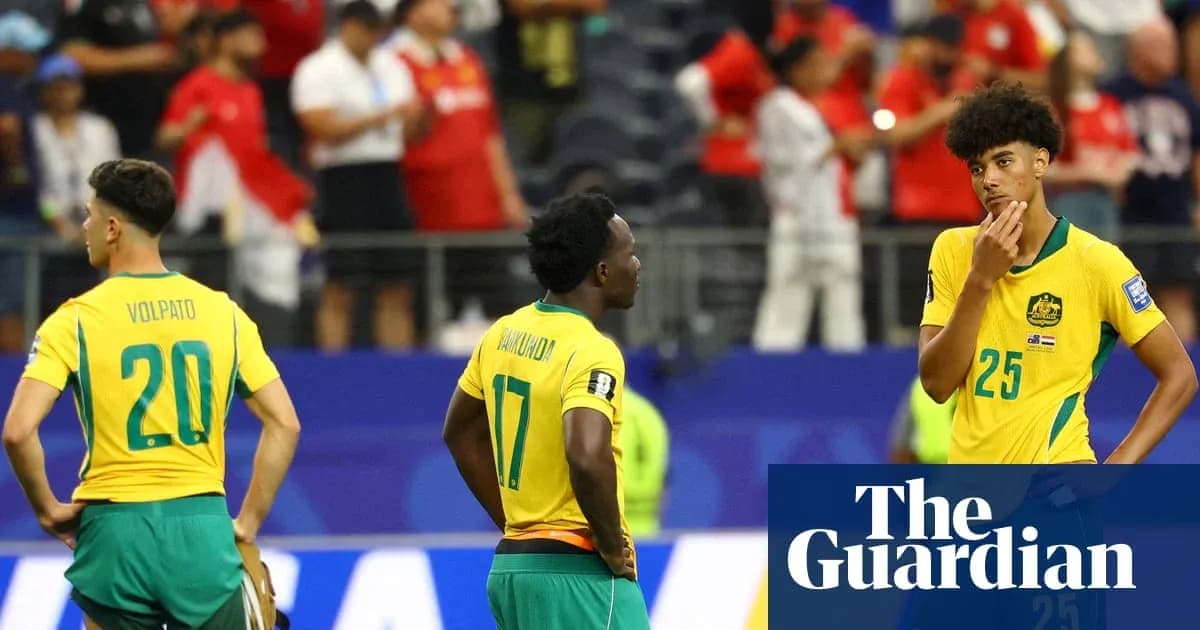
Eighteen years old, the youngest starter the Socceroos have ever sent into a World Cup match, and now chained to one of Australian football’s cruellest nights. His penalty, a calm side-foot that drifted just too high, crashed against the crossbar and back into the noise. In that instant, the stadium swallowed him.
Awer Mabil sprinted to him first, an arm around the shoulders, an instinctive move towards a pain that will not fade quickly. When Egypt finished the shootout a few moments later, Herrington turned his back on the bar that had betrayed him, one hand buried in his mop of curls, his body folding over as if trying to hide from the moment.
Jackson Irvine arrived, reading the rawness immediately. Then Nestory Irakunda, a foot shorter but towering in empathy, wrapped him in a hug. These two are supposed to be the future of Australian football. On this night, they were just kids standing in the wreckage of the present.
Australia will wait at least four more years for that first World Cup knockout win. The nagging thought is unavoidable: they may not see a better opening than this for some time.
Herrington was not alone in his torment. Harry Souttar went first in the shootout, a giant of a defender who had emptied himself over 120 draining minutes. He walked up looking spent, placed the ball, and lifted his penalty over the bar. Advantage Egypt. The tone of the shootout changed in a heartbeat.
Tony Popovic had played his late wildcard, summoning captain Maty Ryan for the dying stages in search of one more act of rescue. It never came. Egypt converted all four of their penalties with ruthless calm and ended the contest early.
By then, the Socceroos had already spent three hours at this tournament without scoring from open play while behind, and they trudged into half-time 1-0 down with morale scraping the floor. It sank even further when Jordy Bos tested his left knee after a challenge, winced, and realised he could not continue. One of Australia’s brightest outlets was gone.
First Half
Before that, the first half had dissolved into a tactical chess match, both sides more interested in evading the press than breaking lines. Australia had only scraps to show for their early ambition. Cristian Volpato had rattled the crossbar with a wicked, skidding effort. Bos had torn into the box on a marauding run. For a few minutes, the optimism felt real.
Then Egypt cut them open.
Australia conceded ground too easily down their right, their press collapsing in a tangle of missed assignments. On the edge of the area, Irvine was caught out by Ziko and clipped him, conceding a free-kick in a dangerous spot. Emam Ashour stepped up. His initial effort smacked into Irvine in the wall, but the danger never cleared. The ball was recycled, swung back in, and found Egypt’s No 8 drifting unmarked at the back post. His header punished the lapse. One chance, one goal, a brutal reminder of Egypt’s edge.
Second Half
The second half opened in chaos. With Bos off, Kai Trewin came on at right-back for his World Cup debut. Within 10 seconds, his direct opponent almost scored, a wild, breathless start that threatened to bury Australian hopes before they could reset.
They did steady, though. And then, for the first time at this tournament, they scored from a losing position.
Officially, the equaliser goes down as a Mohamed Hany own goal. In truth, Aiden O’Neill deserved the credit. From the left side of the box he shaped a gorgeous, looping delivery that dropped into the sort of area defenders hate. Panic followed. The ball kissed bodies, flicked off Hany and into the net. Australia were level, if not exactly flying.
The setting only added to the surreal feel. The roofed arena in Arlington, ringed by 24,000 parking spaces, is a vast cathedral of American sport. On this night it hosted a different kind of worship: stop-start, tense, often ugly. Neutrals will not have been converted by what they saw. The delays were so frequent that a few more advertising breaks would barely have registered. After 100 minutes, the teams had managed just four shots on target between them.
For those in green and gold, and for the swathes of Egyptian fans, it was torture of a different kind. At 1-1, every cross felt like a coin toss. Balls were flung into the box and punched away by Patrick Beach, or repelled by an Egyptian defensive line that, despite its lack of height, refused to crack.
Then Mo Salah arrived.
For most of the night he had been quiet, held at arm’s length. In the final minutes of normal time, he suddenly lit the game up. First, he whipped in a cross that found Ramy Rabia, who seemed certain to score until Beach thrust out a hand and clawed the ball over the bar. Salah then took aim himself, testing the goal again, before sliding a final, teasing pass that looked destined for the corner until Souttar hurled himself in front of it.
Questions about Salah’s fitness had lingered. That furious spell, and the grin he flashed at Souttar during the coin toss for extra time, gave a fairly emphatic answer.
Even he, though, showed his limits. Early in extra time, a ricochet popped up invitingly on the bounce. Salah, alone, leaned back and sent it over the bar. For a second, the entire arena gasped at the sight of football’s surest finisher looking human.
Time drained away. Egypt pushed Australia back and laid siege to their box, but the final punch never landed. The Socceroos clung on, their own attacks reduced to hopeful forays. Both teams could sense it: they were standing on the brink of history, each chasing a first World Cup knockout win, each one kick away from rewriting their story.
Only the shootout would choose. And on a brutal night in Arlington, it chose Egypt, and left an 18-year-old Australian staring at a crossbar that will haunt him long after this World Cup has moved on.