.svg&w=384&q=75 "Naijagoal logo")

Arsenal's Challenge as Defending Premier League Champions
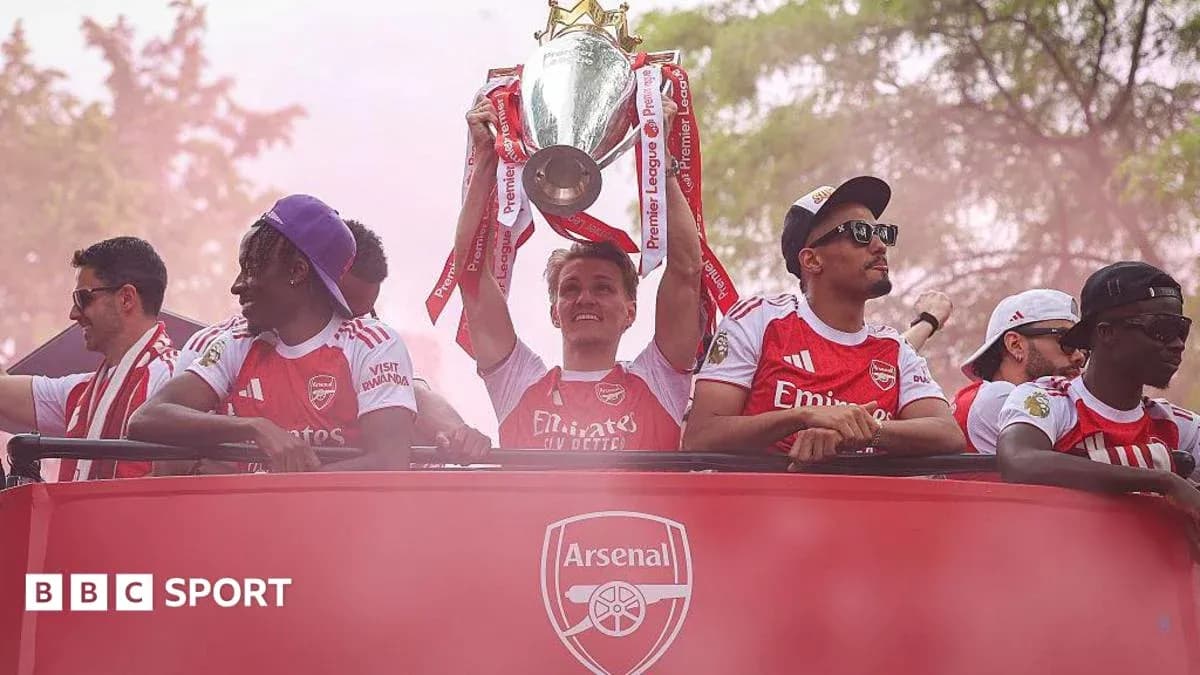
Arsenal return to the Premier League summit this weekend not as hunters, but as the hunted.
Last season’s title ended a two-decade wait and rewrote the club’s modern history. Now comes a very different challenge: waking up every week as champions and proving it all over again. Arsenal have not started a campaign as defending Premier League winners since 2004-05. The landscape has changed beyond recognition since then, but the weight of expectation feels just as heavy.
Life as the team everyone wants to beat
Defending a title sounds simple on paper. Keep the core, add quality, go again. The reality is far more brutal.
Manchester City, under Pep Guardiola, made it look almost routine. From his first title in 2017-18, the Catalan coach reeled off four successful defences before walking away this summer, turning the Premier League into a private duel between his standards and everyone else’s limits.
Before Guardiola, it was a very different story. Across eight seasons prior to his first triumph, the trophy changed hands every year. Only two managers had ever managed back-to-back titles in the Premier League era: Sir Alex Ferguson at Manchester United and Jose Mourinho at Chelsea. That was the scale of the task. Guardiola ripped up that pattern.
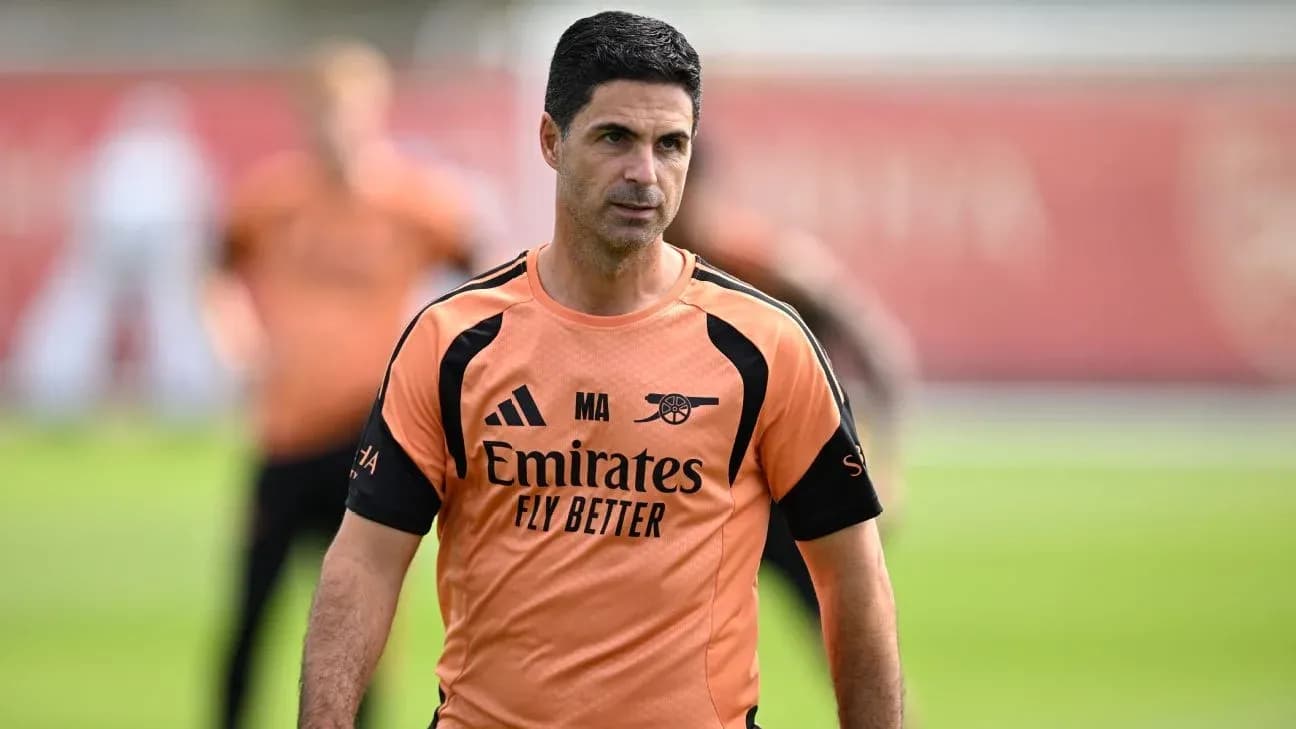
Now Mikel Arteta is trying to do what only those three serial winners have done: build a dynasty, not just a moment.
The difficulty is not just tactical or physical. It is psychological. Players spend a season clawing towards the summit, every training session and every game wired into the same obsession. Then they get there. The pressure breaks, the relief floods in, and the human instinct is to exhale.
Leicester City felt that crash harder than most. After their 2015-16 miracle, they spent the following season glancing nervously over their shoulders at the relegation zone. One Foxes player summed it up in the Guardian: winning the title was like climbing Everest, only to be told, once you’ve staggered back down, to go and climb it again.
Former Premier League winger Andros Townsend sees the same trap lying in wait for Arsenal.
“The last two times Liverpool have won the title the next season they have not been able to replicate it. They have had relatively poor seasons,” he told BBC Radio 5 Live, pointing to Reds finishes of third and fifth after their recent title wins. His question lingers over Arsenal now: after that “huge relief” of getting over the line, do you really attack the summer with the same aggression, the same edge?
Continuity in North London, chaos elsewhere
If Arsenal need any comfort, they can find it in the dugouts around them.
Manchester City, Liverpool and Chelsea all start the season under new managers. Tottenham and Manchester United are about to experience their first full campaigns with Roberto de Zerbi and Michael Carrick respectively, after both arrived mid-season last year. Five of the traditional heavyweights are stepping into something new, and new almost always means uncertainty.
Arsenal, by contrast, offer stability. Arteta stays. The core of the squad stays. The champions have chosen refinement over revolution.
The transfer business has been targeted rather than wild. Greece forward Christos Tzolis has arrived from Club Brugge for £34m, a calculated injection of attacking depth. The headline, though, is Bruno Guimaraes. £75m from Newcastle United for a midfielder Arteta believes can drag this team to another level.
“I think he describes himself as a warrior,” Arteta said. “I think he's a warrior with a tremendous quality as well and intuition and leadership and charisma that is going to help us, that is going to really ignite something different in the team.
“We want to go to the next level and are very, very much convinced that we're going to need players with such a personality, desire and character to push everybody inside the organisation to go even higher.”
That is the language of a manager who knows the hangover is coming and wants characters who will refuse to indulge it.
Saliba blow tests Arsenal’s backbone
Just as the champions looked settled, the first crack appeared.
William Saliba, the calm at the heart of last season’s defence, is out for an “extended period” with a back injury picked up at the World Cup. His partnership with Gabriel Magalhaes underpinned Arsenal’s consistency without the ball; they were the platform for everything else.
Even with attempts to bring in Ezri Konsa, the length of Saliba’s absence could shape the season. Lose that defensive assurance for too long, and the margin for error at the top disappears quickly.
New managers, new threats
The turbulence around Arsenal does not automatically weaken their rivals. In some cases, it sharpens them.
Chelsea have handed the keys to one of Europe’s most coveted young coaches in Xabi Alonso. Fresh from leading Bayer Leverkusen to a historic unbeaten domestic double in 2023-24, he has set about reshaping a squad that had talent but little direction.
Morgan Rogers, 24, has arrived from Aston Villa for a club-record £117m, a statement signing in both price and potential. France defender Maxence Lacroix, 26, comes in from Crystal Palace for £52m to stiffen the back line. New £47m full-back Marco Palestra, 21, has been one of the standout performers in pre-season, hinting at immediate impact.
To balance the youth, Chelsea have brought in Premier League title winners and seasoned voices Jordan Henderson, 36, and Danny Welbeck, 35. Their role is clear: bind a young dressing room, set standards, and drag the tempo of training and matches up a notch.
At Manchester City, Enzo Maresca steps into the impossible job: succeeding Guardiola. City have spent heavily, signing Nottingham Forest midfielder Elliot Anderson for £116m, but look likely to lose Rodri, Spain’s World Cup player of the tournament and the heartbeat of their midfield. Chelsea’s Enzo Fernandez could be the man to fill that void, but replacing Rodri’s influence is one of the great tactical puzzles of this season.
Manchester United have gone for a different route to renewal. Youri Tielemans has been prised from Aston Villa for £35m, while Brazilian midfielder Andrey Santos joins from Chelsea for £48m after catching the eye in pre-season. Both signings strengthen United while simultaneously weakening direct rivals.
Villa, Europa League winners only three months ago, suddenly look very different. Rogers, Tielemans and Lucas Digne – all starters in that final – have gone. In their place come Johan Manzambi from Freiburg for £59.5m and Joao Gomes from Wolves for £38m, while Alejandro Garnacho has arrived on loan from Chelsea to add attacking spark. Behind the scenes, three coaches have departed, including set-piece specialist Austin MacPhee, who has followed the money and the project to Chelsea.
Liverpool, champions two seasons ago, now move into the Andoni Iraola era. Jeremy Jacquet, a £60m centre-back from Rennes, should stiffen the defence, while Ronald Araujo arrives on loan from Barcelona to add versatility. Up front, 22-year-old Victor Munoz has joined, but pre-season results have been mixed. Iraola’s ideas are bold; whether they settle quickly enough to mount a title challenge is another question.
Tottenham, scarred by a couple of difficult seasons, are banking on De Zerbi’s intensity and a significant outlay. More than £200m has gone on Sandro Tonali from Newcastle (£100m), Mateus Fernandes from West Ham (£85m) and Jan Paul van Hecke from Brighton (£52m). This is not a quiet reset. It is a demand to rejoin the conversation at the top.
The opening stretch: no room for a slow start
Every champion talks about “one game at a time”. The fixture list rarely listens.
Opta’s global power rankings, which grade more than 13,500 domestic teams worldwide, have been used to assess the difficulty of each Premier League side’s first five matches. Among the likely title contenders, Manchester United are judged to have the softest landing. Arsenal and Manchester City, last season’s main protagonists, are rated as facing the same level of early difficulty.
Arsenal’s defence of their crown starts at home to Coventry. On paper, a gentle reintroduction to the grind. Then it sharpens quickly: away to Aston Villa, Chelsea at home, followed by trips to Sunderland and Brighton. None of those venues will indulge any lingering complacency.
City open with Bournemouth at home, then travel to Crystal Palace, host Coventry, head across town to face Manchester United, and return to the Etihad to meet Sunderland. Different order, similar level of jeopardy.
The margins at the top are so thin that a sluggish August can haunt a campaign deep into spring. Arsenal know that. City know it better than anyone.
So the question hangs over the champions as the new season kicks off: was last year the start of an era, or a single, glorious climb up the mountain?