.svg&w=384&q=75 "Naijagoal logo")

Argentina’s Epic Comeback Against England in World Cup Semifinal
They may need to check the structural integrity of the Mercedes-Benz Stadium.
When Lautaro Martinez’s 92nd-minute header ripped past Jordan Pickford, the noise from the Albiceleste end didn’t just rise, it detonated. The stands shook, the sound bounced off the roof, and Argentina – written off, dragged around, almost gone – were suddenly, defiantly, back in a World Cup final with a 2-1 comeback that will live long in the memory, and even longer in English nightmares.
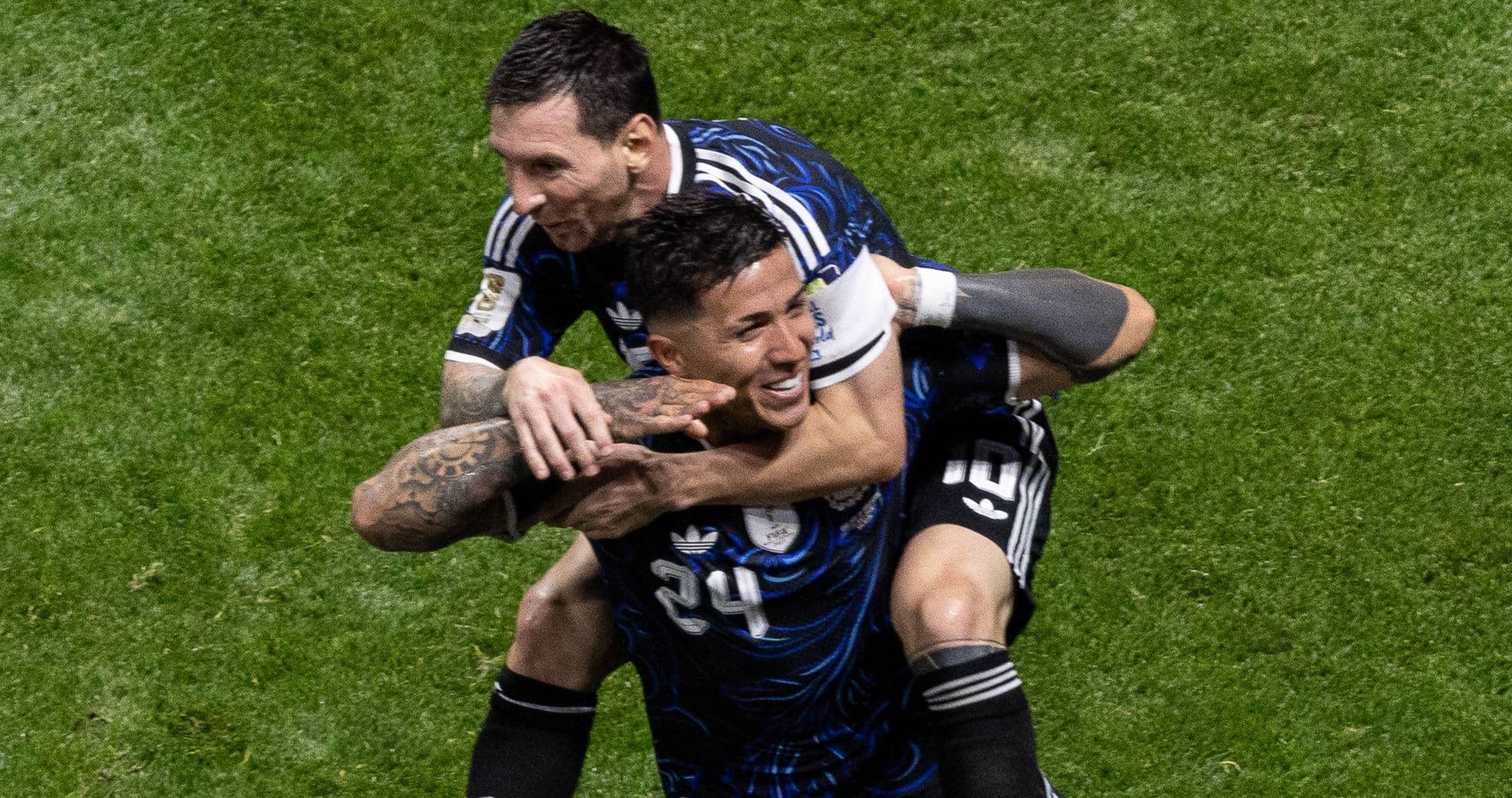
At the heart of it all, again, was Lionel Messi. Thirty-nine years old, legs that have seen everything, mind that still sees it all a second quicker than anyone else. He slipped the ball to Enzo Fernandez for that thunderous 85th-minute equaliser, then threaded the pass that allowed Lautaro to deliver the coup de grâce. The old master didn’t score. He didn’t need to. He pulled the strings when the game was burning.
But this was never just about Messi. This was about a match that turned into a full-scale street fight in football boots.
Argentina had been accused all tournament of drifting through games, saving energy, leaning on late surges and individual genius. Lionel Scaloni tore that script up in Atlanta. He sent his team out to scrap for every blade of grass, to turn a World Cup semifinal into trench warfare.
Giuliano Simeone's Impact
And at the centre of that chaos, a surname returned to English nightmares.
Seeing “Simeone” on the team sheet before kick-off was enough to make older England fans flinch. The name drags the mind back to Saint-Étienne ’98, to Diego Simeone, to David Beckham’s red card and a generation’s trauma. This time, though, it was not the Atletico Madrid coach but his 23-year-old son, Giuliano, thrown into the XI as a surprise starter and a psychological grenade.
From the first whistle, he played as if the past was fuel.
Giuliano Simeone didn’t just press. He hunted. Every loose ball, every half-touch, every hesitant England defender felt him snapping at their heels. On the right flank, he formed a relentless double act with Nahuel Molina, stretching the pitch, forcing England’s left side into retreat, pinning them back with sheer will.
While his Atletico teammate Julian Alvarez led the line, Simeone ran himself into the ground behind him. This was a player who broke his leg three years ago, who fought his way back to the elite level, now treating a World Cup semifinal like a personal crusade. His energy infected Argentina, irritated England, and carved out the space Messi needed to start dribbling into those familiar pockets.
The game tilted, twisted, then suddenly snapped the other way.
On 55 minutes, Anthony Gordon put England in front, and Thomas Tuchel’s side retreated into a shell. Lines dropped. White shirts behind the ball. The classic “protect what we have” stance in the biggest of moments. Argentina, for all their ferocity, were staring at the brink.
Scaloni read the temperature. The first phase of the fight – the running, the pressing, the pure physical grind – had taken its toll. In the 73rd minute, with Simeone spent, lungs burning, legs emptied, the coach made a change that felt like a chapter turning. Off came Giuliano, leaving the pitch with four ball recoveries, joint-second best among his teammates on the night. On came Rodrigo de Paul.
It was more than a substitution. It was symbolism.
De Paul, once Diego Simeone’s trusted enforcer at Atletico, a player who built his own warrior’s reputation under the father before following Messi to Inter Miami, walked into a game to replace the son who had taken his spot in the starting XI. One Simeone disciple for another, one soldier for the next.
De Paul immediately matched Giuliano’s output, racking up four ball recoveries of his own in a frantic cameo and almost creating a goal with a curling effort. The intensity didn’t dip. It simply changed shape.
The pressure finally cracked England.
Enzo Fernandez stepped up first, smashing in the equaliser with five minutes of normal time left and ripping open a game England thought they had under control. The stadium erupted, belief surged back into Argentine legs, and suddenly every 50-50 felt like it belonged to the men in sky blue and white.
Then came Lautaro. Then came the header. Then came the roar.
The winner turned the night from dramatic to mythic. Argentina, who had flirted with disaster throughout this tournament, didn’t wait for a miracle this time. They refused to coast. They refused to let the clock suffocate them. They attacked the final minutes like a team that had no interest in noble defeat, only in survival.
It mattered that the opponent was England. It always does.
This rivalry runs far deeper than football, scarred by the Falklands (Las Malvinas) conflict of 1982 and decades of political tension that still simmer beneath every meeting. Every tackle carries history. Every goal carries weight. Every celebration feels like a statement.
Messi will own the headlines. He always does. Another final, another decisive night, another reminder that his genius has outlasted eras, systems, and generations.
But down on that pitch in Atlanta, a different story quietly carved itself into Argentine folklore.
Giuliano Simeone didn’t score. He didn’t assist. He left before the comeback was complete. Yet for 73 minutes, he fought as if the entire rivalry had been handed to him and him alone. He ran until he broke, then ran some more. He gave Argentina the platform from which their stars could rise.
On a night when Argentina dragged themselves back from the edge once again, a young Simeone wrote his name into the country’s memory the hard way – with sweat, scars, and a performance that felt like the opening chapter of a new, unforgiving era.