.svg&w=384&q=75 "Naijagoal logo")
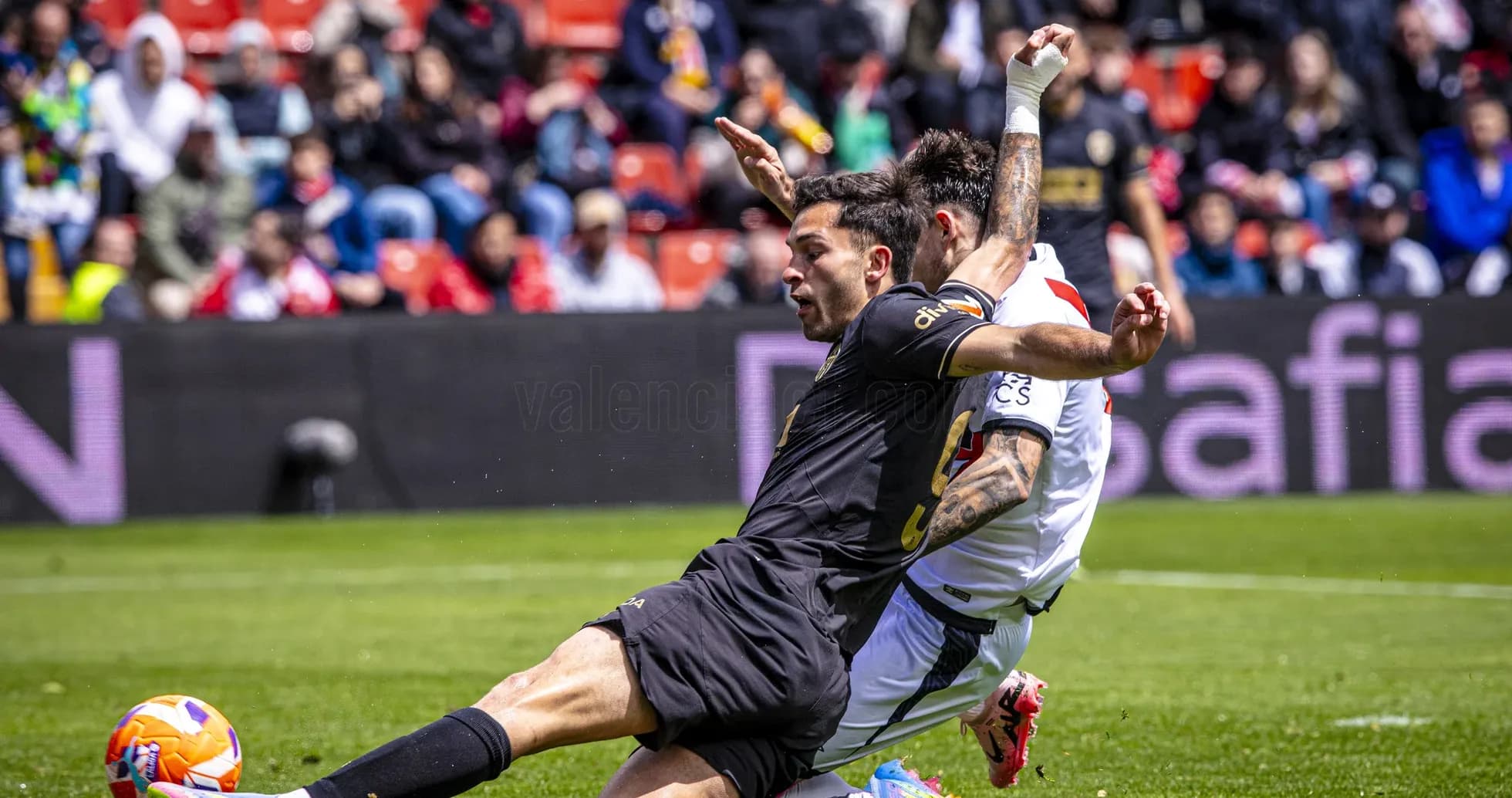
Valencia vs Rayo Vallecano: La Liga Showdown for Top-Half Status
Estadio de Mestalla hosts a mid‑table knife‑edge on 14 May 2026, as 12th‑placed Valencia welcome 10th‑placed Rayo Vallecano in La Liga’s Round 36. With just one point separating the sides – Rayo on 43, Valencia on 42 – this is a direct duel for top‑half status and prize money, even if European qualification is beyond reach.
League context and recent form
In the league, both teams arrive with similar season‑long profiles but contrasting paths to their current positions.
Valencia sit 12th with 42 points from 35 games (W11 D9 L15, goal difference -12). Across all phases they have scored 38 and conceded 50, underlining a campaign defined by defensive frailty rather than attacking power. Their recent five‑game league form (WLWDL) hints at inconsistency but not collapse: they are still picking up wins, yet unable to string together a decisive run.
At Mestalla, Valencia have been significantly stronger. In the league they have taken 26 of their 42 points at home: 7 wins, 5 draws and 5 defeats from 17 matches, scoring 23 and conceding 21. That home record is mid‑table solid and keeps them competitive against most visitors.
Rayo Vallecano, by contrast, are 10th on 43 points (W10 D13 L12, goal difference -6). Across all phases they have scored 36 and conceded 42, making them slightly tighter at the back than Valencia and marginally less productive going forward. Their current form line (DWDWL) reflects a team that is hard to beat but still drops points regularly.
Rayo’s league position is built on a strong home base and a fragile away record. On their travels they have 4 wins, 3 draws and 10 defeats from 17 away matches, with just 14 goals scored and 27 conceded. That away goal average of 0.8 per game, mirrored by Valencia’s 1.4 scored per home match, sets up a tactical battle likely to be decided by small margins rather than a goal glut.
Tactical tendencies and shapes
The season data offers a clear picture of how both coaches are likely to set up.
Valencia have leaned most heavily on a 4‑4‑2, using it in 21 matches. That suggests a fairly traditional shape: two banks of four, with emphasis on wide players supporting a front pair. Their secondary option is 4‑2‑3‑1 (9 matches), giving them the flexibility to add an extra man between the lines if they want more control in possession.
Across all phases, Valencia average 1.1 goals for and 1.4 against per game, with 9 clean sheets and 9 matches where they failed to score. The “biggest” results snapshot is revealing: their best home win is 3-0, but their worst away defeat is 6-0. At Mestalla they are usually competitive, rarely blown away, but they can be opened up if they chase games.
Rayo Vallecano are more systematically modern: 4‑2‑3‑1 has been their primary shape in 21 matches, with occasional switches to 4‑4‑2 and 4‑3‑3 (5 games each). The double pivot in front of the defence is central to their identity, helping them keep a respectable defensive record – 42 conceded across all phases – and providing a platform for their attacking midfielders.
Rayo’s average of 1.0 goals scored and 1.2 conceded per game underlines their cautious balance. They have collected 11 clean sheets but have failed to score 12 times, a sign that when their attacking patterns are stifled, they struggle to find alternative routes to goal. Their biggest away win is 0-3, but they have also suffered a 4-0 away defeat, reflecting volatility when they are forced to open up on the road.
Discipline could play a subtle role. Valencia’s yellow cards are heavily concentrated from 46 minutes onwards, particularly in the final quarter of the game, suggesting late‑game pressure and fatigue. Rayo show a similar pattern but also have a notable spread of red cards, especially from 61 minutes onwards, which could influence how aggressively they press at Mestalla.
Key players and attacking threats
The top‑scorers data highlights one clear attacking reference point: Rayo’s Jorge de Frutos. The 28‑year‑old attacker has 10 league goals and 1 assist in 32 appearances, with 26 shots on target from 47 attempts and a respectable 6.94 average rating. He is also a creative outlet, with 26 key passes and a solid passing accuracy of 77%.
De Frutos’ dribbling output – 50 attempts with 23 successful – and his ability to draw fouls (36 won) make him central to Rayo’s attacking plan. Operating from wide or as one of the advanced midfielders in the 4‑2‑3‑1, he will look to isolate Valencia’s full‑backs and force defensive decisions in the channels.
He has also scored 1 penalty this season and has not missed from the spot according to the individual data, adding another dimension to his threat if Rayo can draw fouls in dangerous areas.
Valencia’s individual scoring data is not provided, but their season profile suggests a spread of goals rather than a single dominant striker. In a 4‑4‑2, they are likely to rely on combinations between the front two and service from wide areas, particularly at home where their goal average rises to 1.4 per game.
Both teams are perfect from the spot at team level this season (Valencia 5 scored from 5; Rayo 3 from 3), with no recorded misses, which could be decisive in a tight contest.
Head‑to‑head: recent competitive meetings
The last five competitive La Liga meetings between these sides show an extremely tight rivalry:
- 1-1 at Campo de Futbol de Vallecas on 1 December 2025 – draw.
- 1-1 at Estadio de Vallecas on 19 April 2025 – draw.
- 0-1 at Estadio de Mestalla on 7 December 2024 – Rayo Vallecano win.
- 0-0 at Estadio de Mestalla on 12 May 2024 – draw.
- 0-1 at Estadio de Vallecas on 19 December 2023 – Valencia win.
Across these five league fixtures, each side has one win, with three draws. Valencia have struggled to score at home in this matchup, failing to find the net in both Mestalla meetings in 2024 (0-1 and 0-0). Rayo, for their part, have found ways to take points both home and away, but without dominating the series.
Team news
There is no confirmed data on injuries or suspensions for either side, so squad availability must be treated as open. With both teams in mid‑table and the season nearing its conclusion, rotation and minutes management could still be factors, especially for players with heavy workloads like de Frutos.
The verdict
All available data points towards a finely balanced, low‑margin game.
Valencia’s home strength, combined with Rayo’s poor away record, marginally favours the hosts. Mestalla has yielded 7 wins for Valencia, and their goal output there is clearly better than away from home. Rayo, however, are tactically disciplined in a 4‑2‑3‑1, carry a genuine match‑winner in Jorge de Frutos, and have already shown in recent years that they can take points – and even wins – from this venue.
The head‑to‑head trend of tight scorelines (no side scoring more than one goal in any of the last five meetings) aligns with the season‑long numbers: both teams average around a goal scored per game, both are capable of clean sheets, and both have a tendency to grind rather than explode.
On balance, Valencia’s home advantage and Rayo’s away fragility suggest the hosts are slightly more likely to edge it, but the data strongly supports another close contest. A narrow Valencia win or yet another draw fits the statistical profile far better than a high‑scoring rout in either direction.