.svg&w=384&q=75 "Naijagoal logo")

Real Betis Edges Elche 2-1 in La Liga Clash
On a warm night at Estadio de la Cartuja, a Champions League-chasing Real Betis edged survival-minded Elche 2-1, a result that felt entirely in tune with the season-long identities of both sides. Following this result, the table snapshots tell their own story: Betis sit 5th in La Liga on 57 points with a goal difference of +12 (56 scored, 44 conceded overall), while Elche remain 16th on 39 points with a goal difference of -9 (47 scored, 56 conceded overall). It was Round 36, and the patterns that have defined these teams across 36 matches crystallised over 90 minutes.
Manuel Pellegrini rolled out a 4-3-3, a slight deviation from his most-used 4-2-3-1 but still consistent with Betis’ attacking DNA. At home this season they have averaged 1.8 goals for and 1.0 against, and the line-up reflected that front-foot intent. A. Valles anchored the side in goal, shielded by a back four of H. Bellerin, D. Llorente, V. Gomez and J. Firpo. Ahead of them, a technically rich midfield trio of P. Fornals, S. Amrabat and G. Lo Celso formed a control room designed to dominate possession and tempo.
Up front, the trident of Antony, Cucho Hernandez and A. Ezzalzouli embodied Betis’ attacking edge. Between league form and individual numbers, this is one of La Liga’s most dangerous units: Cucho Hernandez has 11 total league goals and 3 assists, Ezzalzouli 9 goals and 8 assists, and Antony 8 goals and 6 assists. All three started here, underlining Pellegrini’s intent to stretch Elche’s back line horizontally and vertically.
Elche, under Eder Sarabia, arrived in Seville with the scars of an away campaign that has yielded just 1 win in 18 on their travels, with 18 away goals for and 37 against. The 3-5-2 chosen here was a pragmatic response to that fragility. M. Dituro stood behind a back three of Buba Sangare, D. Affengruber and L. Petrot, with H. Fort and G. Valera as wing-backs. The midfield of G. Villar, M. Aguado and Aleix Febas was tasked with both screening and linking, while G. Diangana and Andre Silva formed a mobile front two.
The absences on both sides subtly shaped the tactical picture. For Betis, M. Bartra (heel injury) and A. Ortiz (hamstring injury) removed a ball-playing option and a depth piece from the defensive rotation, while A. Ruibal’s suspension (red card) stripped Pellegrini of a versatile wide option who can both press and protect a lead. It nudged Betis toward a more purist 4-3-3, trusting full-backs Bellerin and Firpo to provide width rather than using a more conservative wide midfielder.
Elche’s injury list cut deeper into their attacking variety. A. Boayar (muscle injury), R. Mir (hamstring injury) and Y. Santiago (knee injury) all missed out, limiting Sarabia’s ability to change the profile of his front line from the bench. In a side that has failed to keep a single clean sheet away from home and concedes an average of 2.1 goals on their travels, those absences made it even harder to threaten Betis enough to keep them honest.
Disciplinary trends also framed the contest. Betis have been relatively controlled, but their yellow card distribution shows a clear late-game spike: 26.39% of their yellows come between 76-90 minutes, with another 18.06% between 91-105. Elche, meanwhile, are one of the league’s most combative outfits. Aleix Febas alone has 10 yellow cards this season, and Elche’s yellow distribution peaks between 61-75 minutes (22.97%) and 76-90 (21.62%). Add in D. Affengruber’s red card this season and Antony’s own red, and you have two teams who often walk the disciplinary tightrope just as matches become stretched.
Within that context, the key matchups felt almost inevitable.
The “Hunter vs Shield” duel centred on Betis’ attacking trio against an Elche defence that has struggled badly away. With Betis scoring 32 goals at home overall and Elche conceding 37 away, the arithmetic was stark. Cucho Hernandez’s 63 total shots (25 on target) and Ezzalzouli’s 51 shots (24 on target) meant Elche’s back three, particularly D. Affengruber, would be under constant strain. Affengruber has blocked 25 shots this season, an impressive total that underlines how often he is forced into last-ditch interventions. In this match, that translated into a rearguard effort that could not quite hold out as Betis found two goals to overturn the contest.
The “Engine Room” battle was equally compelling. For Betis, Pablo Fornals and G. Lo Celso offered craft and circulation. Fornals’ season numbers – 1,721 passes with 83 key passes at an 86% accuracy – mark him out as the side’s metronome and primary chance architect from deeper zones. On the other side, Aleix Febas carried Elche’s midfield on his shoulders: 1,935 passes at 89% accuracy, 27 key passes, and a remarkable 396 total duels with 241 won. His 73 tackles and 25 interceptions show why he is both creator and enforcer. Over 90 minutes, Betis’ trio eventually outnumbered and outmanoeuvred him, but Elche’s capacity to break Betis’ rhythm for long spells came largely from Febas’ intensity.
Out wide, Antony and A. Ezzalzouli were constant reference points. Antony’s 51 key passes and 52 dribble attempts (23 successful) made him a persistent 1v1 threat against Elche’s wing-backs, while Ezzalzouli’s 83 dribbles (39 successful) and 67 fouls drawn ensured Betis repeatedly advanced up the pitch and forced Elche to defend deep. Every time Elche tried to step out, they risked being isolated against these two in transition.
From a statistical prognosis standpoint, the result mirrored the season-long xG profiles implied by the raw scoring and conceding trends. Betis, with 1.6 total goals for per game and 1.2 against, typically edge games on volume and quality of chances, especially at home. Elche, with 1.0 away goals for and 2.1 against, live on a knife-edge on their travels, needing clinical finishing from Andre Silva – who has 10 total league goals from 41 shots, 28 on target – to compensate for defensive leaks.
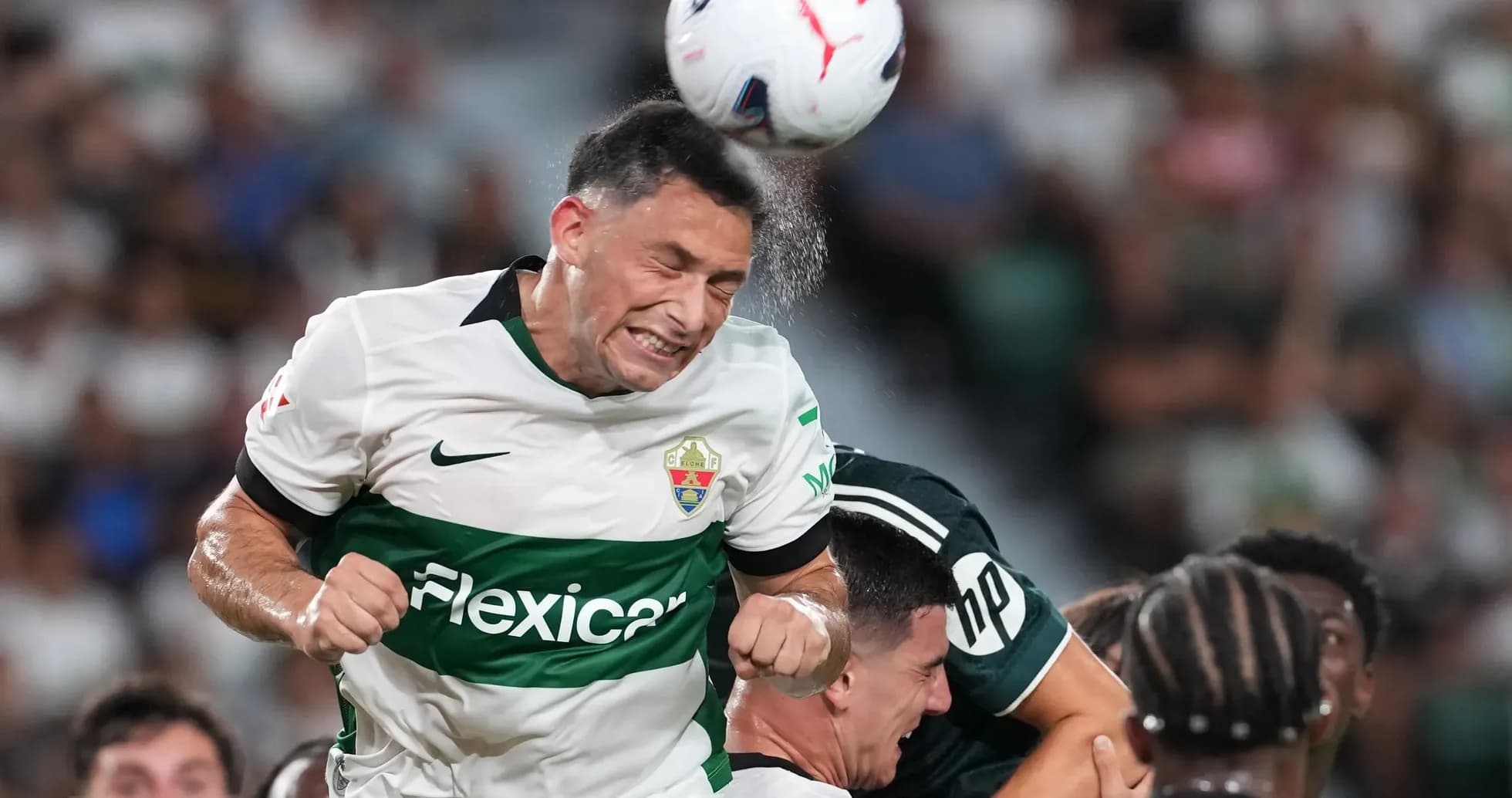
In Seville, the script held. Betis’ attacking structure, supported by a midfield that can both press and possess, generated enough pressure to turn a 1-1 half-time score into a 2-1 full-time win. Elche’s resilience, underpinned by Dituro’s goalkeeping and Affengruber’s blocking, kept them in the contest but could not override the structural gap between a top-five side and a team fighting to stay clear of the drop.
Following this result, the trajectories are clear. Betis look every inch a Champions League contender, their 14 wins, 15 draws and only 7 losses overall reflecting a side that rarely collapses. Elche, with 15 losses and only 1 away win, remain reliant on home form to survive. At La Cartuja, the season’s numbers did not just predict the outcome; they played out, almost to the letter, on the pitch.