.svg&w=384&q=75 "Naijagoal logo")

Derby County Taken Off Market as Turki Alalshikh Withdraws
Derby County’s long, fraught wait for new ownership ended not with a signature, but with a withdrawal.
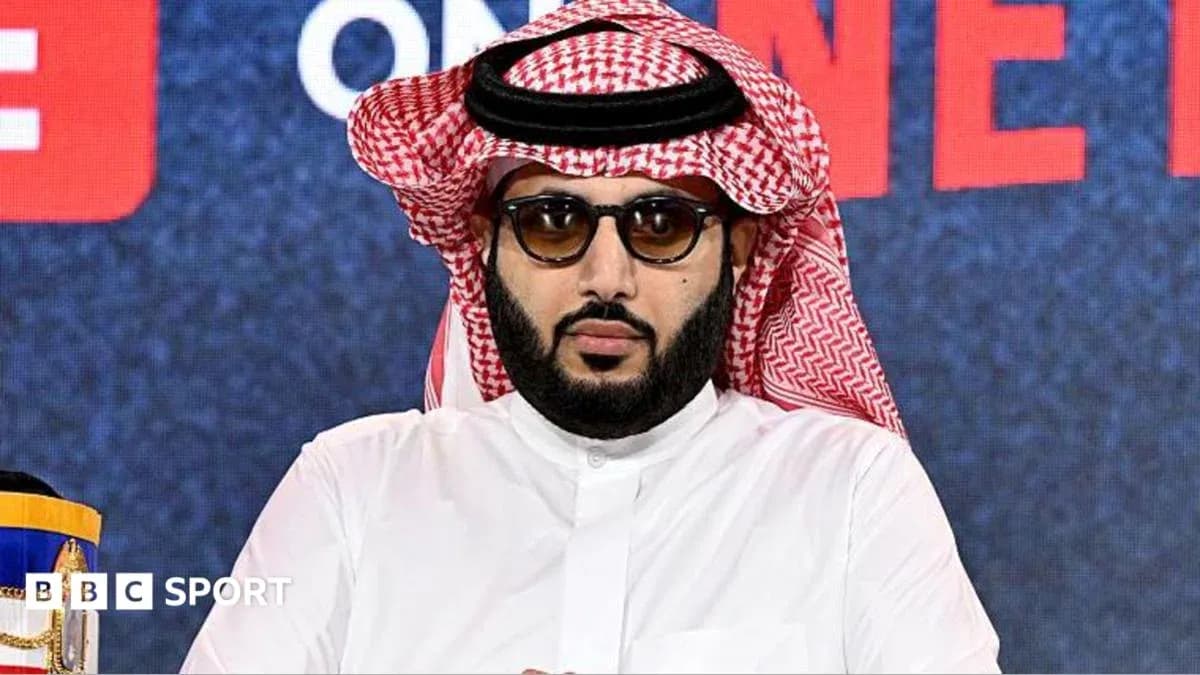
On Monday, the club were told that Saudi government official Turki Alalshikh had pulled out of his proposed purchase of a controlling stake, abruptly ending a deal that had been cleared by both the English Football League (EFL) and the new Independent Football Regulator (IFR).
Just when it looked done, it wasn’t.
“The club is now off the market,” Derby announced in a stark statement, adding that it will “continue to operate under the loyal, committed and unwavering support of Clowes Developments.”
For supporters who had been bracing for a seismic shift in the club’s direction, the message was clear: the Clowes era is not over.
A deal that passed the tests, but ran out of time
Alalshikh’s bid, fronted by his company Lion Sport, had been with the IFR since May. It survived the kind of scrutiny that has become the new normal in English football’s upper tiers.
The regulator confirmed that its assessment of the proposed takeover was completed in 55 days, well inside the 90-day window allowed by law. An IFR spokesperson said it had reached a “minded-to decision” to approve the bid before the start of the 2026-27 season, and that this position had been communicated to all parties last week.
The IFR stressed its remit: to rigorously test potential owners in the top five divisions of the men’s game. That meant digging into financial soundness, available resources, source of wealth, and “honesty and integrity” – including checks on criminal proceedings, civil actions and other regulatory investigations. On those terms, Alalshikh’s offer had cleared the hurdles.
Yet while the regulator was prepared to wave the deal through, the clock was not so forgiving.
Alalshikh walks away
In a statement posted on X, Alalshikh thanked those at Derby County involved in the process, but pointed to the timing as the decisive factor in his decision to step away.
He said he understood the need for the IFR’s detailed checks and “fully respect[ed] the importance of that,” but with the season already under way, the delay had bitten hard. It would, he argued, leave “no time to prepare the team or the club for the season ahead.”
“After careful consideration,” he wrote, “we don't feel it is right to proceed at this time without the necessary preparation in place, but we will remain in conversation with the club and see what is possible in the future.”
The door, in other words, is not completely closed. But the takeover is off.
Human rights concerns never far away
This was never just another ownership story. From the moment Alalshikh’s interest emerged, human rights groups circled.
Amnesty International warned in June that the regulator faced a “defining test” in how it handled the proposed investment. Alalshikh, chairman of Saudi Arabia’s General Entertainment Authority and a close ally of the kingdom’s de facto ruler Mohammed bin Salman, has long attracted criticism from campaigners who accuse him of playing a central role in alleged “sportswashing.”
Saudi Arabia has poured money into football, boxing, golf and more, all while facing sustained condemnation over its human rights record, its treatment of women, use of the death penalty and anti-LGBT stance. Any move into Derby County was never going to escape that wider context.
Those concerns will now recede from Pride Park’s day-to-day conversation, but they have left their mark on the saga and on the regulator’s early public image.
A powerful player steps back – for now
Alalshikh is no stranger to club ownership. He previously owned Egyptian side Pyramids between 2018 and 2019 and more recently controlled Spanish club Almeria, before selling to a Saudi investment group last May. Away from football, he is also a co-founder of boxing promotion company Zuffa, a reminder of how deeply Saudi money now runs through global sport.
His decision to walk away from Derby underlines a new tension in the English game: deep-pocketed investors willing to spend, but a regulatory framework determined to take its time.
Derby, who have known crisis and rescue in recent years, now find themselves back where they started in ownership terms, still under Clowes Developments, still trying to build stability on and off the pitch.
The takeover that promised a new era has vanished. What remains is a club that must now turn all its attention back to the Championship grind, and a question that will linger over Pride Park: when the next suitor comes calling, will the timing – and the politics – fall any kinder?