.svg&w=384&q=75 "Naijagoal logo")

Union Omaha Triumphs Over Fort Wayne 4-2 in USL League One Cup
Under the lights at Werner Park, this USL League One Cup group-stage tie finished with a statement: Union Omaha 4, Fort Wayne 2. In a competition defined by tight margins and experimental lineups, this was an open, chaotic contest that revealed plenty about both squads’ seasonal DNA and their tactical trajectories.
Heading into this game, the standings framed the narrative clearly. Union Omaha sat 2nd in USL Cup 2026, Group 4 with 6 points from 3 matches, a curious profile of strength and vulnerability. Overall they had scored 7 and conceded 8, a goal difference of -1 despite a winning record (2 wins, 1 loss). At home, the numbers were even starker: 5 goals scored and 7 conceded across 2 fixtures, with a home average of 2.5 goals for and 3.5 against. Werner Park was not a fortress; it was a stage for high-scoring drama.
Fort Wayne arrived as the group’s strugglers, 6th with just 1 point from 3 games and a goal difference of -6, having scored 6 and shipped 12 overall. On their travels, they had lost both matches, scoring 3 and conceding 7, with an away average of 1.5 goals for and 3.5 against. Their season to date had been defined by defensive frailty and an inability to manage game states, even though they had at least found the net in every outing.
I. The Big Picture: Open-Field Chaos in the Group
This fixture, though “only” a group-stage clash, carried knockout intensity for both. For Union Omaha, a win would consolidate their push from 2nd place; for Fort Wayne, it was about survival in the group. The 2-2 half-time scoreline hinted at the season-long trends: Omaha’s willingness to attack, and Fort Wayne’s capacity to punch back but not protect themselves.
Union Omaha’s season profile is clear: they are an attacking side that refuses to die wondering. Overall they average 2.3 goals per match, never having failed to score in any of their 3 games, and they have already produced a biggest home win of 4-2 and a heaviest home defeat of 1-5. They commit numbers forward, accept risk, and live with the consequences.
Fort Wayne’s identity is more fragile but equally transparent. They have yet to win in 3 attempts (0 wins, 3 losses), with a total goals-against average of 3.3 per game. Their biggest defeats – 2-3 at home and 4-2 away – mirror the pattern here: they can trade blows, but they lose the shootouts.
II. Tactical Voids: Discipline and Control
With no explicit injury list provided, the tactical voids here are less about absentees and more about structural and emotional control.
Union Omaha’s disciplinary record hints at a team that plays on the edge. Their yellow cards are heavily clustered in the second half: 50.00% of their cautions arrive between 61-75 minutes, and another 25.00% between 76-90. That late-game spike suggests a side that either presses harder as the clock ticks down or tires and begins to foul to protect leads. They have also already seen one red card in the 61-75 minute window, underlining the volatility of their approach once fatigue and game pressure build.
Fort Wayne’s card map is even more telling. A full 44.44% of their yellow cards come in the 76-90 minute period, with another 22.22% between 16-30 and 22.22% from 31-45. This distribution paints a picture of a team that struggles to maintain composure, both when chasing early and when the match reaches its decisive final phase. They do not yet have a red card, but the pattern of late yellows points to a side that unravels under scoreboard and time pressure.
III. Key Matchups: Hunter vs Shield, Engine Room vs Enforcer
Without explicit goals and assists by player, the “Hunter vs Shield” battle is best understood through unit profiles rather than individual stat lines.
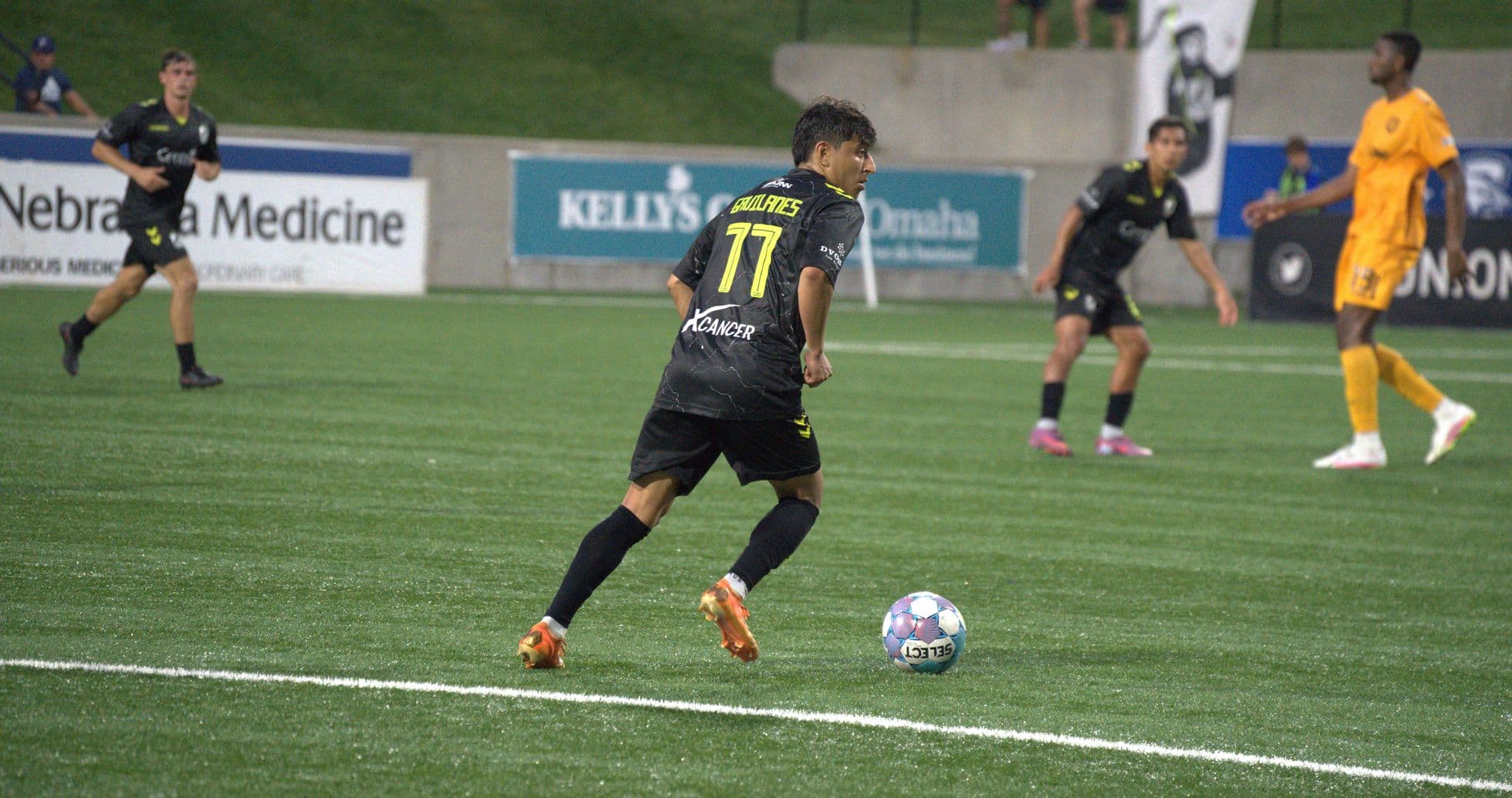
For Union Omaha, the front trio of P. Botello Faz, D. Borczak, and A. Gavilanes embodies their attacking threat. Botello Faz, wearing 9, offers a reference point up front, while Borczak (11) and Gavilanes (77) provide width and creativity. Behind them, A. Gomez and S. Ors Navarro add technical ballast, with Gabriel Cabral as a likely rhythm-setter in central areas. This attacking cluster has powered Omaha to those 7 goals in 3 matches and underpins their 100.00% penalty conversion (1 scored from 1 overall), a small but significant detail in tight group scenarios.
Facing them, Fort Wayne’s “shield” is a back line anchored by J. Smith and R. Sproat, with J. Solis and A. Hernandez completing a defensive unit that has so far conceded 10 in 3 games overall. The numbers are brutal: on their travels they allow 3.5 goals per match, and their biggest away defeat (4-2) is exactly the kind of scoreline they suffered again here. The defensive issue is not just structural; it’s also about repeated exposure to transition, as their midfield – with E. Nieto, J. Garay, and K. Gafar – often has to cover wide open spaces.
In the “Engine Room” duel, Cabral and Ors Navarro were always likely to test Fort Wayne’s central pairing. With Fort Wayne yet to keep a single clean sheet (0 clean sheets in total, both home and away), the onus was on their midfield to screen the back four and reduce the volume of entries into the final third. Instead, the flow of this match – and the season’s statistics – suggest they were overrun whenever Union Omaha chose to accelerate.
IV. Statistical Prognosis: What This Result Tells Us
Following this result, the numbers reinforce the eye test. Union Omaha remain a high-variance, high-ceiling side: 2 wins and 1 loss in total, 0 clean sheets, but also 0 matches where they have failed to score. Their overall goals-against average of 2.7 per match underlines that they are still defensively porous, yet their attacking production at Werner Park – 5 home goals so far, including this 4-goal haul – makes them a dangerous proposition for any visitor.
Fort Wayne’s prognosis is more grim. With 3 losses from 3, 5 goals scored but 10 conceded overall, and no clean sheets, their defensive xG profile (even without explicit numbers) would be expected to be alarmingly high. The repeated pattern of multi-goal concessions, especially on their travels, suggests systemic issues: spacing between lines, transitional defending, and late-game concentration – all mirrored by that 44.44% late yellow-card surge.
In a notional xG battle, Union Omaha’s volume of chances and their season-long scoring consistency would project them as clear favourites in future encounters of this type, particularly at home. Fort Wayne’s only counterweight is their ability to at least find the net in every game, with a total average of 1.7 goals for per match; they are not toothless, but their defensive instability overwhelms any attacking promise.
In sum, this 4-2 at Werner Park was not an outlier but an amplification. Union Omaha lean into chaos and trust their front line to outscore the damage their back line absorbs. Fort Wayne live in the same chaotic world, but without the same firepower or control. Unless they can tighten that back four and calm their late-game discipline, the group-stage narrative that played out here will continue to repeat itself.