.svg&w=384&q=75 "Naijagoal logo")

Terry Butcher on England's Warriors: Who Will Get Messy for the Team?
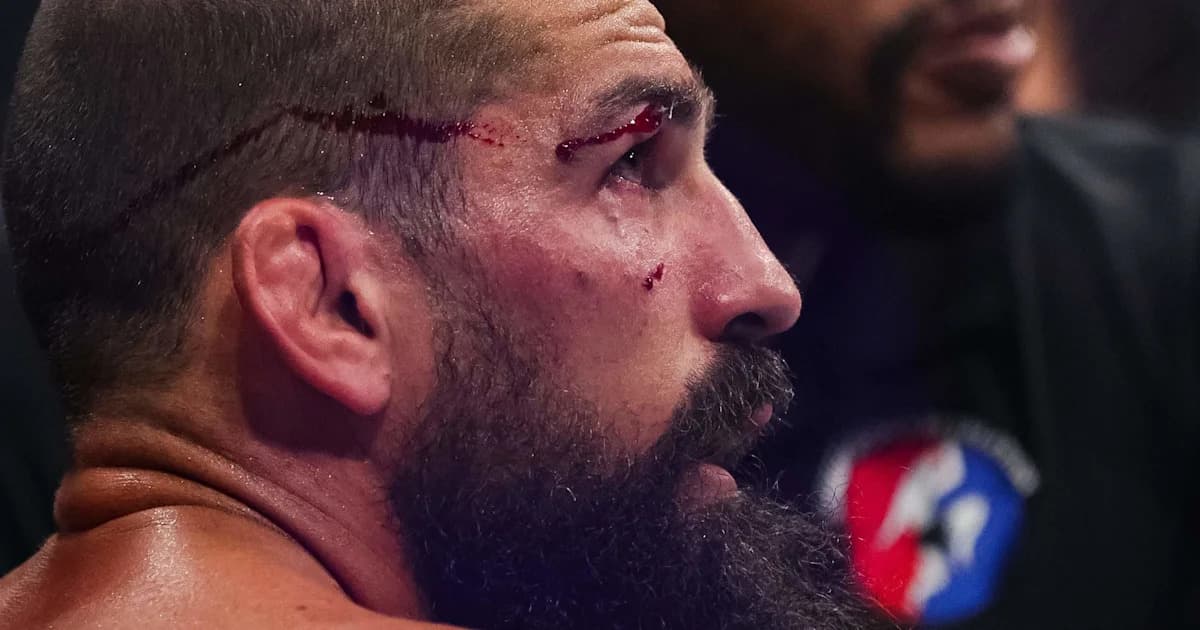
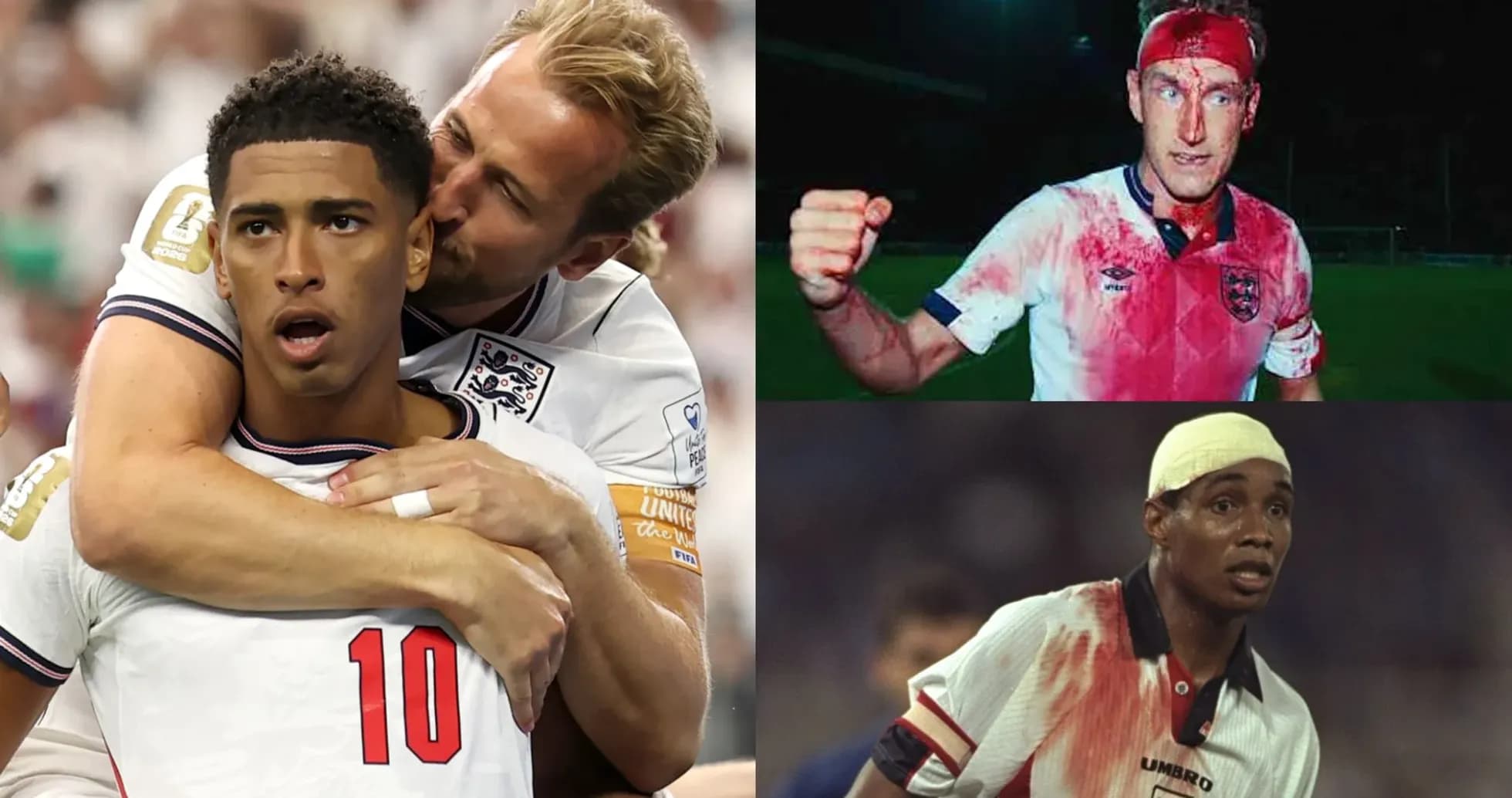
The image is burned into English football folklore. Stockholm, September 1989. Terry Butcher, head bandaged, shirt soaked in blood, refusing to come off as England scrap for a place at the World Cup. By the end, the white of his kit has turned almost entirely red. He stays on, he heads everything, he leads.
That, for many, is what an England warrior looks like.
Butcher, the old-school centre-half who made his name at Ipswich and Rangers and captained his country, has long been held up as the embodiment of that uncompromising spirit. Paul Ince, face torn open in Rome as he helped drag England to the 1998 World Cup, belongs in the same club. Stuart Pearce, too. Men who treated pain as background noise.
Football does not allow that kind of theatre any more. Blood on the shirt means off you go, immediate medical treatment, new kit, new rules. The game has moved on. But the question lingers: who, in this polished, data-driven era, would still put their body on the line for England?
Butcher has a clear answer.
“The biggest warrior we've got at the moment? I’d probably say Jude Bellingham, someone like that,” he told GOAL, speaking as part of Domino’s ‘Shirtiette’ campaign, which leans into the idea of getting messy for your team.
“He'd be more of a warrior, he does get worked up and he's fiery. I like that. Perhaps sometimes too fiery, but that's the way he plays. He lives on the edge sort of thing. He wants to put himself about and gets frustrated like everybody else. I think Jude would be the one for me.”
Bellingham, the 21-year-old Real Madrid star, has already taken ownership of England’s midfield and much of their attacking responsibility. Now he’s being anointed by one of the most iconic hard men in the country’s history as the closest thing this generation has to a throwback fighter.
The Game Is a Different Animal Now
That endorsement comes with a lament. For Butcher, the type of character he represents has been squeezed out of the modern game.
“Yeah, it's faded out of the game because the game is a different sort of animal now,” he said. “It's more technical. It's more about ways of playing rather than just getting stuck in.
“There's no sort of real physicality in football. It's all about the technique. It's all about creating overloads and all the technical terms. The nearest that comes to our day is probably on set plays and particularly corners when everybody seems to take on a wrestling image and try and bundle people to the ground.
“The game has changed and you can see that it's changed for the better in many instances, but I just think a bit more physicality would certainly help. It certainly helps with the fans because the fans always like to see someone getting stuck in, but you can't do that now because you do run the risk. If you do intimidate players and if you do throw your weight around, then you're in danger of getting not a yellow card, but a red card.”
The tackle has been tamed. The leader, too, in Butcher’s eyes.
England, still chasing a first major trophy since 1966, feel to him like a team short of snarling, on-pitch generals.
No Leaders in the Group
Pressed on whether there is a commanding presence in England’s back line, someone capable of marshalling the defence and slamming shut the leaks that have so often haunted tournament campaigns, Butcher did not hesitate.
No, I don't think there is. I don't think there's been anybody there for a long, long time.
He casts his mind back to an era when confrontation among team-mates was part of the job description, not a dressing-room taboo.
“I think gone are the days when you can speak harshly at players. I had Bryan Robson, he used to speak harshly at me if I did something wrong and then I'd have a go back at him if he did something wrong - but he didn't do anything wrong generally so I didn't have to go back at him! But you let your feelings be known vocally, very quickly and very strongly.
“Nowadays you don't do that. I think one of the reasons is that players, particularly on set plays, in the corners and free-kicks, they don't mark a specific opponent. They are zonal, so there's no need for them to shout or do anything else.
“I think the way that football is now, players are too nice with each other. There's no one demanding more of each other. There's no leaders in the group. It's players and just a bunch of individuals getting on with it. They may say things in the dressing room, but on the pitch there doesn't seem to be anyone that really does shout and point a finger.
“[Jordan] Pickford does that sometimes and he points a finger. Not many in the England team do. It's just a case of getting on with their job and being the best that they can be themselves.
“I liked the vocal side. I enjoyed it. I enjoyed praising people as well as also shouting at them to urge them on, ‘come on lads’ and all that sort of thing. You see it occasionally, but not very often. I'd like to see it more.”
For Butcher, leadership is not a slogan or an armband. It is a volume level. A demand. A glare.
Right now, he hears too little of it.
Bellingham, Rice and the Armband After Kane
At the heart of this debate sits the captaincy. Harry Kane wears the armband, and his numbers are extraordinary: 81 goals for England, a record-breaker and the face of the national side. But time, eventually, will tap him on the shoulder.
Who comes next? Bellingham’s name, inevitably, enters the conversation, even as questions occasionally swirl around his temperament.
Butcher sees potential, but also a timeline.
“I was the captain of a few clubs and I used to kick doors down and I used to be vocal and I used to swear at referees and all these kinds of things. Not what you would really expect a captain to do, but that was what it was in those days.
“I think Bellingham will in time mature, particularly on the international scene. I think then he could be eligible for the captaincy. I think at the moment he's one of the lieutenants, one of the wingmen, he's underneath that captaincy level.”
If Bellingham is the heir-in-waiting, Declan Rice is, in Butcher’s view, the obvious candidate in the here and now.
“Declan Rice would be an obvious candidate for a captaincy, particularly following in the footsteps of Harry Kane,” he said.
But the current captain is in no rush to vacate the throne. In Butcher’s eyes, Kane looks built for the long haul.
“Harry Kane could play forever. The way he's going about his business, the way he looks after himself, the way he behaves, he’s like [Cristiano] Ronaldo and he could play forever. Harry didn't have much pace to lose, but his brain seems sharper, his reactions seem sharper. I think that he's got a lot more to do.”
So the succession plan can wait. The demands, in Butcher’s mind, cannot.
New Jersey, New Test
England’s next examination arrives on Saturday, when they close out their Group L campaign at the 2026 World Cup against Panama in New Jersey. Kane will lead the line, Bellingham will carry the creative burden, and Rice will anchor the midfield.
On the touchline, Thomas Tuchel will look for more than just a result. He needs a performance that stirs something – in the stands in North America, and back home where the weight of six empty decades hangs over every England squad.
The stage is set for goals, for moments, for celebrations. Butcher, blood-streaked memories and all, has thrown down a different kind of challenge.
Who, in this team, is ready to get messy for England – and write themselves into legend, not with a statistic, but with a scar?