.svg&w=384&q=75 "Naijagoal logo")
Sunderland vs Manchester United: Premier League Clash Preview
The Stadium of Light stages a classic meeting on May 9, as mid‑table Sunderland host top‑four chasing Manchester United in Premier League round 36. With Sunderland 12th on 47 points and United sitting 3rd on 64, the stakes are very different: the hosts are edging towards a solid return to the elite, while the visitors are trying to lock in Champions League football.
Both arrive with contrasting momentum. In the league, Sunderland’s recent form reads “DLLWW”, a late‑season uptick that has eased any lingering relegation fears. United, by contrast, are on “WWWLD” across all phases, a strong run that has put them in a commanding position in the race for the top three despite a recent stumble.
Tactical outlook: Sunderland’s structure vs United’s firepower
Across all phases, Sunderland have been pragmatic and flexible. Their most used shape is a 4‑2‑3‑1 (18 matches), but they have also turned to 4‑3‑3 and 5‑4‑1, suggesting a coach willing to adjust between front‑foot pressing and deeper, compact blocks. At home, they have been quietly efficient: 8 wins, 5 draws and only 4 defeats from 17, with 23 goals scored and 19 conceded.
The underlying numbers sketch a team that grinds rather than overwhelms. Sunderland average 1.4 goals for and 1.1 against per home game, and have kept 6 clean sheets at the Stadium of Light. However, they have also failed to score in 4 of those 17 home matches, underlining that their attacking output can be streaky. Their biggest home win (3‑0) and heaviest home defeat (0‑5) in this campaign show a side whose level can fluctuate sharply.
Without the ball, Sunderland’s discipline will be tested. They collect yellow cards most heavily between 46–60 minutes (18 bookings, 23.38% of their total) and 61–75 minutes (14, 18.18%), often when legs tire and pressure mounts. That pattern hints at a risk of late fouls and set‑piece concessions against a United side that thrives on sustained territory.
Manchester United travel north with one of the division’s more potent attacks. In the league, they have scored 63 goals in 35 matches (1.8 per game), with 27 of those coming away from Old Trafford at 1.6 per game. Their away record – 6 wins, 7 draws, 4 defeats – is solid rather than spectacular, but they rarely leave empty‑handed and have failed to score only once on the road all season.
Tactically, United oscillate between a 3‑4‑2‑1 (18 times) and a 4‑2‑3‑1 (17 times). The back‑three system has often been used to stabilise their defensive transitions, but the injury to M. de Ligt (back injury, ruled out) complicates that approach. Without him, the visitors may lean more heavily on a back four, prioritising extra control in midfield through a double pivot and allowing their front line to stay high and wide.
Key players and attacking dynamics
United’s goal threat is spread across several profiles rather than a single talisman.
Benjamin Šeško leads their league scoring charts with 11 goals in 30 appearances. Despite starting only 17 times, he has been efficient: 34 shots on target from 51 attempts and 9 key passes. Interestingly, his penalty record in the league is 0 scored, 0 missed – all his goals come from open play or non‑penalty situations, underscoring his movement and finishing in dynamic phases rather than from the spot.
Around him, the wide and hybrid forwards add layers. Bryan Mbeumo has 9 goals and 3 assists from 30 games, with 46 key passes and 54 shots, making him United’s most consistent chance‑creator in the final third. His ability to drift inside from the flank and combine with the central striker will test Sunderland’s full‑backs and wide midfielders, especially if the hosts sit in a 4‑2‑3‑1 and leave spaces between full‑back and centre‑back.
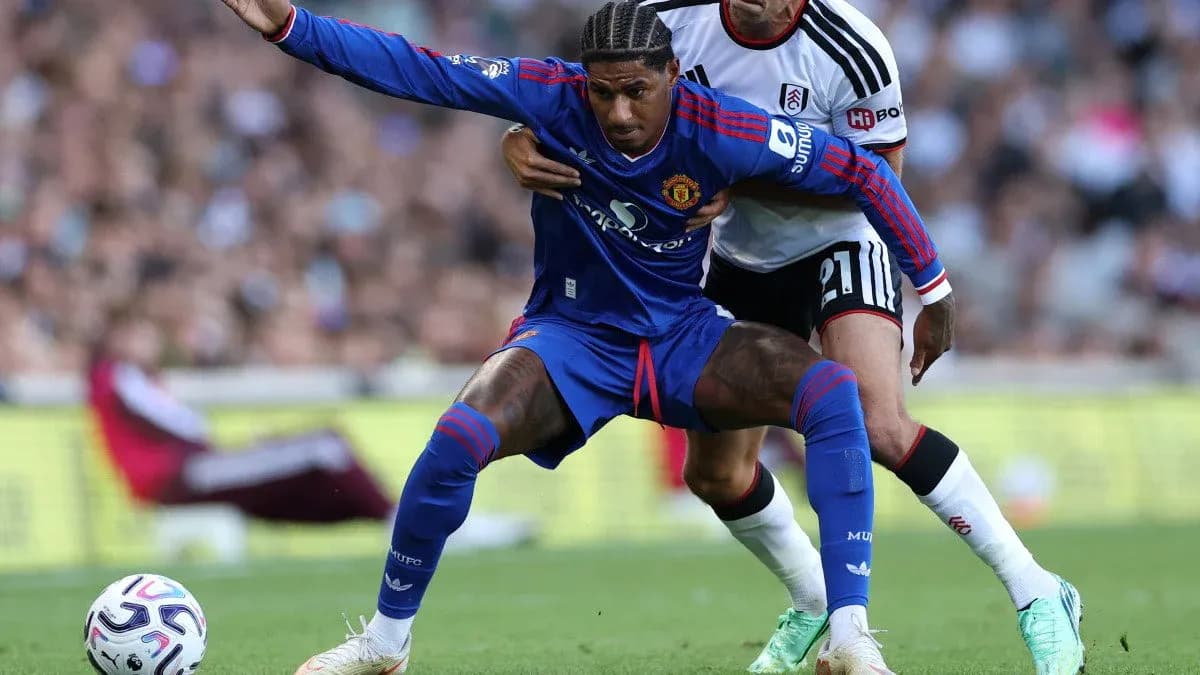
Matheus Cunha mirrors Mbeumo’s output with 9 goals and 2 assists in 31 appearances, but his profile is even more all‑action: 88 dribble attempts (41 successful), 337 duels with 155 won, and 51 fouls drawn. He is the chaos agent, dropping between lines, running at defenders, and forcing mistakes. Sunderland’s centre‑backs and holding midfielders will need to manage his rotations carefully, particularly if United use a 3‑4‑2‑1 with Cunha and Mbeumo underneath Šeško.
Behind them, Casemiro has quietly contributed 9 league goals and 2 assists from midfield – an unusually high return for a holding player. With 1547 passes at 81% accuracy and 88 tackles, he anchors United’s structure while also posing a late‑arriving threat at set‑pieces and from second balls. Sunderland’s attacking midfielders will have to choose between tracking his runs and staying higher to exploit counters.
Team news and selection puzzles
Sunderland have notable absences. D. Ballard is suspended due to a red card and will miss the fixture, removing a key defensive presence and aerial asset. R. Mundle is also out with a hamstring injury, limiting options in wide or creative areas.
Three further players are listed as questionable: N. Angulo (muscle injury), S. Moore (wrist injury) and B. Traore (knee injury). Their availability could affect both depth and in‑game flexibility; if they are not fit, Sunderland’s bench will look lighter, particularly in terms of pace and late‑game changes.
For United, M. de Ligt’s back injury rules him out, which not only weakens their central defensive options but could also influence the choice of formation. B. Šeško is flagged as questionable with a leg injury; should he not make it, United would lose their leading scorer and primary penalty‑box reference. That would push more responsibility onto Cunha and Mbeumo, and might see United use a more fluid front three without a classic target man.
Both sides are flawless from the spot in the league this season: Sunderland have scored 4 of 4 penalties, United 4 of 4, with no misses recorded at team level. However, none of United’s leading scorers listed here have yet converted a league penalty, so any spot‑kick may fall to a different specialist.
Head‑to‑head narrative
The recent competitive history between these clubs is heavily tilted towards Manchester United. From the last five Premier League meetings:
- Manchester United wins: 4
- Sunderland wins: 1
- Draws: 0
The most recent clash came in October 2025 at Old Trafford, where United won 2‑0 after leading 2‑0 at half‑time. Historically, they have also travelled well to Wearside, winning 3‑0 at the Stadium of Light in April 2017. Sunderland’s lone success in this sample was a 2‑1 home victory in February 2016, when they turned a 1‑1 half‑time scoreline into a famous win.
The pattern is clear: United tend to score multiple goals in this fixture, and Sunderland have often struggled to contain them over 90 minutes.
The verdict
On paper and in the data, Manchester United are deserved favourites. They boast the stronger league position, a more prolific attack (63 goals vs Sunderland’s 37 across all phases), and a recent form line that suggests they are finishing the season strongly. Even away from home, they average 1.6 goals scored and have lost only 4 of 17 league trips.
Sunderland, though, are not a soft touch at the Stadium of Light. Their home record (8‑5‑4) and 6 clean sheets underline that they can make life difficult, especially if they can keep the game compact and lean on their well‑drilled 4‑2‑3‑1. The absence of Ballard is a major concern against United’s multi‑pronged attack, and if Šeško is passed fit, the aerial and penalty‑box battle could tilt decisively towards the visitors.
If United manage their defensive reshuffle without de Ligt and avoid the lapses that have seen them concede 48 goals in 35 matches, their attacking quality should ultimately tell. Sunderland’s best route lies in exploiting transitions and United’s occasional away looseness, but over 90 minutes the numbers and recent head‑to‑head record point towards an away win, likely in a match with goals at both ends.