.svg&w=384&q=75 "Naijagoal logo")
Liverpool vs Chelsea Tactical Analysis: 1–1 Draw Insights
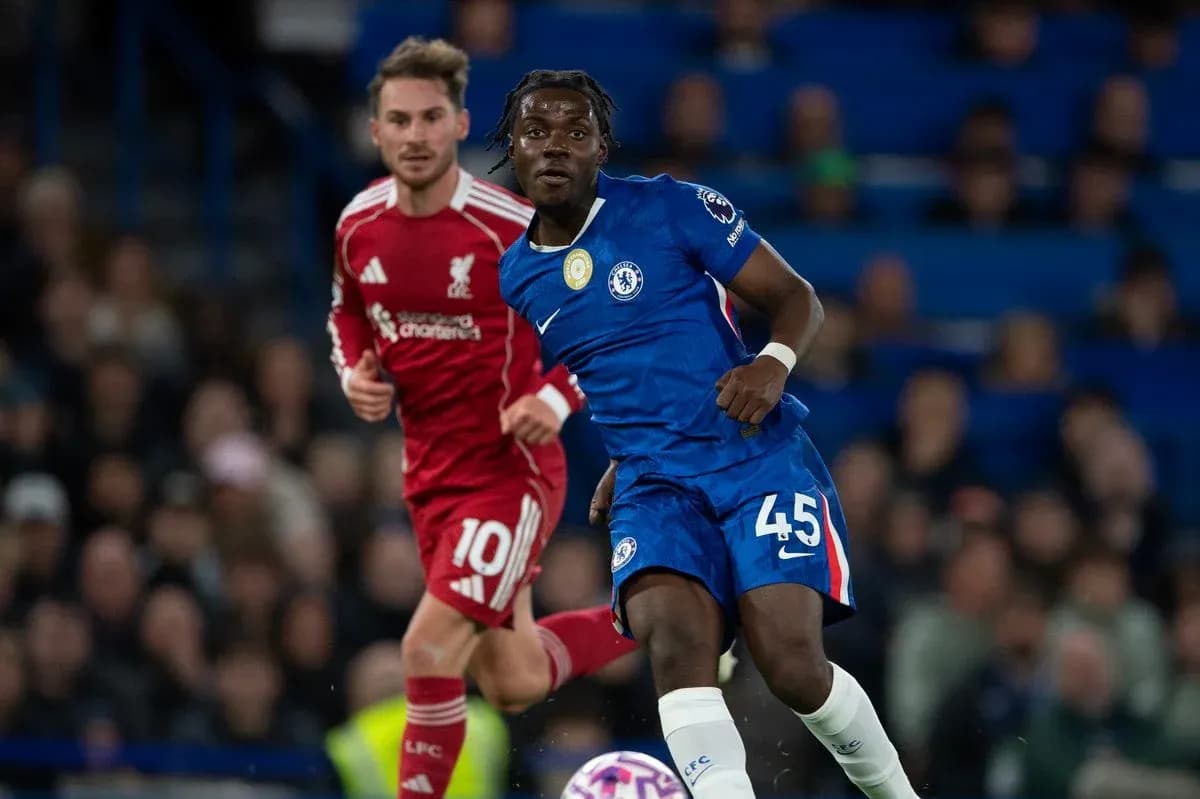
Liverpool and Chelsea shared a 1–1 draw at Anfield in Premier League Round 36, a match that quickly settled into a finely balanced tactical arm‑wrestle. Arne Slot’s Liverpool struck first through Ryan Gravenberch, but Calum McFarlane’s Chelsea responded before the break via Enzo Fernández. From there, the game became a study in small structural adjustments: Chelsea gradually took control of possession, Liverpool leaned into vertical transitions, and both sides defended their box well enough that the low combined xG (0.56 vs 0.50) accurately reflected a contest of control more than chaos.
First Half
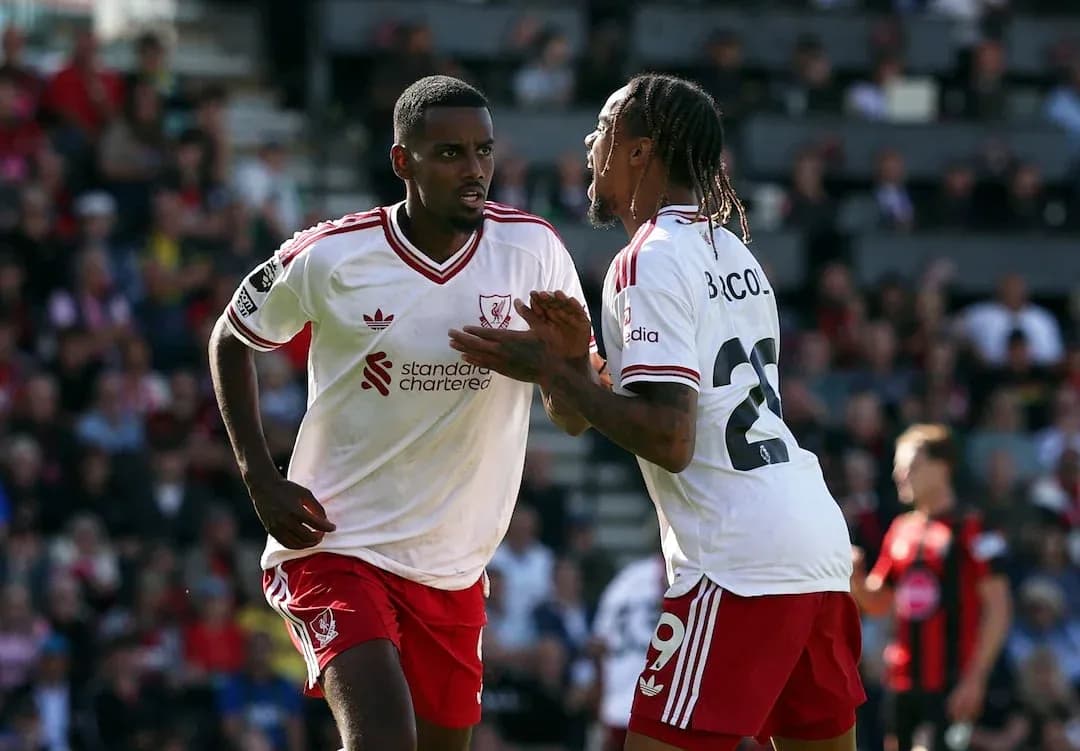
The scoring opened on 6' when Ryan Gravenberch arrived from midfield to finish a Liverpool move, assisted by Rio Ngumoha. It was emblematic of Slot’s intent: midfielders breaking lines to support Cody Gakpo, with Ngumoha operating as a high, aggressive outlet from the right side of the midfield line. Chelsea responded on 35', Enzo Fernández scoring without an assist, a reminder of their capacity to generate threat from central midfield even in a relatively low‑volume attacking game (6 total shots).
Chelsea thought they had turned the match on its head at 50' when Cole Palmer had the ball in the net, but a VAR review resulted in “Goal cancelled”, keeping the score at 1–1 and effectively resetting the tactical battle for the final 40 minutes.
From there, the story was about adjustments, substitutions, and discipline.
Substitutions
Substitutions followed the event order. On 63', Andrey Santos (OUT) was replaced as Reece James (IN) came on for Chelsea, signalling a shift towards more width and crossing threat from the right. At 67', Liverpool answered: Rio Ngumoha (OUT) made way as Alexander Isak (IN) came on, adding a more classic central forward profile and allowing Gakpo to adjust his movements around him. On 77', Slot made a double structural change: Cody Gakpo (OUT) was replaced as Federico Chiesa (IN) came on, and Ibrahima Konaté (OUT) was replaced as Joe Gomez (IN) came on, refreshing both the attacking line and the right side of the defence.
Disciplinary Sequence
The disciplinary sequence, in strict chronological order, was as follows:
- 67' Jorrel Hato (Chelsea) — Foul
- 73' Enzo Fernández (Chelsea) — Foul
- 83' Marc Cucurella (Chelsea) — Foul
- 88' Joe Gomez (Liverpool) — Argument
- 89' Moisés Caicedo (Chelsea) — Handball
- 90+4' Alexis Mac Allister (Liverpool) — Persistent fouling
That yields locked totals: Liverpool: 2, Chelsea: 4, Total: 6.
Tactical Overview
Tactically, Liverpool’s approach without a declared formation can be inferred from roles. Giorgi Mamardashvili in goal had 2 saves, reflecting that Liverpool’s defensive block, led by Virgil van Dijk and Ibrahima Konaté, restricted Chelsea to just 3 shots on target. The back line of Curtis Jones, Konaté, van Dijk and Miloš Kerkez suggests a flexible build‑up: Jones tucking in to form a three, Kerkez pushing slightly higher on the left, and Jeremie Frimpong listed as a midfielder but operating as a high‑wide right outlet in possession.
In midfield, Ryan Gravenberch and Alexis Mac Allister, supported by Dominik Szoboszlai and Rio Ngumoha, formed a dynamic, rotating box. Gravenberch’s goal underlines his freedom to arrive late into the area, while Mac Allister’s late yellow for “Persistent fouling” at 90+4' shows the defensive workload he carried as Chelsea increasingly tried to play through central zones. Ngumoha’s early assist and subsequent substitution for Alexander Isak at 67' shifted Liverpool from a more fluid, line‑breaking right‑sider to a dual‑forward look, with Isak and Gakpo (until 77') pinning Chelsea’s centre‑backs and opening pockets for Szoboszlai between the lines.
Defensively, Liverpool’s 17 fouls and 2 yellow cards indicate an aggressive, sometimes borderline approach to disrupting Chelsea’s rhythm, particularly in the second half as the visitors gained more control of the ball (Chelsea 52% possession, 515 passes at 87% accuracy versus Liverpool’s 48%, 473 passes at 84%). Joe Gomez’s booking for “Argument” at 88' points to rising emotional temperature as Liverpool tried to force a late winner while protecting transitions.
Chelsea's Structure
Chelsea’s structure, also without an explicit formation, was clearly tilted towards ball control. Filip Jørgensen, like Mamardashvili, registered 2 saves, a sign that Chelsea’s back line of Malo Gusto, Wesley Fofana, Levi Colwill and Jorrel Hato, supported by Marc Cucurella from midfield, limited Liverpool to 3 shots on target despite conceding 8 total shots. The double‑pivot of Andrey Santos and Moisés Caicedo in front of the defence gave Chelsea a platform to recycle possession and protect central spaces; Caicedo’s yellow for “Handball” at 89' was a rare lapse in an otherwise controlled screening performance.
Further forward, Cole Palmer and Enzo Fernández operated as creative hubs. Palmer’s disallowed goal at 50' was the clearest sign of Chelsea’s capacity to exploit half‑spaces and second‑phase moments, even if the final decision went against them. Enzo’s equaliser at 35' and later yellow card for “Foul” at 73' show both sides of his role: advancing into finishing positions but also engaging aggressively in counter‑pressing. Cucurella’s booking for “Foul” at 83' and Hato’s earlier card at 67' underline how often Chelsea’s wide and left‑side defenders were asked to defend in isolation against Liverpool’s direct runners.
The introduction of Reece James for Andrey Santos at 63' nudged Chelsea towards a more wing‑oriented attack, with James and Gusto capable of overlapping and underlapping on the right. This, combined with João Pedro’s presence up front, aimed to stretch Liverpool’s back line horizontally, but the low xG of 0.50 shows Liverpool largely contained those patterns, forcing Chelsea into lower‑quality attempts.
Statistical Overview
Statistically, the match supports the tactical reading of a balanced, low‑margin encounter. Liverpool generated 0.56 xG from 8 shots, Chelsea 0.50 from 6, almost perfectly mirroring the 1–1 scoreline. Both teams committed 17 fouls, but the card profile was asymmetric: Liverpool 2 yellows, Chelsea 4, reflecting Chelsea’s greater number of interventions that crossed the disciplinary threshold (“Foul” three times, plus one “Handball”) versus Liverpool’s mix of “Argument” and “Persistent fouling”. Both goalkeepers conceded one from roughly half an expected goal, with identical “goals prevented” figures of -0.49, indicating that neither keeper significantly over‑ or under‑performed relative to shot quality faced.
Chelsea’s marginal edge in possession and passing accuracy did not translate into a decisive territorial advantage, in part because Liverpool’s defensive index on the day — compact central block, strong aerial presence from van Dijk and Konaté, and diligent midfield screening — kept the visitors’ attacks on the outside. Overall form for both sides, judged on this performance, suggests two teams structurally sound, capable of controlling phases of play, but still searching for a sharper cutting edge in the final third.