.svg&w=384&q=75 "Naijagoal logo")


Spain vs Argentina: World Cup Final Preview
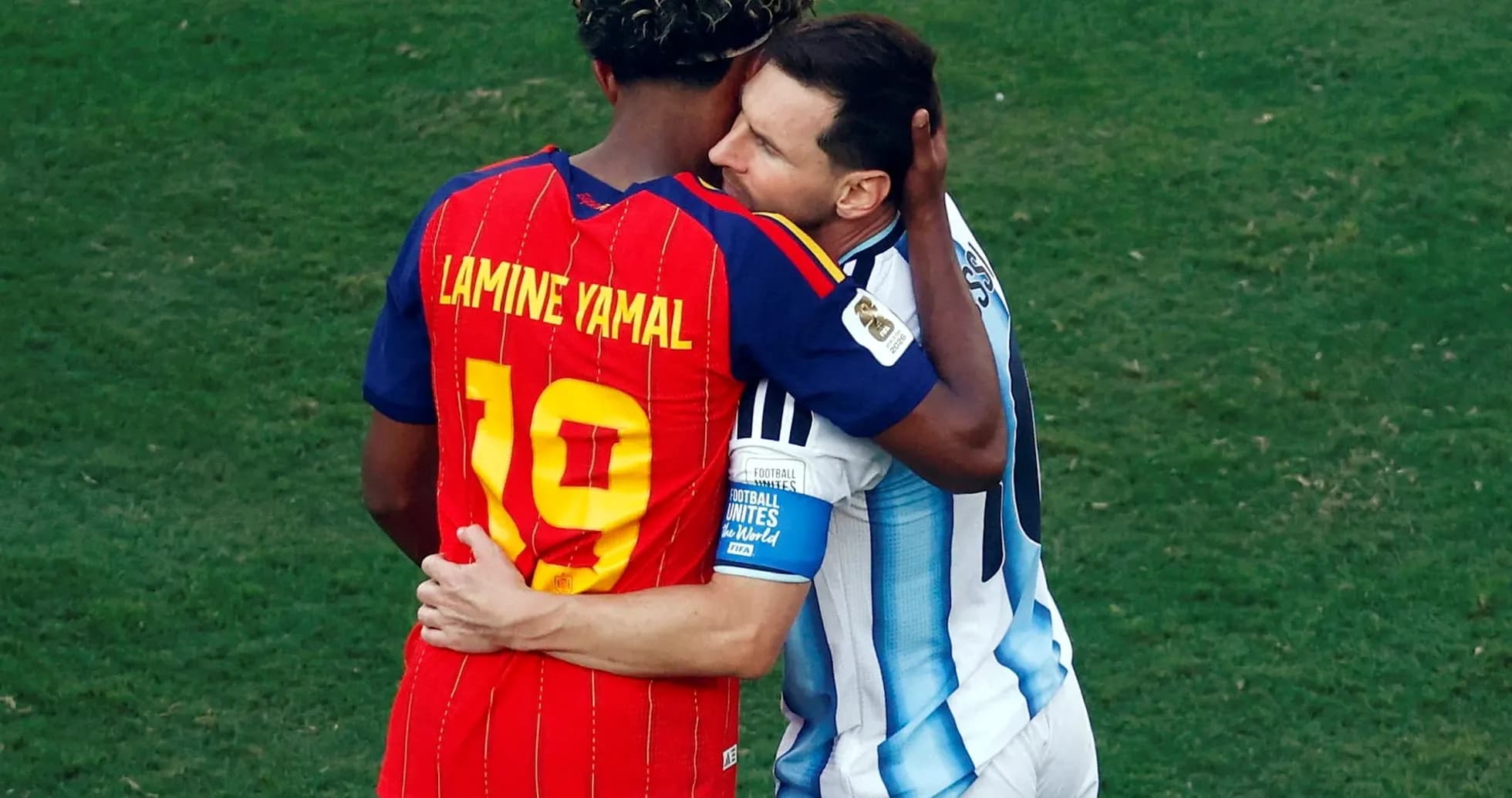
Spain and Argentina meet with the world watching on 19 July 2026, a World Cup Final without a fixed backdrop yet, with the venue and city still to be confirmed. One side chases a return to the summit of international football, the other looks to extend an era defined by L. Messi. Spain arrive as group winners built on control and defensive perfection, while Argentina have powered through with ruthless attacking edge. Everything that has happened in this World Cup for both nations now narrows to one night, one trophy, and a legacy-defining 90 minutes.
Season Context
Spain come into this final as 1st in Group H with 7 points from 3 matches, built on a flawless defensive platform. They scored 5 goals and conceded none across those 3 games, turning 2 wins and 1 draw into a calm but convincing passage through the Round of 32 bracket. A goal difference of +5 underlines a side that has combined efficiency in front of goal with total control at the back.
Argentina topped Group J with maximum authority, finishing 1st with 9 points from 3 matches. They won all three group games, scoring 8 goals and conceding just 1, for a goal difference of +7. That perfect record and a return of 3 wins from 3 underline a team that has treated every step of this World Cup as a mission, not just a journey.
Form & Momentum
Both finalists arrive in the ultimate match with identical official group-stage form strings: Spain’s record is “WWWWW” and Argentina’s is also “WWWWW”, a rare clash of two sides who have known nothing but victory in the build-up. For Spain, those 5 goals and 0 conceded over 3 group matches translate to a team averaging 1.7 goals scored and 0.0 conceded per game, a picture of control and defensive assurance (5 scored, 0 against in 3). Argentina’s path has been more explosive: 8 goals scored and 1 conceded in 3 group games mean roughly 2.7 scored and 0.3 conceded per match, a blend of attacking firepower and disciplined structure (8 scored, 1 against in 3).
Beyond the group phase, the wider tournament data reinforces those impressions. Spain have remained unbeaten across 7 World Cup fixtures, with 6 wins and 1 draw, scoring 13 and conceding only 1 (13 scored, 1 conceded in 7). That balance makes them look relentlessly stable rather than spectacular. Argentina, by contrast, have been all-out winners: 7 victories from 7, with 19 goals scored and 7 conceded (19 scored, 7 conceded in 7), a profile of a side that embraces risk because it trusts its attacking stars to decide games.
Head-to-Head Patterns
Recent history between these nations is sparse but loaded with narrative. Their scheduled meeting in the CONMEBOL - UEFA Finalissima Final in March 2026 never took place, recorded officially as a cancelled fixture with no goals scored and no result. The last completed match in the data comes from a very different context: on 27 March 2018, Spain dismantled Argentina 6-1 in Friendlies (Friendlies, season 2018, March 2018), a night in Madrid at Estadio Wanda Metropolitano that still lingers in the collective memory. That result, while from a friendly and eight years removed, showed how Spain’s positional play could overwhelm an Argentina side still searching for balance. With no competitive World Cup meeting listed in the recent records provided, this final writes its own competitive chapter, unburdened by a direct tournament precedent but haunted by that 6-1 scoreline in the background.
Tactical Preview
Spain’s tournament statistics point towards a team built on structure and control. Their most common systems have been variants of a back four with a strong midfield core, most frequently a 4-2-3-1 and 4-3-3 across the World Cup. That aligns perfectly with a squad stacked with technical midfielders: Rodri, Pedri, Fabián Ruiz, Mikel Merino and Martín Zubimendi offer an array of passing angles and pressing triggers. Out wide and up front, the likes of Lamine Yamal, Nico Williams, Ferran Torres and Mikel Oyarzabal provide vertical threat and goals; Oyarzabal in particular has been decisive with 5 goals and 1 assist in 7 appearances, showing he can finish moves at the highest level. Defensively, Spain’s record of 1 goal conceded in 7 tournament matches reflects a compact block and controlled pressing, rather than last-ditch defending.
Argentina lean into a more direct, punchy style. Their most used shape has been a 4-4-2, with occasional switches to 4-1-3-2 and 4-1-4-1, systems that all revolve around freeing L. Messi between the lines and creating running lanes for Lautaro Martínez and J. Álvarez. The numbers around Messi are staggering: 8 goals and 4 assists in 7 World Cup games, with 28 shots, 18 on target and 35 dribble attempts, 24 of them successful. He is both creator and finisher, the hub of everything Argentina do in the final third. Behind him, R. De Paul, A. Mac Allister, E. Fernández and others provide energy and line-breaking passes, while a defensive unit marshalled by figures such as C. Romero and N. Otamendi has done just enough to support an attack-first identity. Two clean sheets in the tournament data and 7 goals conceded in 7 matches suggest a defence that can be opened up, but one that tends to be bailed out by superior firepower.
The key tactical battleground will be Spain’s midfield control against Argentina’s vertical surges. Spain’s defensive excellence (1 goal conceded in 7 World Cup matches) will be tested by an Argentina side that averages 2.7 goals per game in group play and 19 overall in 7 matches. If Spain can pin Argentina back with long spells of possession and limit transitions, their wide forwards and late-arriving midfielders could exploit spaces around Argentina’s full-backs. Conversely, if Argentina can turn this into a broken, transition-heavy game, Messi’s ability to find Lautaro Martínez and J. Álvarez in space could tilt the final towards the reigning South American champions.
Statistical Snapshot
- Competition: World Cup, season 2026 — 19 July 2026.
- Venue: To be confirmed, to be confirmed.
- Prediction: Win or draw — Double chance : Spain or draw.
- Win Probabilities: Home 45% / Draw 45% / Away 10%.
- Model: Spain 69.2 — Argentina 31.0.
Betting Verdict
The prediction model leans towards Spain avoiding defeat, with a double-chance angle backed by a 45% home win probability and 45% draw, against just 10% for an Argentina win. That tilt is grounded in Spain’s defensive record of 1 goal conceded in 7 World Cup matches and their unbeaten run, compared to an Argentina side that has occasionally left space at the back despite 7 wins from 7 and 19 goals scored. Head-to-head data offers only one completed recent game, the 6-1 Spain win in March 2018 Friendlies, which reinforces the idea that Spain’s structure can trouble Argentina when they overcommit. With no odds data provided, the safest analytical stance mirrors the model: Spain on the double chance looks the most rational position, especially in a final where control and defensive solidity often outweigh pure attacking flair.