.svg&w=384&q=75 "Naijagoal logo")


Milei Uses World Cup Win to Reassert Malvinas Sovereignty
The World Cup was supposed to be the stage for football. Instead, it has reignited one of the most combustible territorial disputes in modern history.
Milei turns a celebration into a sovereignty statement
Fresh from Argentina’s politically charged World Cup semifinal win over England, President Javier Milei has seized on the fallout to sharpen his government’s stance over the Falkland Islands.
On Thursday, Milei declared that Argentina is “getting closer every day” to recovering sovereignty over the islands, known in the country as the Malvinas. The message did not come in a carefully choreographed press conference, but in a pointed post on X, where he mocked Britain’s anger at Argentina’s post-match celebrations.
“While some are busy throwing tantrums befitting a terminally mononeuronal teenager,” he wrote, “we, through the diplomatic route, are getting closer every day to the recovery of the Malvinas Islands, Georgias, and South Sandwich Islands, and the surrounding maritime space.”
No ambiguity. No softening of the language. A football match had cracked open a diplomatic fault line.
A banner, a slogan, and an old wound
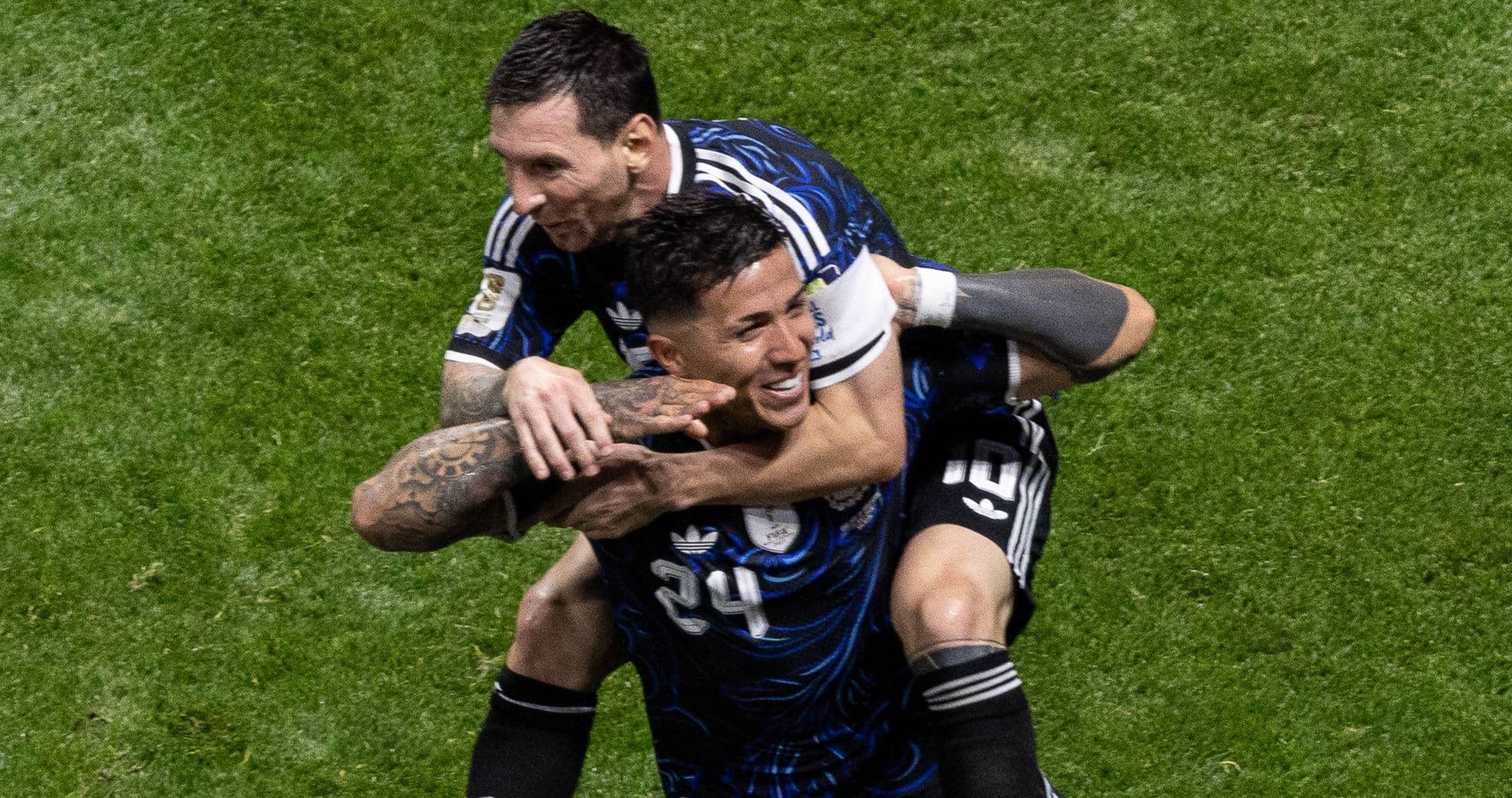
The spark came on Wednesday night, moments after Argentina beat England in the World Cup semifinal. As the celebrations began, Argentine players unfurled a banner reading: “Las Malvinas son Argentinas” — “The Falkland Islands are Argentinian.”
The image raced around the world in seconds. On the pitch, it looked like a choreographed gesture. Off it, it landed like a political statement.
In London, the reaction was swift. British Business Secretary Peter Kyle branded the display “entirely inappropriate” and called on FIFA to investigate. Prime Minister Keir Starmer’s spokesperson pushed back just as firmly: “The World Cup might not be ours, but the Falkland Islands definitely are.”
The message from Downing Street was clear: football may be global, but sovereignty, in Britain’s view, is settled.
FIFA drawn into the crossfire
Once again, FIFA finds itself dragged into a dispute that runs far beyond the touchline.
On Thursday, world football’s governing body confirmed that its independent disciplinary committee is reviewing the match reports and the circumstances surrounding the banner before deciding whether to open formal proceedings. This is not new territory. Argentina’s football association was fined in 2014 after the same slogan appeared before a friendly against Slovenia.
What looked like a spontaneous act of national pride now sits under forensic scrutiny, its timing and intent being weighed against FIFA’s rules on political messaging.
Old war, new rhetoric
Behind the noise of social media and press briefings lies a long, bitter history. The Falklands, or Malvinas, have sat at the heart of a sovereignty dispute between Britain and Argentina for decades. In 1982, the two countries fought a short but brutal war over the South Atlantic archipelago. Britain emerged in control and has remained so ever since.
For Argentina, the issue has never faded. It lives in school textbooks, political speeches, and, as this week showed again, in football stadiums.
The language around this match has been anything but diplomatic. Before the semifinal, Argentine Vice President Victoria Villarruel described Britain as “usurping pirates,” framing the game in the shadow of the territorial dispute long before a ball was kicked.
When the final whistle blew and the banner appeared, it felt less like a surprise than an inevitability.
Milei’s U-turn on mixing football and the Malvinas
Milei’s intervention carries an extra twist. Only a day earlier, he had urged Argentines not to mix football with the sovereignty dispute, dismissing such displays as “cheap gestures of patriotism.”
Then came the win over England, the banner, and the international backlash. The tone changed.
Now, the president is not just defending the players. He is using their act as a springboard for his own diplomatic message. Speaking to Radio El Observador, Milei backed the team’s stance and doubled down on Argentina’s claim.
“The Malvinas are Argentine, we are going to recover them and we are going to do it at the diplomatic level,” he said.
What he had framed as empty symbolism one day became, the next, a “legitimate expression of national feeling.”
Washington drawn into the debate
The row has even brushed up against U.S. politics. Milei’s post on X came in response to a message from Marc Zell, chair of the U.S. Republican Party’s branch in Israel, who urged the Trump administration to reconsider long-standing U.S. policy on the Falklands and support Argentina’s sovereignty claim.
The call does not change American policy on its own, but it shows how quickly a football match can pull in actors far beyond Buenos Aires and London.
A semifinal that won’t stay on the pitch
This was a World Cup semifinal loaded with history before kickoff. Argentina vs England always carries echoes of 1986, of Diego Maradona, of goals that still define national myths.
This time, the battle did not end with the final whistle. A banner held aloft for a few seconds has reopened a decades-old dispute, pushed leaders on both sides into sharper language, and forced FIFA back into the uncomfortable space where sport and geopolitics collide.
Argentina has its place in the World Cup final. England is out. Yet the most enduring image of the night may not be a goal, a save, or a celebration — but a white banner, black letters, and a claim that refuses to leave the world stage.