.svg&w=384&q=75 "Naijagoal logo")

Sarasota Paradise Defeats Naples 2–0 in USL League One Cup
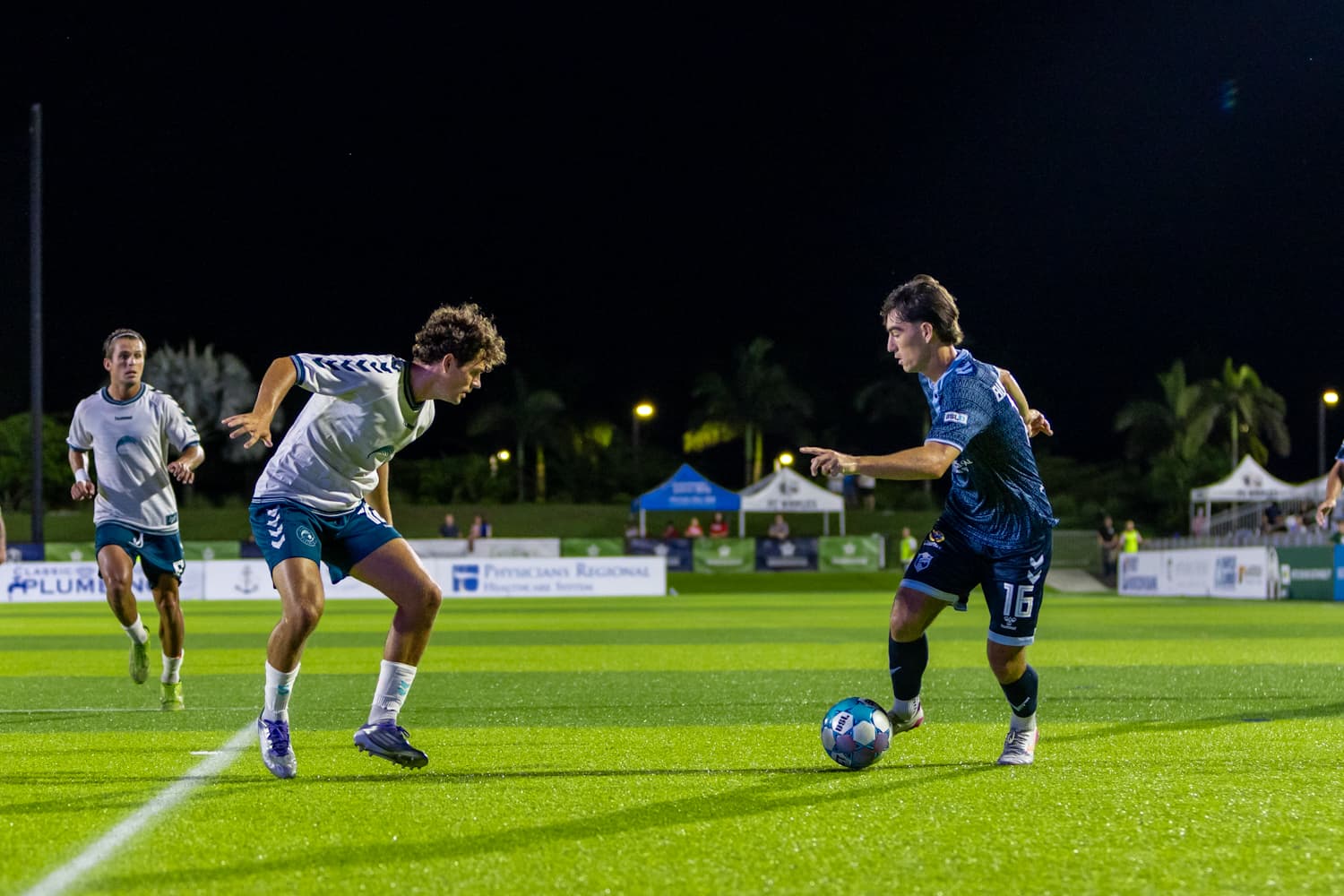
Under the Florida floodlights at Paradise Coast Sports Complex, a Group 7 meeting in the USL League One Cup ended with a clear verdict: Sarasota Paradise travelled in, imposed their structure, and left with a 2–0 win over Naples. Following this result, the table snapshot is stark. Naples sit 5th in the group with 2 points and a goal difference of -3, while Sarasota climb to 4th with 3 points and a goal difference of -2. For both, this night felt less like a routine group game and more like an early referendum on identity.
I. The Big Picture: Contrasting Seasonal DNA
Heading into this game, Naples’ campaign profile was that of a chaotic, high‑variance side. Overall they had played 3 fixtures, winning 1 and losing 2, with 3 goals scored and 7 conceded. The numbers tell a story of imbalance: overall they averaged 1.0 goals for per match but 2.3 goals against. At home, that defensive fragility was already visible: 2 goals scored and 3 conceded across 2 fixtures, an average of 1.0 scored and 1.5 conceded at Paradise Coast.
Sarasota arrived with a different imprint. Also through 3 games overall (1 win, 2 defeats), they had scored 2 and conceded 4, averaging 0.7 goals for and 1.3 against. On their travels, though, they were steadier: 2 away matches, 1 win and 1 loss, with 2 goals scored and 2 conceded, an away average of 1.0 for and 1.0 against. Where Naples were open and volatile, Sarasota were cagey, often low‑scoring, and structurally more sound.
The full‑time 0–2 scoreline fits those season arcs neatly: Naples again failed to keep a clean sheet (they still have 0 in total), and Sarasota again leaned on defensive control, adding another away performance that kept the game within their preferred margins.
II. Tactical Voids and Discipline: Edges in the Margins
With no explicit injury or suspension list, both coaches appeared to have their core groups available. Matthew Poland’s Naples XI was an aggressive, front‑foot selection on paper: J. Grant and G. Miglietti given central attacking responsibility, flanked by the mobility of C. Garcia and the work rate of D. Bachstein. In midfield, J. Osorio and I. Cerro were tasked with knitting transitions, while J. Cisneros and M. Torrellas formed part of a back line that needed to be much tighter than their season numbers suggested.
On the opposite bench, Mika Elovaara named a Sarasota side built on clarity of roles. The spine of R. Burlew, D. Watters, and R. Valentine offered physicality and timing in the back line, with H. Backstrand providing an outlet from deeper zones. Ahead of them, the creative axis of E. Bryant and J. Bender supported the direct running of S. Karani and the intelligence of M. Tainio between the lines.
Discipline has been a quiet but significant subplot for both teams this season. Heading into this game, Naples’ yellow‑card pattern showed a tendency to lose control in the middle and late phases: 40.00% of their yellows arrived between 46–60 minutes, with another 20.00% in the 76–90 window. Crucially, their only red card of the campaign had also come between 46–60 minutes. Sarasota, meanwhile, showed their own late‑game volatility: 37.50% of their yellows fell in the 76–90 period, with another 25.00% between 46–60.
That disciplinary profile framed the second half as a psychological battleground. Sarasota’s plan was to drag Naples into a scrappy, card‑heavy phase where the home side had already shown they could unravel. The visitors’ composure in those same windows, and the absence of any red‑card history, gave them a subtle but real advantage.
III. Key Matchups: Hunter vs Shield, Engine Room vs Enforcer
With no official top‑scorers list, the “Hunter vs Shield” duel was more conceptual than individual. For Naples, the attacking “hunter” was the collective front line of Grant, Miglietti, and Garcia, representing a side that, overall, had shown they could score at least once per game but rarely control the flow. Their task was to break down a Sarasota unit that, overall, conceded just 1.3 goals per match and exactly 1.0 on their travels.
The visitors’ “shield” was the back four of Burlew, Watters, Valentine, and Backstrand, screening a goalkeeper group that already had 1 away clean sheet this season. Sarasota’s away defensive record—2 goals conceded in 2 matches—suggested a line comfortable absorbing pressure and denying central space. Across 90 minutes, that pattern held: Naples’ forwards were forced into wide, lower‑percentage areas, and the visitors protected the central lane with discipline and numbers.
In the “Engine Room” matchup, Naples leaned on Osorio and Cerro to dictate tempo and progress the ball. Their challenge was to punch through a Sarasota midfield triangle built around A. Rodriguez, E. Bryant, and M. Tainio. Bryant’s role as a connector was critical: dropping deep to help in build‑up, then stepping beyond Naples’ first pressing line to release Karani and Bender into pockets.
The duel here was less about crunching tackles and more about who could win the second ball and control rest defence. Sarasota’s midfield consistently positioned themselves to collect Naples’ clearances and turnovers, re‑circulating possession and suffocating any chance of the home side turning the game into an end‑to‑end shootout. For a Naples side conceding 2.3 goals per match overall, that inability to destabilise Sarasota’s structure was fatal.
IV. Statistical Prognosis: Why 0–2 Felt Inevitable
Without explicit xG numbers, the prognosis must lean on season‑long trends and structural logic. Heading into this game, Naples’ defensive record—7 goals conceded in 3 matches overall, including 4 on their travels and 3 at home—painted them as one of the more porous units in the group. Their lack of any clean sheet, combined with a failed‑to‑score tally of 1 overall, suggested a team that often had to outscore problems rather than solve them.
Sarasota, by contrast, were built for nights like this. They had already kept 1 clean sheet away from home, and their away goal profile—2 scored, 2 conceded—spoke to a side comfortable in narrow, controlled games. Their failed‑to‑score count of 2 overall hinted at attacking inconsistency, but when they did find the net, it tended to be in matches where their defensive platform held firm.
Overlay the disciplinary data, and the picture sharpens. Naples’ vulnerability to cards and even reds in the 46–60 minute band made the early second half a danger zone. Sarasota’s own yellow‑card spikes in the 46–60 and 76–90 windows were more about tactical fouling and game management than structural collapse. In a match where the visitors could afford to be patient, those small edges in control and composure were decisive.
The 2–0 scoreline, then, feels like the logical endpoint of the underlying numbers. A Naples side averaging 1.5 goals against at home and 2.3 overall once again conceded multiple times, while a Sarasota unit allowing 1.0 away and 1.3 overall comfortably kept the home attack at arm’s length. The narrative from here is clear: if Naples are to reframe their Group 7 story, they must harden their defensive core and manage the emotional spikes that have defined their card profile. Sarasota, meanwhile, have rediscovered the template that suits them best—compact, disciplined, and ruthlessly efficient when the game tilts their way.