.svg&w=384&q=75 "Naijagoal logo")
Rayo Vallecano vs Girona: A Tactical Draw Reflecting Two Seasons
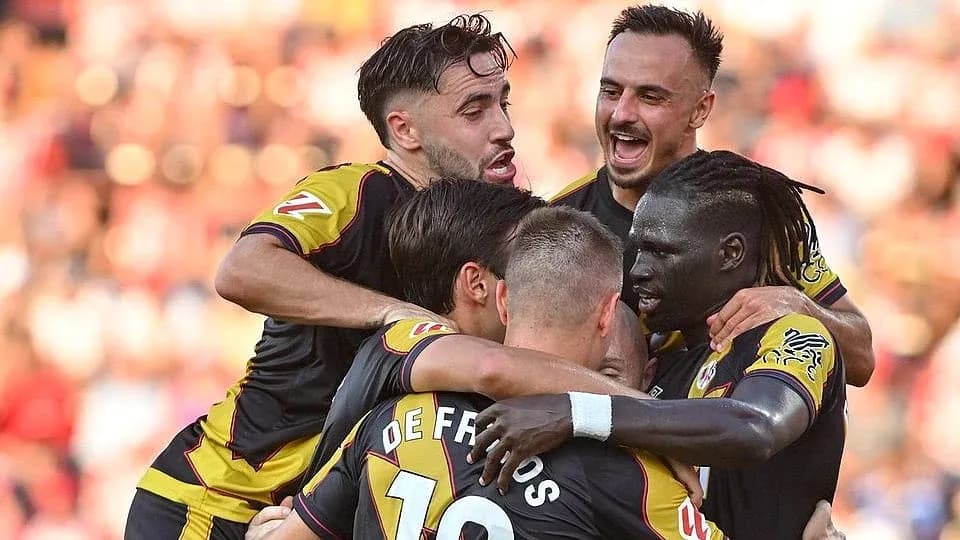
The night at Campo de Futbol de Vallecas ended with the scoreboard frozen at 1–1, a result that felt as much like a character study of these two seasons as it did a single match. Following this result, Rayo Vallecano’s campaign remains defined by resilience and structure, Girona’s by fragility wrapped around flashes of technical quality.
I. The Big Picture – Two Seasons Colliding in Vallecas
In La Liga’s Regular Season - 35, this was a meeting of contrasting realities. Rayo came into the round sitting 10th with 43 points, their goal difference at -6 from 36 goals scored and 42 conceded overall. It is the profile of a mid-table side that survives on control and defensive discipline rather than attacking fireworks.
Girona arrived in Madrid under a different kind of pressure. Rank 18 with 39 points and a goal difference of -15 (37 for, 52 against overall), their season has been a tightrope walk over the relegation zone. On their travels they had taken 3 wins, 8 draws and 7 defeats from 18 away matches, scoring 18 and conceding 27 – a team that can stay in games, but rarely dominate them.
Rayo’s identity at home has been consistent all year: 6 wins, 10 draws, 2 defeats from 18 at Vallecas, with 22 goals for and only 15 against. An average of 1.2 goals scored at home and 0.8 conceded underlines why they are so difficult to beat here, and why a 1–1 feels, in tactical terms, like the game bending towards their structural comfort.
II. Tactical Voids – The Missing Pieces
Both coaches had to redraw their plans before a ball was kicked. Inigo Perez was without I. Akhomach (muscle injury), Luiz Felipe (injury), D. Mendez (knee injury) and, crucially, I. Palazon, suspended by a red card. Palazon is not just a name on a teamsheet; heading into this game he had 3 goals and 3 assists in La Liga, plus 10 yellow cards and 1 red. His 39 key passes and 51 fouls drawn show how often he pulls Rayo’s attacks into the half-spaces and how frequently he becomes the reference point for their transitions. Removing that from the right side of the attack forced Rayo into a more collective, less improvisational structure.
Girona’s absences were just as disruptive, if not more so. B. Gil was out through yellow-card suspension, while Juan Carlos, Portu and V. Vanat all missed out with injuries. The list continued with D. van de Beek (Achilles tendon injury) and even M. ter Stegen registered as unavailable. For a side already carrying the weight of a -15 goal difference, these absences stripped away layers of experience and rotation options, particularly in wide and creative areas.
On the pitch, the shapes reflected adaptation to these voids. Rayo moved into a 4-3-3: A. Batalla in goal behind a back four of A. Ratiu, P. Ciss, F. Lejeune and P. Chavarria. The midfield trio of P. Diaz, O. Valentin and U. Lopez was built for control rather than chaos, while J. de Frutos, S. Camello and F. Perez formed a front line that had to manufacture chances without Palazon’s gravity.
Michel, for Girona, set up in a 4-2-3-1. P. Gazzaniga started in goal, protected by A. Martinez, A. Frances, Vitor Reis and A. Moreno. The double pivot of A. Witsel and F. Beltran sat beneath a technically gifted three of V. Tsygankov, T. Lemar and J. Roca, with A. Ounahi leading the line. It was a system designed to keep the ball and find pockets between Rayo’s lines, but one still haunted by the structural looseness that has seen Girona concede 52 goals overall at an average of 1.5 per match both home and away.
Disciplinary tendencies framed the tone. Rayo’s yellow cards are spread, but there is a clear rise after the break: 18.37% between 46-60 minutes, 19.39% between 61-75, and 16.33% stretching into 91-105. Their reds spike late too, with 33.33% in 91-105 minutes. Girona, by contrast, are a late-game powder keg: 39.19% of their yellows arrive between 76-90 minutes, and 17.57% from 91-105, reflecting a side that often ends games stretched and desperate.
III. Key Matchups – Hunter vs Shield, Engine Room vs Enforcer
Even without scoring on the night, the shadow of Jorge de Frutos hung over Girona’s defensive line. Heading into this game he had 10 goals and 1 assist from 33 appearances, with 47 shots (26 on target) and 27 key passes. As Rayo’s top scorer, he is the “Hunter” in this narrative, constantly attacking the channels and arriving in the box from wide starting positions.
Opposite him, Girona’s “Shield” was symbolised by Vitor Reis. Across the season he had 38 blocked shots – a remarkable number that speaks to a defender who lives in the line of fire. His 1766 completed passes at 91% accuracy and 30 interceptions underline a calm presence in possession and a sharp reader of danger. In Vallecas, his duel with de Frutos was about more than one-on-ones; it was about whether Girona’s last line could hold against Rayo’s most decisive finisher.
In midfield, the “Engine Room” confrontation was subtler but no less significant. For Rayo, P. Ciss, starting as a defender but seasonally a hybrid presence, is a physical enforcer with 49 tackles, 32 interceptions and 14 blocked shots this campaign. He plays on the front foot, stepping out to break lines and contact opponents early. On the Girona side, A. Witsel and F. Beltran were tasked with dictating tempo and evading that pressure, dropping into pockets to offer passing angles and progressing the ball into the feet of Lemar, Tsygankov and Ounahi.
Without Palazon, Rayo’s creativity had to be redistributed. U. Lopez and O. Valentin were asked to link play, while S. Camello’s movement between the lines tried to pull Girona’s centre-backs out of their comfort zone. For Girona, the absence of Portu and B. Gil meant more responsibility on Tsygankov to carry the ball and on Lemar to find those disguised passes into Ounahi.
IV. Statistical Prognosis – A Draw That Fits the Numbers
Following this result, the 1–1 feels almost pre-written by the data. Rayo’s overall scoring rate of 1.0 goals per game and defensive record of 1.2 conceded, combined with Girona’s 1.1 goals for and 1.5 against, point towards a match where both sides would create but neither would fully control. Girona’s away profile – 18 scored, 27 conceded on their travels – again hints at games that open up without tipping into chaos.
Rayo’s 11 clean sheets overall, 7 of them at home, show how rarely they collapse at Vallecas. Girona’s 6 clean sheets in total, with only 1 away, suggest that conceding here was always likely. In xG terms, this had the feel of a contest where Rayo’s structured possession and set-piece threat would generate steady, medium-quality chances, while Girona’s technical three behind Ounahi would carve out fewer but more dangerous moments in transition.
The late-game disciplinary patterns add another layer: Girona’s surge of yellows between 76-90 minutes and Rayo’s own spiky red-card window from 91-105 hint at a tense, stretched finale rather than a controlled close. A shared point, one goal each, and a sense of unfinished business – statistically and tactically, the draw at Vallecas fits the season-long story arcs of both Rayo Vallecano and Girona.