.svg&w=384&q=75 "Naijagoal logo")

Portugal's Tactical Mastery in 2-1 Victory Over Croatia
Portugal’s 2-1 win over Croatia at BMO Field in the World Cup Round of 32 was defined by structural control versus transitional threat. Both coaches started in a 4-2-3-1, but the way those shapes behaved without the ball – and how Portugal managed the game after going behind – decided the tie.
Portugal’s 4-2-3-1 under Roberto Martinez was ball-dominant by design. With 61% possession and 584 passes at 91% accuracy (532 accurate), they built consistently from the back through Rúben Dias and Renato Veiga, using João Cancelo and Nuno Mendes as high, aggressive full-backs. The double pivot of João Neves and Vitinha provided the platform: Neves often dropped between the centre-backs to create a three-man first line, while Vitinha connected to Bruno Fernandes and the wide trio. This structure allowed Portugal to sustain pressure, reflected in 15 total shots, 10 from inside the box and 9 corners.
The front four’s spacing was crucial. Rafael Leão held very wide on the left, stretching Josip Stanišić and Josip Šutalo, while Pedro Neto attacked the right half-space, allowing Cancelo to overlap. Bruno Fernandes operated between the lines, drawing out Luka Modrić or Mateo Kovačić and opening vertical lanes into Cristiano Ronaldo. Even before the goals, this network produced a steady xG of 2.18 and forced Croatia to defend deep for long spells, with 4 blocked shots illustrating how often the visitors had to throw bodies in front of efforts.
Croatia’s 4-2-3-1 under Zlatko Dalic was more reactive but far from passive. With 39% possession and 368 passes at 85% accuracy (311 accurate), they focused on compressing central zones and springing forward quickly. Modrić and Kovačić sat relatively deep to shield the back four, while Nikola Vlašić and Martin Baturina looked to break forward around Ante Budimir. Croatia generated 13 shots, 10 inside the box, which underlines how dangerous they were whenever they managed to escape the press and attack Portugal’s back line in transition.
Out of possession, Portugal’s rest defence was a key battleground. With both full-backs advanced, Dias and Veiga often had to manage large spaces against Budimir and the onrushing second line. Croatia’s opener from Ivan Perišić came as part of this pattern: the nominal left-back was given license to surge forward, and Croatia’s structure allowed him to arrive from deep, exploiting Portugal’s aggressive positioning. It was a reminder that, despite territorial dominance, Portugal’s 4-2-3-1 left them vulnerable when counter-pressing was bypassed.
Goalkeeping performances, within this tactical context, were decisive. Diogo Costa (Portugal) faced 6 shots on target and made 5 saves, a strong return given Croatia’s shot quality (xG 1.34). His interventions underpinned Portugal’s high line, allowing them to keep numbers ahead of the ball without being punished repeatedly in behind. Dominik Livaković (Croatia), by contrast, registered 2 saves from 3 shots on target. With Croatia conceding 10 shots in the box and repeatedly defending their own area, the small margin for error around set-pieces and penalty-box duels proved costly.
The turning point came in the second half, where Martinez’s in-game management sharpened Portugal’s attacking structure. After Croatia’s 53rd-minute goal, Portugal initially saw a potential response ruled out by VAR for offside against Ronaldo at 61’, but the pattern of pressure was clear. The triple substitution around the hour – Bernardo Silva (IN) came on for Vitinha (OUT), Francisco Conceição (IN) came on for Pedro Neto (OUT), and Nélson Semedo (IN) came on for João Cancelo (OUT) – re-energised both flanks and added a more incisive ball-carrier between the lines. Bernardo’s tendency to drift inside created overloads with Bruno Fernandes, while Francisco Conceição attacked the right channel with more direct dribbling.
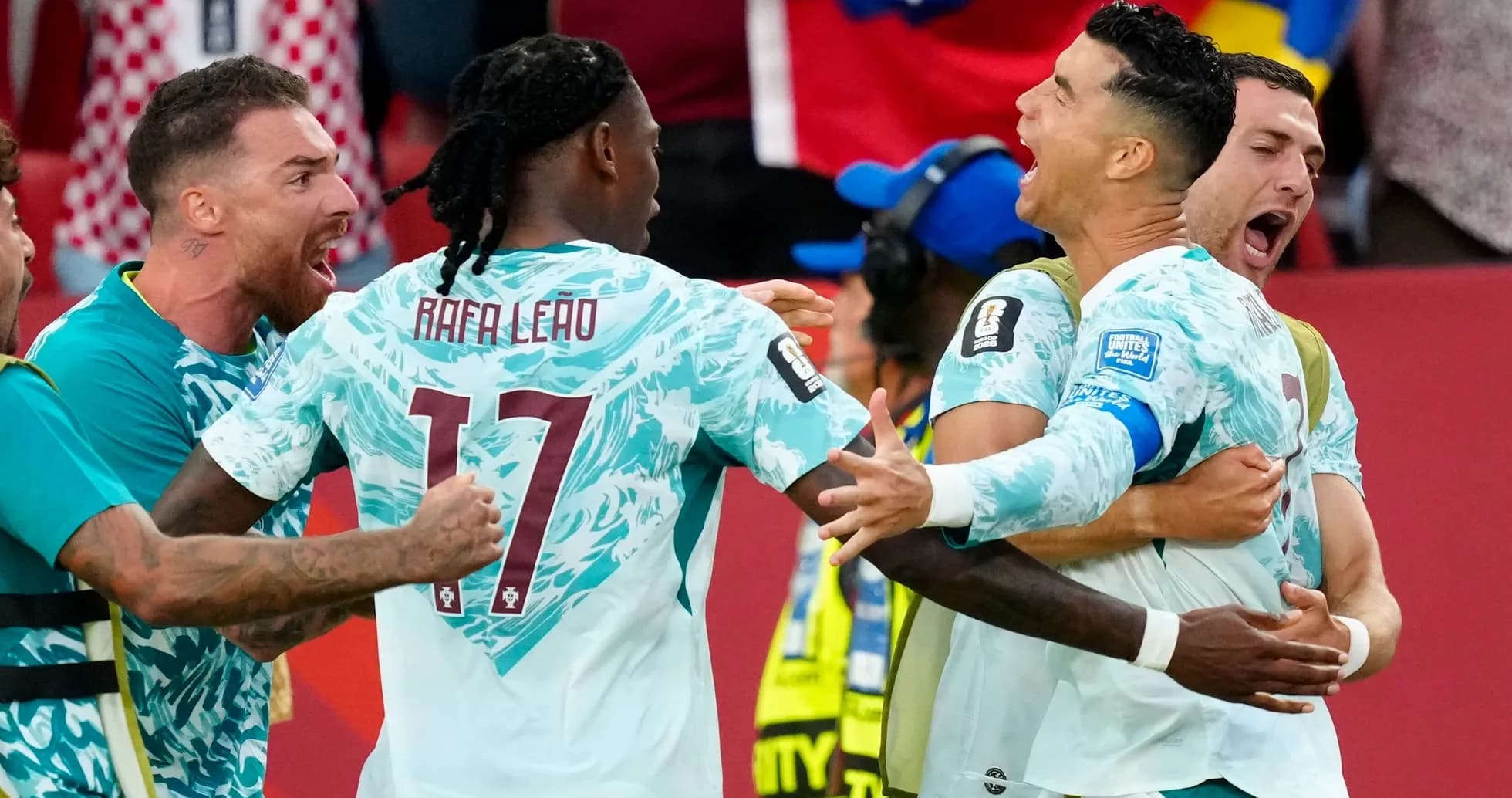
This reconfiguration tightened Portugal’s attacking grid: the full-backs now balanced their surges more cautiously, the pivots recycled possession cleaner, and the front line attacked Croatia’s box with greater timing. The penalty converted by Ronaldo at 68’ came from sustained occupation of the final third and constant pressure on Croatia’s defensive line, rather than isolated moments. Later, Gonçalo Ramos (IN) came on for João Cancelo (OUT) in a further attacking shift, giving Portugal a more classic penalty-box reference alongside or instead of Ronaldo, and that change was vindicated when Ramos finished in stoppage time after a decisive run and assist from Leão.
Croatia’s substitutions were more reactive than transformative. Igor Matanović (IN) came on for Ante Budimir (OUT) at 46’, aiming to refresh the pressing trigger up front, and Mario Pašalić (IN) came on for Martin Baturina (OUT) at 68’ to add late-arriving threat from midfield. However, with Portugal controlling territory and tempo, Croatia’s ability to turn these changes into sustained pressure was limited. The late introduction of Joško Gvardiol (IN) for Nikola Vlašić (OUT) and Andrej Kramarić (IN) for Mateo Kovačić (OUT) in deep stoppage time reflected a final push that never fully materialised, further hampered by VAR interventions cancelling potential equalisers.
Discipline and duels also shaped the tactical flow. Rúben Dias’ early yellow card for “Elbowing” at 17’ could have constrained Portugal’s aggression in the back line, but their collective pressing structure meant they defended more through positioning than individual tackles, finishing with just 6 fouls to Croatia’s 12. Modrić’s booking for “Tripping” at 59’ and Perišić’s late yellow for “Unsportsmanlike conduct” at 90+8’ illustrated Croatia’s growing strain under Portugal’s pressure, particularly as they tried to halt counters and contest marginal decisions.
Statistically, the verdict aligns with the tactical story. Portugal’s higher xG (2.18 to 1.34), greater volume of shots and box entries, and superior passing numbers all point to a controlled, territorially dominant performance. Croatia’s 6 shots on target and 10 attempts in the box show that their counter-attacking and set-piece threat was real, but not sufficiently repeatable to overturn Portugal’s structural superiority. The combination of Portugal’s refined possession game, proactive substitutions, and Diogo Costa’s shot-stopping anchored a deserved 2-1 progression, even if Croatia’s late VAR-disallowed moments ensured tactical tension right to the final whistle.