.svg&w=384&q=75 "Naijagoal logo")
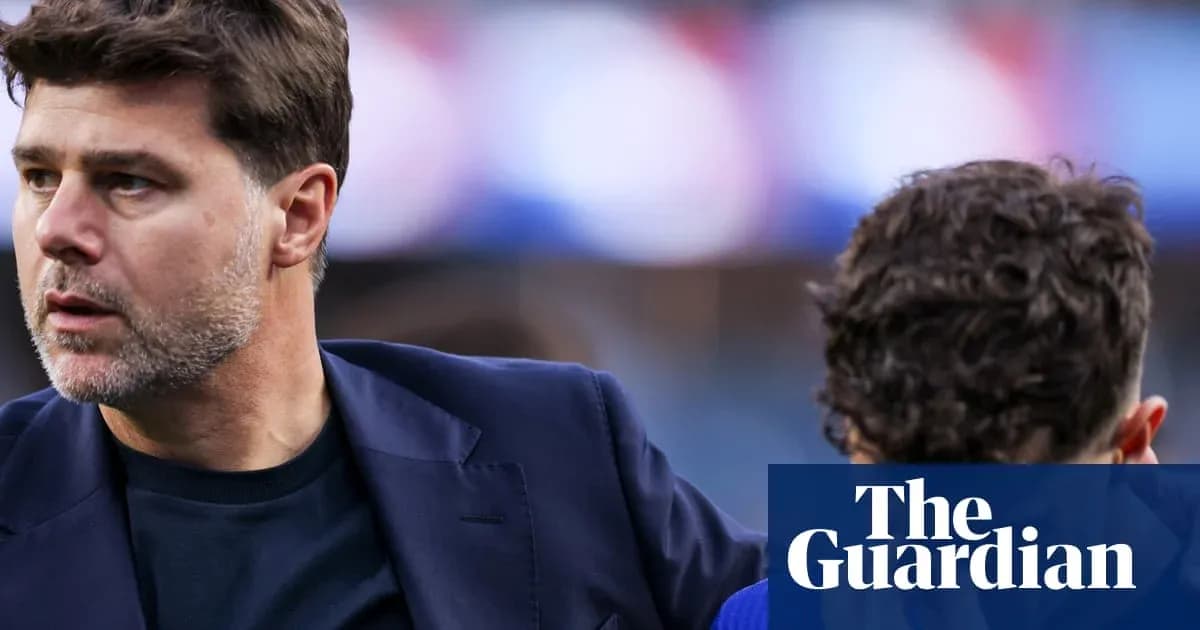

Pochettino's Journey: From Defeat to World Cup Aspirations
Mauricio Pochettino’s voice cracked before the final whistle ever blew.
In Houston, with the 2025 Gold Cup on the line and Mexico celebrating yet another regional crown at the expense of their greatest rivals, the US head coach stood on the touchline and felt the tears coming. Not just because his team had lost a final. Not just because it was Mexico. Because of who was cheering.
They were in one of the biggest metro areas in the United States. It sounded like Mexico City.
The stands seethed in green. Every US touch met with whistles, every Mexican counter-attack roared forward by a partisan wall of noise. For Pochettino, it was a jolt: a home final that felt like enemy territory. A Tottenham derby played in a stadium packed with Arsenal shirts.
One year out from a home World Cup, the reality hit him harder than the defeat. His team weren’t just chasing the world’s elite. They were fighting for space in their own sporting culture.
The punch before the tears
That “big bang, punch” Pochettino talks about didn’t actually arrive in Houston. It landed months earlier.
March 2025, Concacaf Nations League. On paper, the US had a familiar assignment: dispatch Panama in the semi-final, then renew acquaintances with Mexico or Canada in another regional showpiece. The US had owned the competition since its launch, winning each of the first three editions.
This time, they didn’t even make the final.
Panama were organized, aggressive, and sharper in the decisive moments. The US, by contrast, looked blunt. Worse, they looked alone.
“It was empty,” Pochettino recalled of the stadium that night. The crowd that did show up had mostly come for the later game. “It was the Mexican people [in the stands] because they played after us.”
For years, Panama had been a reliable measuring stick the US usually cleared with room to spare. As of mid-2021, the record stood at 17-4-2 in the Americans’ favor. That gap has closed with startling speed. Panama’s win in that Nations League semi was their fourth in six against the US, a run that already included a 2023 Gold Cup semi-final and a 2024 Copa América group-stage blow.
One mental lapse, one chance taken. Panama scored with just their third shot and walked into the final. The US walked into a reckoning.
“That was [a] good crash, no?” Pochettino said. Painful, but useful. The kind of defeat that strips away illusions. When critics pointed to “bad results,” he leaned into them. Detect the problems. Then go after the solutions.
One of those problems, in his eyes, lived inside the team itself.
No passengers
The US squad, Pochettino felt, had grown comfortable. Established names, familiar roles, a sense that certain players could pick their spots.
So when Christian Pulisic asked to skip the Gold Cup but still join the build-up friendlies against Turkey and Switzerland, Pochettino drew a line. No. One group, one camp, one shared grind from day one through the end of the tournament. The same principle he would later apply to his World Cup roster.
The decision triggered a back-and-forth between coach and star. Then came the results: decisive defeats in those pre-Gold Cup friendlies, and a rising drumbeat of doubt outside the camp.
Inside it, a message had been delivered. You’re either all-in, or you’re watching on TV.
The Gold Cup became more than a consolation prize. It was a laboratory. With Pulisic and other regulars absent, Pochettino turned the keys over to new hands.
- Malik Tillman stepped into the role of chief playmaker and finally had a tournament to himself.
- Matt Freese took over in goal and, in a moment that resonated across the region, outlasted the legendary Keylor Navas in a shootout.
- Alex Freeman emerged as a young full-back Pochettino couldn’t drop.
- Sebastian Berhalter forced his way into the midfield rotation.
The coach changed too. For over a month, he had what club managers take for granted: daily access to a fixed group. No fly-in, fly-out international window. Real time to drill patterns, tweak structures, build habits.
They fell short in the final against Mexico, the tears came, but Pochettino saw something he liked. Heart. Resilience. A group that had taken its bruises and still pushed back.
“Keep improving, but please don’t change,” he told them in the locker room, still haunted by the atmosphere in Houston. The football could evolve. The mentality, he wanted to protect.
“Why not us?”
The question that reshaped everything came not in a soccer stadium, but at a college football cathedral.
“We were in Columbus watching Ohio State against Texas,” Pochettino said, thinking back to that August 2025 game. More than 70,000 fans packed in, living and dying with every play. It made him restless.
Why not us?
If the country could pour that kind of passion into a college game, why not into its national soccer team? If that power could be harnessed, if those crowds could be turned, what would it do for his players?
Out of that frustration and ambition, a mantra was born. “Why not us?” It wasn’t just a slogan. It became a blueprint.
In September, with Pulisic and other mainstays back in camp, Pochettino unveiled the shape that would come to define this US side. Fluid, restless, constantly morphing. Forwards drifting between lines, full-backs inverting, midfielders popping up in half-spaces. Quick switches of play, relentless off-ball movement, a willingness to attack gaps the moment they appeared.
Showtime, American-style.
The results started to match the swagger. A 2-0 win over Japan in September. A draw with Ecuador and a win over Australia in October. Then a November window that roared: victory over Paraguay and a 5-1 demolition of Uruguay, a statement to close 2025.
The process, though, still had one more harsh lesson in store.
March, and the wobble
This March brought the kind of bruising that can derail a project or harden it.
Two defeats. A 7-2 aggregate scoreline that looked ugly in black and white. More troubling than the numbers, the manner: a defense stretched and over-run, a team that suddenly seemed unsure of its own new identity. Against Belgium, the US even reverted to an older, more porous structure in a bid to stem the tide.
Up front, Pulisic’s confidence sagged under a career-worst goal drought. Pochettino handed him a rare start at center-forward against Portugal. It didn’t unlock him.
From the outside, it looked like the same old story. A USMNT that could thrill in one window and crumble in the next. Capable of the occasional big scalp, but just as likely to stumble against anyone, anywhere.
Inside the camp, the tone was different. Defender Chris Richards insisted the group had never stopped believing, but he admitted that March mattered in a different way. It forced them to confront where they still fell short.
Pochettino didn’t sugarcoat the talent gap either. Belgium and Portugal, he noted, have several players among the world’s top 100. His US side? “I think we don’t have [any].”
The question hung in the air: had they overreached with their pre-World Cup schedule? With Senegal and Germany looming as final tune-ups, some wondered if the US were inviting more damage.
Pochettino refused to blink. “That is good for us. It’s going to measure our level,” he said. No hiding. No soft landings.
From hard knocks to liftoff
The response came fast.
A 3-2 win over Senegal, full of attacking conviction. A narrow 2-1 defeat to Germany that, rather than deflating the group, hinted at a team rounding into shape at exactly the right time.
Then the World Cup began, and the US hit the accelerator.
Paraguay were swept aside 4-1, the kind of ruthless, front-foot performance that has rarely been associated with this program on the biggest stage. Australia were muted 2-0, the US pressing with intelligence, attacking with clarity, feeding off a home crowd that, at long last, sounded like it belonged to them.
On Thursday came the oddity: a dead rubber against Turkey, already eliminated, with the US already confirmed as winners of Group D. It felt almost surreal. Only four teams at this World Cup wrapped up top spot after two games: Argentina, Germany, Mexico – and Pochettino’s United States.
Argentina and Germany bring a century of pedigree. Mexico travel with a nation’s worth of noise and the advantage of altitude in their most hostile venues. The US sit in that company now, not by accident, but by surviving the kind of setbacks that once would have broken them.
This is, without question, the high-water mark of Pochettino’s tenure so far. Two wins, a 6-1 combined scoreline, and a tournament that, for the first time, feels like it might actually belong to them as hosts. The atmospheres have been raucous, the support finally starting to resemble the vision he formed that night in Columbus.
The journey has been anything but smooth. An empty stadium in the Nations League. A Gold Cup final swallowed by rival colors. A March window that exposed their limits. A star forward searching for goals. A coach who openly admits his squad lacks the individual stardust of Europe’s elite.
What they do have is something else: a hardened belief in the process, and a style that no longer apologizes for its ambition.
“It’s not going to be figured out overnight,” defender Mark McKenzie said. “Maybe not as fast as everybody wanted to. I think we’re showcasing that it’s a process.”
The process now moves into the knockout rounds, where sentiment counts for nothing and history rarely waits for latecomers. The question that once sounded like a hopeful slogan has become something sharper, more urgent.
Why not them, here, and now?