.svg&w=384&q=75 "Naijagoal logo")


Niger Tornadoes Claim Victory Over Enyimba in NPFL Opener
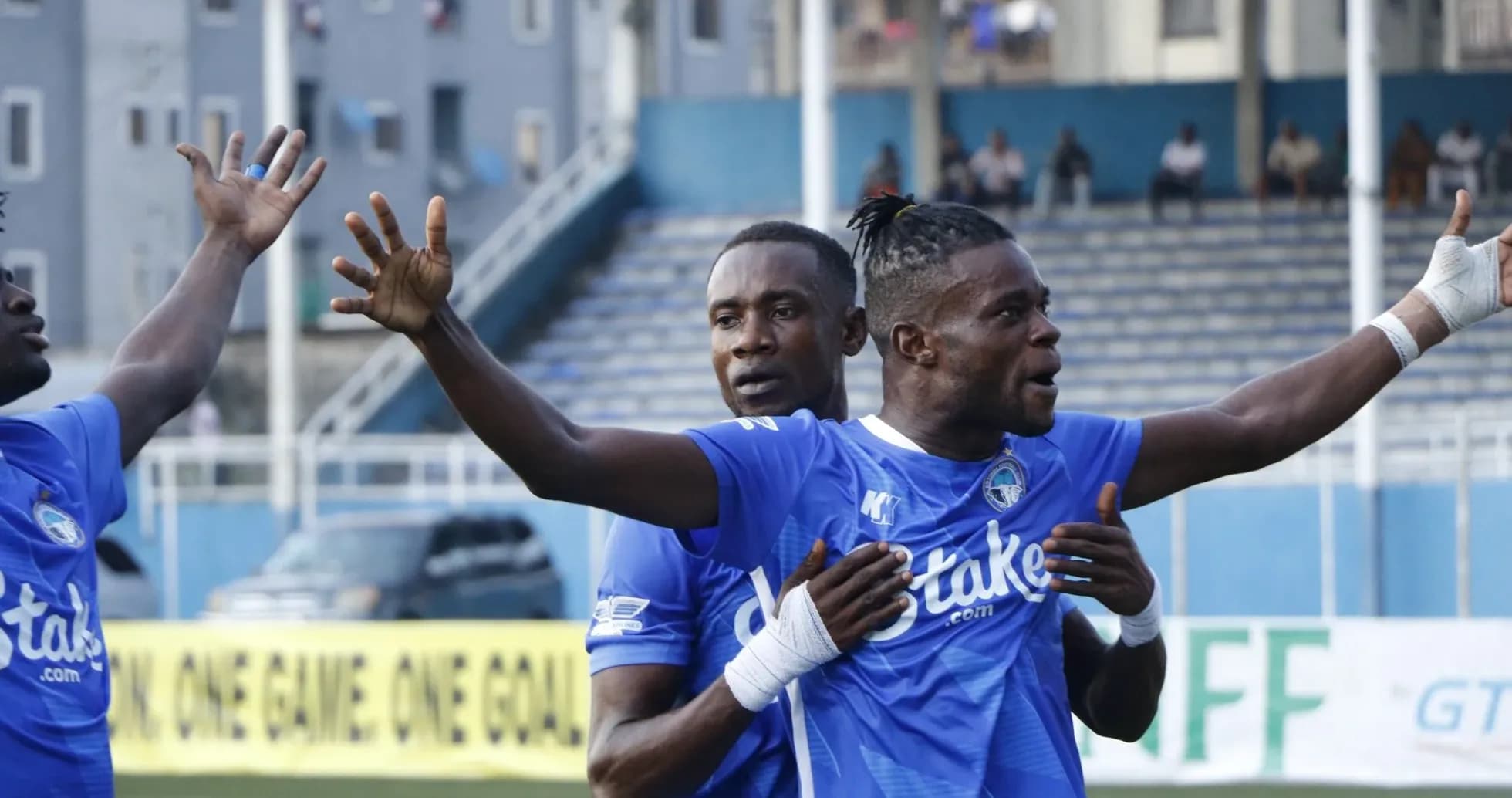
Under the late afternoon glare at Bako Kontagora Stadium, Niger Tornadoes opened their NPFL season with a 2–1 win over Enyimba that felt like more than just three early points. It was a small statement of intent. In a league where momentum is currency, starting the 2027 campaign with a home victory has lifted Tornadoes to 5th with 3 points, while Enyimba, beaten on their travels, sit 14th without a point.
Overall this season, Niger Tornadoes have scored 2 goals and conceded 1 across 1 match, giving them a goal difference of +1. At home, they have played 1, won 1, with 2 goals for and 1 against. Enyimba, by contrast, have played 1 match in total, all of it away, scoring 1 and conceding 2 for a total goal difference of -1. The numbers are small this early, but the patterns are already suggestive: Tornadoes are efficient at home; Enyimba have work to do on their travels.
The match itself, finished in regular time after 90 minutes, followed that script. Tornadoes led 1–0 at half-time and held their nerve to close it out 2–1. There was no extra time, no penalties, just a regulation win built on sharp attacking phases and enough defensive resilience to absorb Enyimba’s response.
From a tactical standpoint, the most intriguing element is that both lineups are listed without formations. That forces us to read the squad lists as clues. For Niger Tornadoes, the spine looks robust and balanced. At the back, S. Akinmoladun and M. Aliyu offer a physical, no-nonsense base, with I. Abubakar and B. Hannafi likely operating in wider defensive roles. In front of them, the presence of Y. Abdulazeez and J. Zakka hints at a double-pivot or staggered midfield, designed to both screen the back line and link play to the forwards.
Further up, B. Oluwaseun, I. Sarki, J. Godfrey and R. Mendos form a flexible attacking unit. Sarki, wearing 9, is the natural focal point, but the inclusion of Godfrey and Mendos suggests Tornadoes can stretch the pitch horizontally, creating lanes for late runs from midfield. With 2 goals scored at home in this single fixture and an average of 2.0 goals per home game so far, Tornadoes’ front line has already shown it can turn territory into tangible returns.
Enyimba’s structure feels more experimental. With G. Utum starting and a cluster of defenders and midfielders around him—P. Iheme, A. Yazid, C. Ezeifule, S. Bell, P. Anyanwu, C. Ezinwa and S. Bello—they appear to have gone for density in central areas. T. I. Iyanda and J. Johna offer box-to-box energy, while D. Obodoagu provides an attacking edge. The away side did manage to score once, reflecting their total average of 1.0 goal per away game so far, but conceding 2 away, matching their 2.0 average goals against on their travels, underlines the fragility of that setup.
Discipline also shaped the tone of the contest. Niger Tornadoes’ yellow card profile this season is heavily back-loaded: 50.00% of their cautions have come in the 76–90 minute window and 50.00% between 91–105 minutes. That late-game spike hints at a side that defends aggressively when protecting a lead, willing to take tactical fouls to manage the clock and break rhythm. They have not received any red cards so far.
Enyimba, for their part, show a different pattern. Their yellow cards are split evenly between 31–45 minutes (50.00%) and 76–90 minutes (50.00%). That suggests two pressure points: just before half-time, when concentration can dip and frustration can rise, and again in the closing stages as they chase or defend a result. Neither side has seen a red card this season, but the timing of Enyimba’s cautions hints at emotional swings that better game management could smooth out.
In the “Hunter vs Shield” matchup, Tornadoes’ attack has the early edge. At home, they average 2.0 goals for and 1.0 against, while Enyimba, away, concede 2.0 and score 1.0. The arithmetic is simple: when Tornadoes play at Bako Kontagora and Enyimba travel, the hosts project as the more likely side to outscore their visitors. Tornadoes have also yet to fail to score in any match this season—home or overall—while Enyimba, despite their defeat, have also scored in their only outing. That combination naturally leans toward open, attacking football when these two meet.
In the “Engine Room”, the contrast is stylistic rather than statistical. Tornadoes can rotate between J. Zakka and Y. Abdulazeez as tempo-setters, with B. Oluwaseun offering a more advanced link. Enyimba’s central cluster—C. Ezinwa, S. Bello, T. I. Iyanda and J. Johna—suggests a more combative, compact middle third, built to win second balls and slow the game down. How those midfield duels are refereed will be crucial, especially given both teams’ tendency to collect cards late in halves.
Penalties offer another lens into composure. Overall this season, Niger Tornadoes have been awarded 1 penalty and converted it, a 100.00% record with no misses. Enyimba have yet to take a penalty in any match. That single successful spot-kick reinforces the impression of a Tornadoes side that can handle high-pressure moments inside the box.
Statistically, with no xG data provided, we infer from goals, defensive records and discipline. Tornadoes’ total average of 2.0 goals scored and 1.0 conceded, combined with their perfect home record so far, paints them as a side that can impose itself at Bako Kontagora Stadium. Enyimba’s total averages of 1.0 goal scored and 2.0 conceded on their travels, plus a current losing streak of one, suggest a team still calibrating its away identity.
Following this result, the early-season verdict is clear: Niger Tornadoes look like a compact, opportunistic unit whose late-game edge and penalty composure can tilt tight contests. Enyimba, while not blunt in attack, must tighten their defensive structure on their travels and manage emotional peaks around half-time and full-time if they are to climb from mid-table obscurity toward the top end of the NPFL.