.svg&w=384&q=75 "Naijagoal logo")

Manchester United vs Ipswich: Tactical Insights from a 5–2 Victory
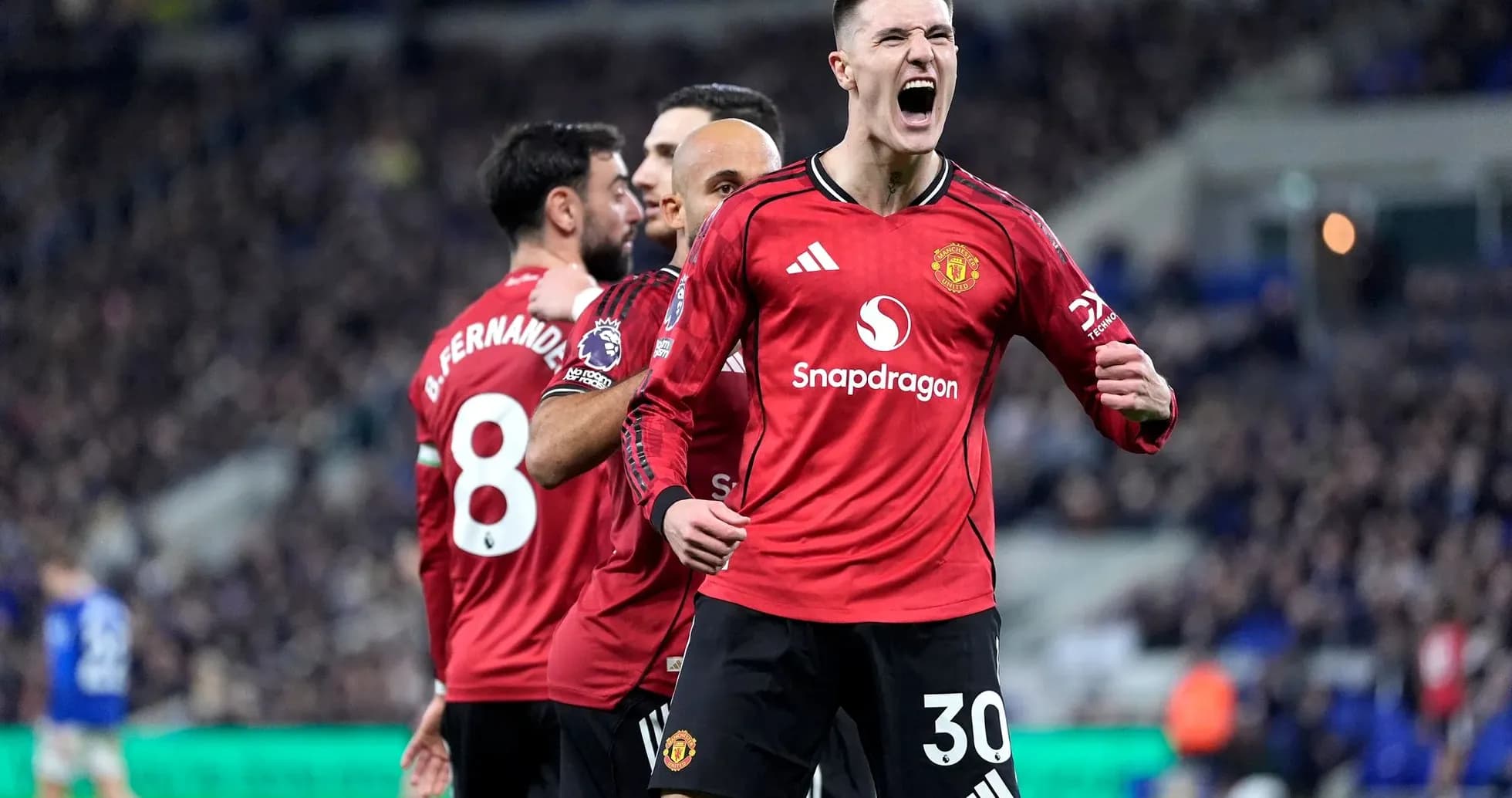
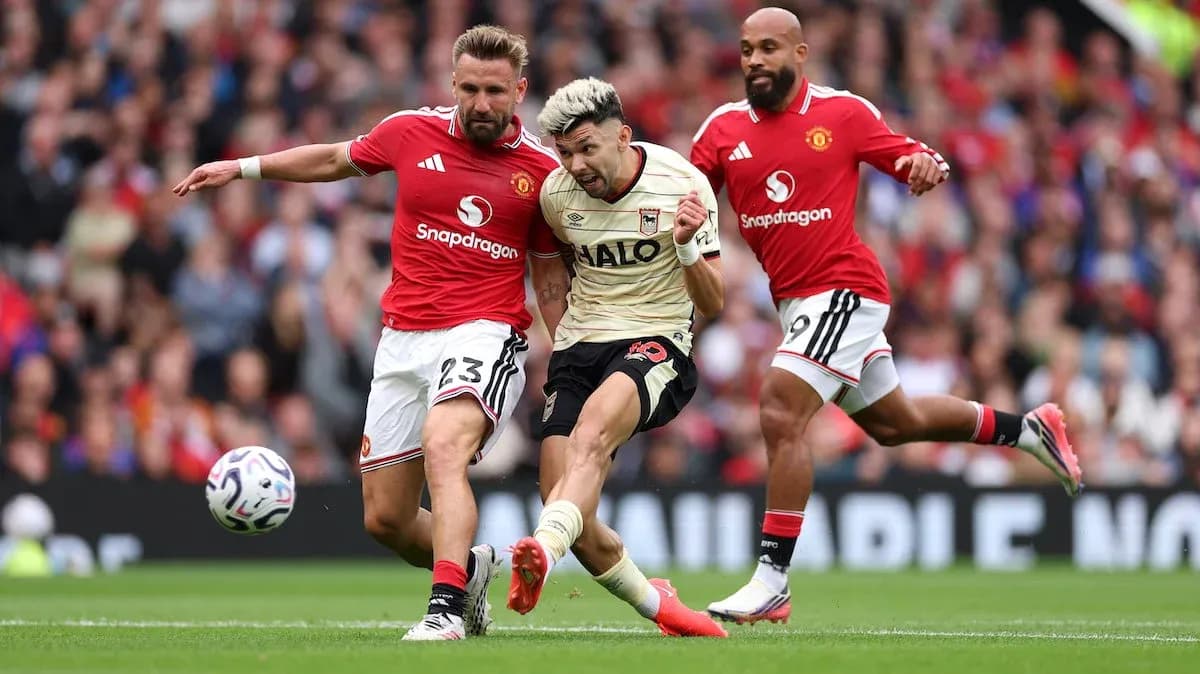
Old Trafford under late‑August light felt less like a routine league date and more like a statement of intent. Manchester United, still sketching out their identity under Michael Carrick, dismantled Ipswich 5–2 in a match that revealed as much about squad architecture and tactical direction as it did about the scoreline.
I. The Big Picture – Early‑Season DNA
Following this result, United sit 10th with 3 points from 2 matches, their overall goal difference a slender +1, built on 5 goals for and 4 against. Crucially, all 5 of those goals at this stage have come at home, where they average 5.0 goals scored and 2.0 conceded per game. On their travels, they have yet to score and concede 2.0 per away match – a split personality that makes Old Trafford both a weapon and a crutch.
Ipswich, 12th with 3 points from 2 games, are living a more volatile reality. Overall they have scored 4 and conceded 6, an overall goal difference of −2. At home they have been competitive, scoring 2 and conceding 1, but away they are porous: on their travels they have scored 2 and shipped 5, an average of 5.0 goals conceded per away game. The 5–2 here is already their heaviest away defeat and sets an early pattern for Gary O’Neil to confront.
Both managers leaned into a 4‑2‑3‑1, but the systems were not mirror images. United’s version was about verticality and overloads between the lines; Ipswich’s, about transitions and wide creativity.
II. Tactical Voids – Absences and Discipline
United arrived with a sizeable medical bulletin. C. Baleba (ankle), A. Diallo, T. Heaton, M. Mount (foot), M. Ugarte (knee) and M. de Ligt (back) were all listed as missing. That stripped Carrick of a natural ball‑winning pivot in Ugarte, a high‑energy eight in Mount, and a dominant organiser in de Ligt. The response was structural: a double pivot of Y. Tielemans and K. Mainoo tasked with building play rather than purely destroying it, and a back four where H. Maguire and L. Martinez had to defend large spaces without the insurance of a destroyer in front.
Ipswich had their own gaps. Florentino was inactive, while A. Matusiwa, J. Philogene and J. Taylor (knee) were all absent. O’Neil lost a key screening midfielder in Matusiwa and an individualist wide threat in Philogene. In their place, S. Lukic and M. Nunez formed a double pivot asked to do two jobs at once: plug central lanes and feed a creative band of three.
Disciplinary trends added another layer. Overall this season, United’s yellow cards have been concentrated in the 31–45 and 91–105 minute windows, each accounting for 50.00% of their cautions. That hints at emotional spikes just before the interval and late on. Ipswich’s bookings are clustered earlier: 66.67% of their yellows between 31–45 minutes and 33.33% between 46–60. O’Neil’s side tend to fray around half‑time, precisely when United’s tempo often rises.
III. Key Matchups – Hunter vs Shield, Engine Room, and Flanks
The headline act is Bruno Fernandes. Heading into this game he was already the league’s most influential attacking midfielder on form: 3 goals and 1 assist in 2 appearances, with 5 shots (4 on target), 151 passes at 84% accuracy and 6 key passes. He has also converted 1 penalty from 1, with United perfect from the spot so far.
Behind those numbers lies his positional gravity. In Carrick’s 4‑2‑3‑1, B. Fernandes floats between the lines, knitting together B. Mbeumo on the right, M. Rashford from the left and M. Cunha as the nominal nine. With United’s overall scoring rate at 2.5 goals per game and no clean sheets so far, the plan is clear: win games by out‑creating, not by suffocating.
Ipswich’s shield against this is the Lukic–Nunez axis. Both are industrious, but their season‑long data suggests a unit more comfortable in a flowing game than a siege. Ipswich have not kept a clean sheet in either home or away fixtures, and their overall goals against average sits at 3.0 per match, ballooning to 5.0 per game away. The double pivot is being stretched: they are asked to protect a back four and ignite transitions for I. Fatawu and J. Enciso.
Enciso is the creative counterpoint to Bruno. With 2 assists in 2 games, 47 passes at 85% accuracy, 2 key passes and 11 dribble attempts (6 successful), he is Ipswich’s principal conduit between midfield and Emersonn up front. His duels – 21 contested, 12 won – show a player unafraid of physical traffic. The clash between Enciso’s roaming and the positional discipline of Mainoo and Tielemans is the true “engine room” battle.
Out wide, Fatawu brings a different threat. He has 1 assist, 5 key passes and 12 dribble attempts with 6 successful, plus 5 tackles and an early yellow card to his name. He is both progressor and presser. Up against L. Shaw and D. Dalot, who must also support United’s high‑octane front four, Ipswich’s right flank becomes their best avenue to drag United’s back line into uncomfortable lateral sprints.
At centre‑forward, Emersonn is still raw but dangerous. With 1 goal, 3 shots (2 on target), 3 key passes and 18 duels contested (8 won), he thrives in broken phases. If Ipswich can exploit United’s lack of clean sheets – they have yet to prevent a goal either at home or away – the Brazilian can turn half‑chances into something more.
From the bench, C. Akpom offers a different profile: 1 goal from limited minutes, 1 shot on target, and 14 duels contested with 5 won. He is O’Neil’s chaos card if the game opens up.
IV. Statistical Prognosis – Firepower vs Fragility
United’s early‑season numbers sketch a side built to overwhelm at Old Trafford: 5 goals in their only home match, but 2 conceded and no clean sheets overall. Ipswich, for their part, have scored in both fixtures and have yet to fail to score in any venue, but their away defensive record – 5 goals conceded in a single trip – is an alarm siren.
Overlay the disciplinary timelines and the tactical picture sharpens. Ipswich’s tendency to pick up cards around half‑time collides with United’s most aggressive attacking phases, especially with Bruno Fernandes orchestrating and Rashford and Mbeumo stretching the pitch. With United flawless from the penalty spot so far and Ipswich prone to late tackles in dangerous zones, any reckless challenge in the box could tilt matches decisively.
The absences of de Ligt and Ugarte mean United’s defensive ceiling is not yet visible; they are winning by volume, not control. Ipswich, missing Matusiwa and Philogene, are similarly compromised in their ability to screen and to counter at elite level.
Taken together, the numbers and patterns point to a recurring script whenever these squads meet in this phase of the season: United’s attacking structure, led by Bruno Fernandes and supported by a fluid three behind Cunha, should continue to generate chances at a rate Ipswich’s away defence struggles to contain. Ipswich’s own forward line, fuelled by Enciso’s craft and Fatawu’s directness, will almost always carry a punch, but unless O’Neil can reinforce the shield in front of his back four, the balance of probability leans towards high‑scoring, chaotic contests where United’s superior firepower has the final word.